In this expansive guide, we’ll explore two intertwined themes in fine detail:
- Clever, sustainable, space‑saving ways to reuse plastic bottles in your kitchen — turning waste into functional, sometimes beautiful utility items.
- Delicious kitchen recipes, especially with garlic and potatoes, illustrating how these bottle hacks can intersect with daily cooking (storage, infusing, dispensing, sprouting, etc.).
By the time you finish reading, you’ll have dozens of practical ideas you can start today, plus culinary inspiration. Let’s dive deep.
Part I: Smart Ways to Reuse Plastic Bottles in the Kitchen
Plastic bottles are ubiquitous—and often discarded. But with some creativity and care, you can repurpose them into useful kitchen tools and storage aids. Below are many ideas (from simple to ambitious), including how to prepare, cut, seal, and maintain them safely.
Why reuse plastic bottles?
- Cost efficiency: Save money by repurposing what you already have.
- Environmental benefit: Reduce plastic waste, carbon footprint, and landfill.
- Customization: Create bottle adaptations tailored to your space, volume needs, or particular ingredients.
- Novelty & aesthetics: A well-executed bottle repurpose can look sleek and modern, adding charm to your kitchen.
But before we jump into hacks, a few safety considerations:
- Clean thoroughly: Use hot soapy water, scrub, rinse, and sterilize (boil or use food-safe sanitizer) before use.
- Choose safe parts: Avoid reusing bottles that held toxic chemicals or non-food liquids (e.g. strong detergents).
- Avoid direct heat or flame: Plastic can melt or release harmful compounds under high heat.
- Check for cracks or seams: Over time, plastic degrades; discard bottles that show wear or brittleness.
- Use food-safe plastic types: If possible, use PET (#1) or HDPE (#2) bottles for safer reuse.
With that in mind, here are clever bottle reuse ideas you can implement in the kitchen.
1. Bottle as dispensing container for oils, sauces, and dressings
Idea: Convert a plastic bottle into a pourer/spout container.
- How to do it:
- Clean and dry the bottle thoroughly.
- Drill or punch a small hole in the cap (or use a screw cap with a tight-fitting spout). Optionally, insert a small stainless steel or food-safe plastic nozzle (like a squeeze bottle tip).
- Fill with olive oil, flavored oil, vinaigrette, or even homemade sauces (tomato sauce, hot sauce).
- Label the bottle with tape or marker, and store upright.
- Benefits: Controlled pour, less mess, and easy refilling. The plastic bottle’s flexibility helps you squeeze out every drop.
- Use cases: Drizzling flavored oil over salads, dashed garlic-infused oil, or homemade hot sauce.
2. Sprouter / microgreens in a bottle
Growing your own sprouts or microgreens is a wonderful way to have fresh greens at hand. A plastic bottle makes an excellent small sprouter.
- How to build:
- Cut the bottle in half or near the neck, leaving the top part inverted.
- Invert the top part into the bottom half so it acts like a funnel.
- Line the inverted bowl with a fine mesh or cheesecloth (secured with rubber band).
- Place sprouting seeds (alfalfa, mung bean, radish, fenugreek) on the mesh.
- Rinse with cool water 2–3 times per day, allowing water to drain into the bottom half.
- After several days, harvest sprouts.
- Variations: You can use several bottle stages (vertically stacked) to produce microgreens like broccoli sprouts or wheatgrass. Or instead of cutting, punch small drainage holes in the cap and invert the whole bottle over a dish.
- Advantages: Low cost, transparency (you see root growth), reusability, and portability.
3. Airtight spice shakers & mini grinders
- Method: Use small plastic bottles (e.g. small soda or juice bottles) to store and shake spices or dry herbs.
- Clean the bottle and dry thoroughly.
- Drill or punch multiple small holes in the lid to turn it into a shaker. Optionally screw on a mesh insert for a pepper grinder effect.
- Fill with dried spices (e.g. ground chili, paprika, garlic powder, herbs).
- Label with masking tape or printed stickers.
- Enhancement: Use a two-step lid: one side is solid (for airtight storage), flip or rotate to the shaker side when needed.
This gives you consistent spice dispensing, reduces waste of packaging, and consolidates small shakers.
4. Herb planters or vertical herb garden
- Concept: Use cut plastic bottles as planters for kitchen herbs.
- Procedure:
- Cut a bottle lengthwise or across its midpoint.
- Drill drainage holes at the bottom.
- Fill with soil or potting mix.
- Plant small herbs (basil, mint, thyme, parsley).
- Hang or mount bottles on a wall, fence, or inside near a window.
- Creative layouts: Stack bottles vertically for a “herb tower,” or mount them on rails so you can slide them. Use colored bottles or paint (with breathable coatings) for aesthetic appeal.
This gives you fresh herbs within reach — basil by the window, mint near tea supplies, etc.
5. Funnel and measuring jug
- Funnel: Use the neck of a bottle as a funnel. Just cut off the base and use the top half. Insert into wide-mouthed jars or bottles to transfer liquids or powders without spill.
- Measure and pour: Because bottles often have volume markings, you can repurpose them for measuring and pouring. E.g., measure 250 ml, mark with permanent marker, and reuse for repeat tasks.
These simple transformations take advantage of existing tapered shapes.
6. Storage for dry goods and snacks
You can repurpose bottle bodies as airtight containers for various dry goods.
- Examples:
- Rice, lentils, sugar, flour (small amounts)
- Nuts, seeds (sunflower, pumpkin)
- Snack items (dried fruit, trail mix)
- Pasta (short shapes)
- Tips:
- Use screw top bottles for tight seal.
- Label contents and “use by” dates.
- Keep bottle bottoms level by trimming or adding a base pad (e.g. cork or rubber).
- Use pinch-top bottles for easy access (e.g. small caps that snap open).
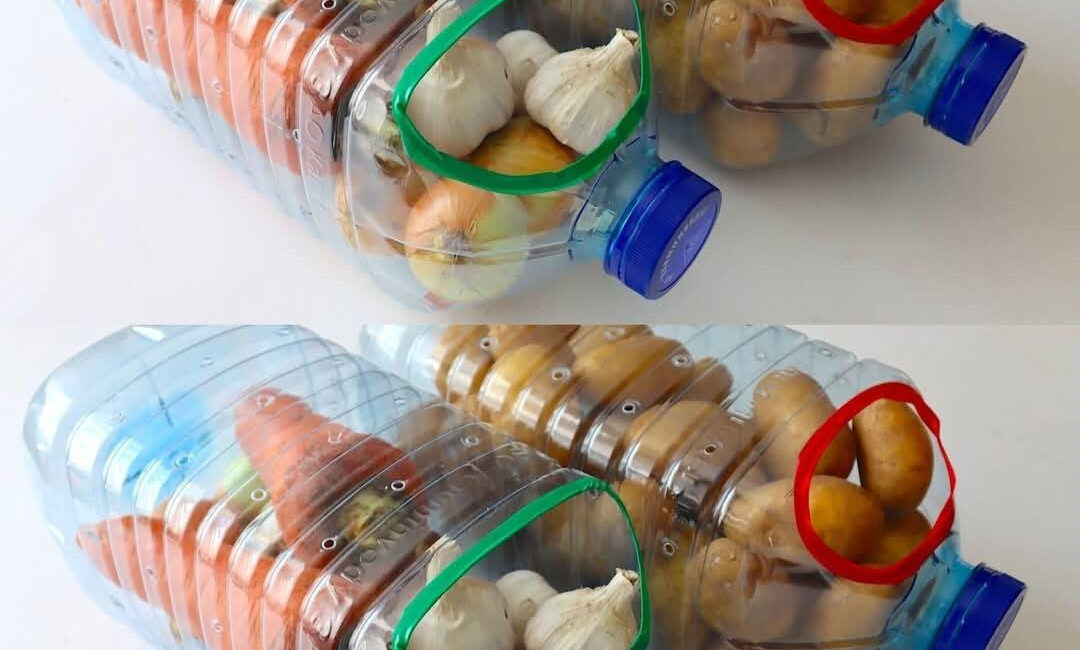
7. Bottle drip reservoir for produce (tomatoes, garlic, ginger)
Some produce (like tomatoes, garlic) can rot if left airtight. A modified bottle container can help provide ventilation.
- Design: Use a bottle with side ventilation holes (small slits) and a domed top to allow air flow. Place garlic heads or ginger inside. The bottle shields produce from light while permitting air circulation.
- Alternate use: Cut a bottle in half, place produce in the bottom half, and invert top with holes to create a mini greenhouse that breathes.
This delays sprouting or spoilage.
8. Homemade infusion or flavoring jars with bottle lids
Another clever use: use a bottle as a vessel for infusing oils, alcohol, or vinegars with flavors like garlic, chili, herbs.
- Steps:
- Clean and sterilize bottle.
- Chop or crush garlic, herbs, chili.
- Insert into bottle, then fill with oil or vinegar.
- Close and store in a cool dark place for several days.
- Strain or leave solids in for continuous infusing.
You can use different bottle sizes for batch infusing (small bottles for spice oils, larger for flavored vinegar). The narrow neck and screw cap help minimize exposure to air and contamination.
9. Bottle-based steaming or cooking vessel (indirect heat)
A more advanced idea: use a thick plastic bottle top or cut section to create a steam dome over a pot or pan. (Caution: only use bottles that can withstand moderate heat, and don’t expose them to direct flame.)
- How to do it:
- Use a transparent, heat-tolerant bottle section and place it inverted above your steaming or sautéing pan, creating a humid micro-environment.
- Lift periodically to vent.
- Useful for faster steaming of small portions, or glazing.
This must be done carefully to avoid melting, but as a short-term cover (not directly over flame), it can help trap moisture.
10. Bottle lids as stencils, molds, or dividers
Don’t forget smaller parts: lids can be turned into:
- Cookie cutter / stencil: cut shapes from lids and use them to stamp dough or garnish shapes.
- Mini molds: form small puddles of gelatin, chocolate, or butter.
- Dividers: cut lids into slices to partition trays or shallow boxes.
- Caps as plugs: use bottle caps to seal other containers, or as small lids for jars or tubes.
These small adaptations add utility from even minor bottle parts.
Part II: Recipe Use Cases: Garlic & Potato with Bottle-Aided Techniques
Having explored many ways to repurpose bottles, let’s illustrate how these hacks can integrate into actual recipes—especially using garlic and potatoes, two kitchen staples. We’ll walk you through useful recipes and show how bottle hacks make them easier, more flavorful, or more creative.
Core idea
- Use bottles for storage, infusion, sprouting, seasoning, and even micro-steaming to enhance your garlic and potato dishes.
- Let’s start with a few recipes, then map which bottle hack supports which part.
Recipe A: Garlic-Infused Oil for Drizzling & Sautéing
Ingredients (approx.):
- 200 ml good extra virgin olive oil (or neutral oil if preferred)
- 5–7 garlic cloves, peeled and slightly crushed
- (Optional) A sprig of fresh herb (rosemary, thyme, oregano)
- (Optional) A small dried chili or pepper flakes
- Bottle for infusion (sterilized)
Instructions:
Click page 2 for more