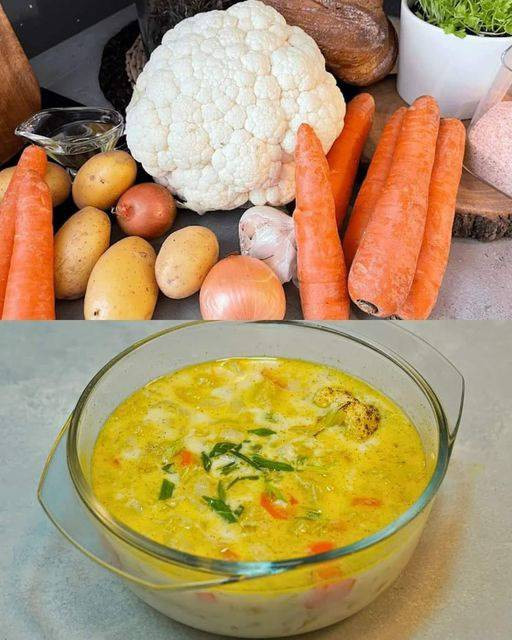
When you’re trying to lose weight or eat healthier, soups are often a go‑to: they are filling, hydrating, and can deliver vegetables, fiber, and protein in a low calorie format. Among all the vegetable soups, cauliflower soup stands out as a top candidate. Why? Because cauliflower is:
- Low in calories
- High in fiber
- Nutrient-dense (vitamins C, K, folate, etc.)
- Relatively neutral in flavor (so it adapts well to seasoning)
- Creamy when pureed — giving you the satisfaction of richness without heavy creams
When combined with other vegetables and a modest amount of starch (potato) plus some milk, cauliflower soup becomes a smooth, comforting, and satiating dish — yet still light enough to fit into a weight loss diet.
In this article, I’ll walk you through:
- The nutritional background and why this soup supports weight management
- A complete, detailed recipe (with your baseline ingredient list plus variations)
- Step‑by‑step cooking instructions with tips for texture, consistency, and flavor
- Variations and add-ons (protein boosts, flavor twists)
- Serving suggestions and portion control
- A sample meal plan integrating cauliflower soup
- Troubleshooting common issues (too watery, too thick, bland, etc.)
- Storage, reheating, and make‑ahead strategies
- Final thoughts and encouragement
Let’s get started.
The Nutritional & Metabolic Case: Why This Soup Helps with Weight Loss
Before cooking, let’s understand how and why this soup supports a weight loss or healthy eating plan.
Low Caloric Density & Satiety
Cauliflower is composed largely of water and fiber, which gives it low caloric density — you can eat a satisfying volume without consuming many calories. Soup form further helps you ingest fiber and water simultaneously, promoting gastric fullness and satiety signals while keeping total energy low.
Fiber & Digestive Health
Fiber plays multiple roles:
- It slows gastric emptying and delays hunger
- It provides bulk without digestible calories
- It supports gut health and regular bowel movements
- In combination with the mildly starchy potato and carrots, you get a balance of soluble and insoluble fiber
All of this helps you feel fuller and reduces overall calorie intake.
Nutrient Density & Micronutrients
Cauliflower is a respectable source of vitamin C, vitamin K, folate, and phytonutrients (like glucosinolates). The carrots bring beta‑carotene (vitamin A precursor) and potassium, while onion adds flavor plus minor B vitamins and antioxidants. This means your body receives essential micronutrients even while in a calorie deficit.
Moderate Carbohydrate Structure
The inclusion of a moderate amount of potato gives the soup a slight starchy body, which helps you feel more satisfied, especially if you’re used to carbohydrate in meals. But because the bulk is cauliflower and vegetables, your net carbohydrate load is moderate — and the fiber mitigates blood sugar spikes.
Controlled Fat with Olive Oil
Using olive oil (for roasting) gives you healthy monounsaturated fat, which supports absorption of fat‑soluble vitamins (like A and K) and adds satiating value, but in controlled amounts, it won’t tip the recipe into calorie excess. You’re not using heavy cream or butter, so the fat is modest.
Thermogenic & Metabolic Boost
Soups—and warm meals generally—help maintain thermogenesis (burning calories to maintain body heat). Also, the act of digestion (thermic effect) is higher for whole food, fiber-rich meals, which slightly increases energy expenditure.
Balanced Macronutrients & Portion Control
While this is not a high‑protein soup by itself, you can supplement it (see variations). As a standalone meal, it gives you a low-fat, moderate-carb, moderate-protein option that fits well into a weight loss plan when paired with lean proteins or a side salad.
Overall: this cauliflower soup is a low calorie, fiber‑rich, nutrient-dense, volumetric meal — ideal for weight loss yet satisfying, comforting, and flexible.
Ingredients & Ingredient Roles (Detailed)
Here is your base recipe (as you provided), with commentary for each ingredient’s role and optional substitution tips:
| Ingredient | Amount | Role / Contribution | Substitutions / Notes |
|---|---|---|---|
| Cauliflower, chopped | 300 g + extra for roasting | Bulk, body, fiber, “creaminess” when pureed | You can use a little more or less; frozen cauliflower also works (thaw first) |
| Onion, chopped | 1 medium | Aromatic base, flavor depth | Shallot or leek can substitute |
| Carrots, chopped | 2 medium | Taste sweetness, color, beta-carotene | You can add more or reduce if you prefer lower sugar |
| Milk | 3 cups | Liquid base, creaminess, mild protein & calcium | Use low-fat or plant-based milk (unsweetened almond, oat, etc.) — adjust taste |
| Potatoes, peeled & chopped | 2 medium | Starchy body, thickening | Use a waxy potato; you may reduce if stricter on carbs |
| Salt | to taste | Essential seasoning | Sea salt, kosher salt, iodized — watch so you don’t oversalt |
| Black pepper | to taste | Mild heat, flavor enhancement | Freshly ground pepper is best |
| Thyme powder | to taste | Herb aroma, savory balance | You may use fresh thyme or dried herb mix |
| Olive oil (for roasting) | enough to coat extra cauliflower | Adds flavor, gentle fat, helps caramelize roasted cauliflower | A neutral oil (avocado) could work if extra-virgin olive yields too strong flavor |
A few points to keep in mind:
- The extra cauliflower for roasting is optional but highly recommended: those roasted bits add depth of flavor, caramel notes, and complexity.
- The milk should be plain, unsweetened. If using full-fat milk, reduce any added fat later; if using plant milk, pick an unsweetened low-calorie version.
- Potatoes are optional, but they really improve the texture. If you omit them entirely, the soup can be thinner — you may then reduce the milk or add a small amount of another thickener (like a cream of cauliflower base).
- Herbs and spices (thyme, black pepper) are adjustable — feel free to tweak based on your taste preference.
Step‑by‑Step Cooking Instructions with Rich Detail & Tips
Below is a thorough, detailed method. Do not skip tips — they will improve outcomes.
1. Preparation & Mise en Place
- Wash the cauliflower (both the 300 g and any extra florets for roasting). Ensure no dirt or grit.
- Chop the cauliflower into uniform florets (smaller ones will cook faster).
- Chop the onion and carrots into even small dice (this ensures even cooking).
- Peel and chop the potatoes into uniform cubes (about 1–1.5 cm size).
- Preheat the oven (for roasting the extra cauliflower) to about 200 °C (≈ 390 °F).
- Line a baking sheet with parchment or lightly oil it.
- Lay out all the other ingredients, measuring milk, salt, pepper, thyme, olive oil.
2. Roast Extra Cauliflower (Flavor Booster)
This step adds a layer of depth and “roasted caramel” notes that elevate an otherwise simple soup.
- Take the extra cauliflower florets (e.g. 100–150 g) and toss them in a small amount of olive oil, salt, and pepper.
- Spread in a single layer on the baking sheet, giving each floret space (don’t overcrowd).
- Roast for about 20–25 minutes, turning or flipping halfway, until edges are golden brown and slightly caramelized.
- Remove and set aside. These pieces will later either be blended in or used as garnish / mix-in chunks for texture.
3. Sauté the Aromatics
- In a large soup pot (with a tight-fitting lid), drizzle a small amount of olive oil (just a tablespoon or two) over medium heat.
- Add the chopped onion. Stir and sauté for 3–4 minutes until translucent and fragrant (don’t let it brown).
- Add the chopped carrots and continue sautéing 2–3 more minutes, stirring so nothing sticks. This helps bring out the carrot sweetness and meld flavors.
4. Add Potatoes, Main Cauliflower & Liquid
- Add the chopped potatoes to the pot, stirring to combine with onion/carrot.
- Add the primary 300 g cauliflower florets.
- Pour in the milk (3 cups). If the milk is cold, warm it slightly or heat gently after adding.
- Add a little water if needed to fully cover the vegetables (only if necessary).
- Season at this stage lightly with salt, black pepper, and thyme. You can always adjust seasoning later.
5. Simmer to Tender
- Increase heat slightly to bring the mix to a gentle boil (stir occasionally to avoid sticking).
- Once it begins to boil, lower heat to a simmer and cover partially with the lid (leaving a crack for steam).
- Simmer for ~15–20 minutes (maybe up to 25), or until the cauliflower and potatoes are fully soft and tender (test with a fork).
- Be careful: if simmering too vigorously, milk may scald or foam — use medium heat.
6. Puree & Adjust Consistency
- Once the vegetables are soft, turn off heat and let the pot stand a minute to cool slightly (for safety).
- Use an immersion blender to puree the soup until smooth. If you prefer ultra-creamy texture, you might remove some of the solids into a blender and process in batches (be careful of hot liquid).
- After pureeing, check consistency. If it’s too thick, add a little more milk or hot water; if too thin, simmer a bit longer (stirring) or blend in a small extra cauliflower or potato chunk.
7. Incorporate Roasted Cauliflower Pieces
- Optionally, fold in some of the roasted cauliflower florets for texture contrast (or reserve them as garnish).
- Gently stir them in so they distribute across the soup.
8. Final Seasoning & Tasting
- Taste carefully. Adjust salt, pepper, or thyme. If it seems flat, a small squeeze of lemon juice or a pinch of nutmeg can lift flavor.
- If you have a warming herb (like marjoram, oregano), a small pinch can enhance complexity (optional).
9. Serve & Garnish
- Ladle soup into bowls.
- Garnish with a few roasted cauliflower bits, or a swirl of olive oil, a sprinkle of fresh parsley or chives, or a crack of black pepper.
- Serve hot.
10. Portioning & Caloric Estimate
Divide the finished soup into portions (e.g. 4 or 5 bowls). Because ingredients are modest, each bowl is relatively low in calories yet satisfying. Pair with a lean protein or side salad if desired.
Variations, Enhancements & Protein Boosts
To keep things fresh and to suit different dietary goals, here are many variations, tweaks, and enhancements you can apply.
1. Protein-Rich Add-Ons
- Cooked shredded chicken / turkey: Stir in lean meat for extra protein.
- Beans or legumes: White beans (like cannellini) can blend in well without altering texture heavily.
- Greek yogurt or strained yogurt: Add a dollop (after pureeing) for protein and creaminess (if your diet allows).
- Cottage cheese: Blend in some low-fat cottage cheese and re-blend to silky texture.
- Tofu: Silken tofu can be blended with the soup to boost protein smoothly.
- Protein powder: Use an unflavored, clean protein powder designed for culinary use — blend gently to avoid graininess.
2. Flavor Twists & Herb Profiles
- Garlic: Add minced garlic in the sauté step (1–2 cloves) for more aromatic punch.
- Cumin / coriander: A pinch of cumin or ground coriander adds slight earthiness.
- Smoked paprika: A small amount gives smoky warmth.
- Turmeric: Adds color and health properties (anti-inflammatory). Use sparingly to avoid overpowering.
- Fresh herbs: Parsley, chives, dill, basil added at final stage for freshness.
- Curry-style: Add a teaspoon of mild curry powder or garam masala to transform it into a cauliflower-coconut style soup (if coconut milk works in your diet).
- Ginger: A touch of grated fresh ginger can add zing.
3. Dairy / Non-Dairy Substitutions
- Use unsweetened almond milk, cashew milk, soy milk, oat milk — ideally low-fat or unsweetened.
- If you want richer texture, use part cream (if your nutrition plan allows) or part whole milk plus light milk.
- For vegan version: use vegetable broth plus plant milk combination; omit extra dairy.
4. Spicing Up the Starch
- Replace potato with sweet potato (but yields slightly more sugar).
- Use cauliflower only (no potato), but reduce the milk or add a thickening element (like a small amount of pureed white beans).
- Add a small piece of parsnip or celery root (celeriac) for flavor complexity.
5. Heat Variants
- Spicy version: Add red pepper flakes, cayenne, or a dash of hot sauce.
- Chilled version: In warmer weather, you can chill the soup and serve cold (a kind of creamy cauliflower gazpacho). Adjust consistency to thinner.
6. Garnish & Texture Add-Ons
- Roasted cauliflower bits (already described)
- Toasted almond slivers or pine nuts
- A swirl of chili oil or herb oil
- Crusty whole grain croutons or multi-grain bread on the side
- Fresh microgreens or sprouts
These variations help you not tire of the same flavor and allow you to adapt the recipe to dietary preferences or contexts.
Serving Suggestions & Portion Control Strategies
To maximize the weight loss advantage, you want to serve this soup strategically and integrate it into your meals wisely.
Serving Portion Size
- A typical healthy serving might be ~300–350 ml (1¼ to 1½ cups), depending on your daily calorie target.
- Measure once, note the calories per serving, and use that as a guide for future servings.
- If you make the soup in bulk (e.g. 1 large pot yields 4–5 servings), divide accordingly.
Pairing & Meal Composition
Because the soup is moderate in protein, pairing is key:
- Lean protein side: grilled chicken, baked fish, tofu, or lean beef.
- Salad: a non-starchy green salad (spinach, arugula, cucumber) with light vinaigrette.
- Whole grain / complex carb (in moderation): a slice of whole grain bread or small portion of quinoa or brown rice (if your plan allows).
- Vegetable side: steamed or roasted non-starchy vegetables (broccoli, zucchini, greens).
This composition gives you a balanced, satisfying meal without overeating.
Timing & Frequency
- Use the soup for lunch or dinner, where a warm, filling meal helps avoid snacking later.
- You might also use it as a starter (first course), limiting the portion, then follow with a protein + salad.
- You could replace one meal per day (e.g. dinner) with the soup on a rotation (so long as your protein intake remains adequate elsewhere).
Adjusting for Calorie Goals
- If your target is very low (e.g. 1,200 kcal/day), reduce serving size or limit additive oil.
- For moderate deficit (1,500–1,800 kcal/day), use full portions plus lean protein.
- Always account for added toppings, sides, or added fats in your tracking.
Sample Meal Plan Including Cauliflower Soup
Click page 2 for more