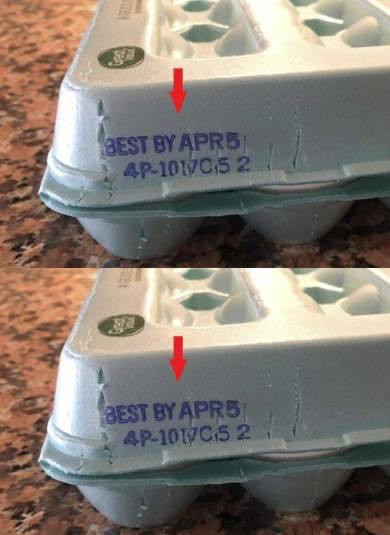
When most shoppers look at an egg carton, they see something like:
- A “best by / best before” date
- A “use by / expiration / EXP” date
- A “sell by” date
- A Julian code (a three‑digit pack date)
They glance at it, pick the latest date, and move on. But that date is a signal: it’s telling you how long the egg is expected to maintain desirable quality and, more importantly, how much buffer you have before safety becomes a concern.
In a grocery store, eggs might already be days or even weeks old by the time a customer picks them up. If you don’t understand how that timeline works, you risk buying eggs that are on their death trip. Worse, people often throw out eggs that are still perfectly good, out of fear of spoilage.
I’ve watched eggs shelved too long, mishandled in transport, stored in warm places, or sold too close to their expiry — and I’ve also seen customers waste because they didn’t know how to test freshness. Let’s change that.
Understanding Egg Dating: What the Numbers Mean
Before you trust (or distrust) an egg carton, you have to decode what those printed dates really imply.
1. Pack Date / Julian Date
Many high‑volume producers stamp a 3-digit Julian code on the carton. That number indicates the day of the year when the eggs were packed. For instance, 001 = January 1, 032 = February 1 (in a non‑leap year), 365 = December 31. This is one of the most useful markers, because it tells you how fresh the egg really is — not just how long until the date printed on the carton.
When you see that Julian code, you can add typically 4 to 6 weeks of safe usability (depending on storage) beyond that pack date, as long as storage conditions remain good.
2. Sell‑By Date
This is intended for retailers. It signals to the grocery store how long they should display the eggs for sale. After that point, the store is expected to rotate the stock or remove the eggs. Importantly: the sell‑by date is not the same as “must discard by.” In many cases, eggs remain perfectly usable many days or even weeks after the sell‑by date, depending on how well they’ve been stored.
3. Best‑By / Best‑Before Date
This is typically a quality marker. It suggests until when the eggs are expected to deliver the best texture, flavor, and performance (for things like baking, frying, etc.). After that date, the egg’s internal qualities start degrading — the white may thin, the yolk might flatten, etc. That doesn’t automatically mean danger, but more that you should test or use them more urgently.
4. Expiration / Use‑By (EXP) Date
This is where many people start to worry. An expiration or “use by” date is more conservative — it’s the manufacturer’s recommendation for when the egg should ideally be used. It’s closer to a safety margin than just a quality suggestion. Once you pass this date, you should be very careful: use freshness tests, cook thoroughly, and discard any eggs showing signs of spoilage.
Bottom line: the printed date is a guideline, not a guarantee. It’s a tool — not a dictator. You must combine it with your observations and proper storage practices.
How Eggs Age: The Science Behind the Spoiling
To understand how quickly eggs deteriorate, you need to know what’s happening inside that shell over time.
Air Cell Expansion & Porosity
Inside every egg, between the shell and the inner membrane, there’s a pocket of air. Over time, as the egg breathes (shells are porous), that air cell grows larger. That means the egg becomes lighter and more “airy.” This process accelerates with temperature fluctuations, rough handling, or damage to the shell.
When the air cell is big enough, the egg may float in water (classic float test) — but by then, the egg is quite old.
Degradation of Membranes & Proteins
The membranes around the yolk and white become weaker with age. The boundary between egg white (albumen) and yolk becomes less firm. The thick albumen surrounding the yolk thins. Over time, the yolk may flatten and is more likely to break when cracked. The whites become more watery.
Simultaneously, proteins can break down, and there’s gradual loss of CO₂ and moisture. Those chemical changes degrade texture and possibly allow bacteria easier penetration.
Microbial Growth Risks
Eggs are never sterile; they may carry bacteria like Salmonella on the shell or, in rare cases, inside. As time passes and protective barriers weaken, the likelihood that bacteria penetrate increases — especially if the shell is cracked or the egg is stored improperly. Temperature abuse (warm storage) accelerates bacterial growth.
Volatile Compound Development
With age, eggs can develop off‑smells (sulfurous compounds) or may acquire foreign odors from the fridge if stored near pungent items (onions, garlic, strong cheese). These volatile compounds reflect decomposition or contamination processes.
Because of these chemical and structural changes, eggs lose quality and eventually safety. That’s why the date is not trivial — it’s a marker for the safe life window before undesirable or unsafe transformations dominate.
How Long Can Eggs Last (Realistic Shelf Life)
Knowing the typical lifespan gives perspective when you see that expiration date.
- Under optimal refrigeration (~4 °C / 39 °F) and stored properly in their carton (not in the door), eggs often stay good for 4 to 5 weeks beyond their pack date (or sell‑by date).
- Some sources suggest they may still be usable a bit beyond that, though quality degrades.
- Once hard‑boiled, eggs (in shell) last about 1 week more when refrigerated.
- Egg whites stored separately are best used in 2‑4 days.
- Yolk stored alone is more fragile (1‑2 days).
- In warmer environments, shelf life shrinks dramatically.
This is consistent with what I’ve seen in stores — batches beyond 5–6 weeks often show more breakage, more bad eggs, and more returns.
So when I see an egg carton printed “EXP” or “best by” in 3 days, that’s a red flag: it likely has already aged 3–4 weeks in the supply chain.
Why People Get Egg Dates Wrong (Common Mistakes)
Here are frequent misunderstandings I’ve witnessed in my time:
- Thinking “best before” means spoilage
Many customers discard eggs the moment the “best by” date passes, even when eggs still pass float or sniff tests. That’s unnecessary waste. - Trusting carton date blindly
Some assume that from today they have e.g. 14 more days. But the carton may already be several days old before it reached the shelf. - Keeping eggs in the fridge door
Many fridges have temperature swings on the door. Eggs stored there age faster than those in the stable cold zone. - Washing eggs before storage
That removes protective coating (bloom) on shell and opens pathways for bacterial penetration. - Buying eggs too close to expiration
I’ve watched entire cartons get returned because the printed date was imminent — those are low margin sales, but customers don’t want to risk it. - Not using freshness tests
People forget simple checks like smell, float test, visual cues — relying solely on date labels.
How to Judge Egg Freshness — Smarter Than the Date
Once you know the date is just a guide, your eyes, nose, and a few simple tests are your best tools. Combine tests to reduce risk.
1. Visual Shell Inspection
- No cracks, no leaks, no slime.
- Shell should feel dry and free of powdery mold.
- Uniform shell color (unless the breed produces speckled eggs).
- Avoid eggs with thin or chalky shells.
If the shell is compromised, discard immediately.
2. Float (Water) Test
- Place the egg gently in a bowl or glass of cold water.
- Fresh eggs sink and lie flat on their side.
- Older but still usable eggs might tilt, stand upright, or bob slightly.
- Bad eggs float — meaning the internal air pocket is too large.
A floating egg is a strong sign it has gone bad (or at least lost quality). But even eggs that sink might be marginal — use further tests.
3. Shake Test (Auditory)
- Hold the egg near your ear and shake it gently.
- If you hear sloshing, it suggests the white has thinned or the membranes have degraded.
- No or minimal sound is ideal.
This isn’t definitive, but helps with borderline cases.
4. Sniff / Smell Test (After Cracking)
- Crack the egg into a clean bowl (not directly into food).
- A fresh egg should have negligible smell.
- A rotten egg emits a strong sulfur/rotten smell.
- If unsure, throw it out.
5. Appearance of White and Yolk
- Fresh eggs: white is thick and holds shape; yolk is round and domed.
- Older eggs: the white is watery and spreads farther; the yolk flattens more easily.
- Discoloration (pink, green, black) is a rejection sign.
6. Cooking Behavior (as a last check)
- Use an older-looking egg in a well-cooked dish (hard boiled, scrambled thoroughly).
- If it foams excessively, smells, or yields strange texture, discard.
By layering these checks with the printed date, you minimize risk while avoiding waste.
How That Date Affects Retail Decisions (Insider View)
In-store, that printed expiration or “best by” date drives a lot of behind‑the-scenes actions:
- Stock rotation: Older cartons are moved to the front to encourage sales before expiration.
- Markdowns: Eggs nearing expiry may be discounted to encourage quick turnover.
- Returns / recalls: If batches show elevated spoilage rates, stores push them back or discard them.
- Supplier accountability: Sometimes stores reject pallets with too short remaining shelf life.
- Return / refund cases: Customers bring in bad eggs; store management investigates batch and backing date codes.
So the date on that carton isn’t just passive — it often determines whether that batch is considered viable or not in the supply chain long before it reaches your home.
How to Shop Smart: Tips for Picking the Best Eggs
When you’re buying eggs, especially in bulk or uncertain conditions, here’s how to maximize your chances of getting the freshest batch:
- Prefer latest pack / minimum remaining shelf life
Choose cartons with the furthest-out date or latest Julian code. - Avoid cartons with short remaining date
If expiration is days away, it’s a gamble whether you’ll use all before deterioration begins. - Inspect shells visually in-store
No cracks, no slime, even color, no chalkiness. - Check neighboring cartons
Sometimes adjacent ones have better dates or fewer damaged eggs. - Buy what you can use in 2–3 weeks
Unless you have specialized storage, avoid overstocking eggs too far into future. - Store immediately and correctly
Don’t let eggs sit in hot car trunks or warm places before refrigeration. - Ask about sourcing / freshness
In small or local grocers, sometimes employees know when that lot came in.
By adopting those habits, you’ll dramatically reduce buying borderline or spoiled eggs.
Storage Best Practices: Stretching Egg Life
Click page 2 to continue