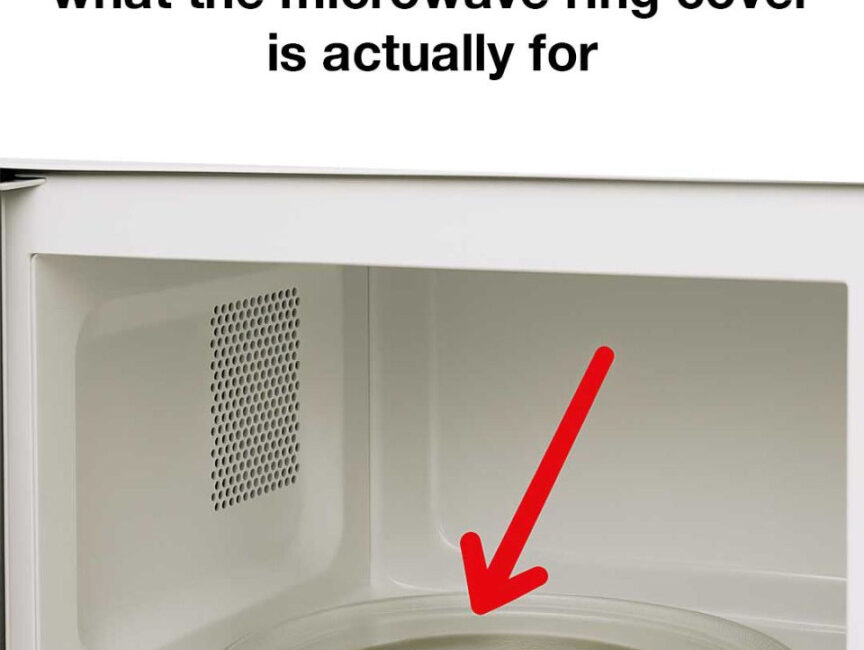
“I was totally in the dark on this!” That was my reaction the day I discovered the true purpose and critical function of the microwave ring cover — that small, plastic circular component often hidden beneath the turntable of a microwave oven.
Like many, I’d always assumed it was just some kind of support piece or even packaging. I never imagined that this overlooked component was playing a vital role in food preparation, energy efficiency, and the overall functionality of one of the most essential home appliances in modern kitchens.
Whether you’re someone who frequently uses a microwave for heating leftovers, thawing frozen groceries, preparing full meals, or simply warming your morning coffee, this often-ignored component affects your experience every single time.
Let’s uncover the secrets behind the microwave ring cover, examine its design, mechanics, and importance, and expose the misconceptions that might be harming your appliance — and your food.
Table of Contents
- Introduction: What Is the Microwave Ring Cover?
- Understanding the Engineering Behind the Ring Cover
- Why Smooth Rotation Matters in Microwave Cooking
- Common Misconceptions (And the Risks They Bring)
- Long-Term Impact on Microwave Performance
- The Surprising Influence on Food Safety and Heating Efficiency
- Cleaning and Maintenance: Best Practices
- What Happens If You Remove or Break the Ring Cover?
- How the Ring Cover Interacts with the Turntable Motor
- Energy Usage and Microwave Efficiency
- Signs Your Ring Cover Needs Replacement
- Microwave Turntable Not Spinning? Here’s What to Check
- Budget-Friendly Maintenance Tips
- Myths About Ring Cover Materials and Replacements
- Final Thoughts: Small Part, Big Difference
1. Introduction: What Is the Microwave Ring Cover?
Let’s start with the basics. The microwave ring cover is that circular, often plastic component located beneath the microwave’s glass turntable plate. It typically features three small wheels or rollers, evenly spaced to distribute the weight of the turntable and the food placed on it.
Its main task? To facilitate smooth rotation of the turntable during microwave operation. But that’s just the tip of the iceberg. Its role spans across heat distribution, energy efficiency, and operational noise reduction.
Understanding the hidden mechanics behind this small part can enhance your microwave’s lifespan, save you money on repairs, and improve the quality of your food.
2. Understanding the Engineering Behind the Ring Cover
The design is deceptively simple. It consists of:
- A circular track built to match the circumference of the microwave base.
- Rollers or wheels that allow seamless movement with minimal friction.
- A central cavity to accommodate the rotating axis of the microwave’s turntable motor.
These parts work in synchrony with the motor to ensure consistent spinning at an even pace. This motion is critical — without it, microwave radiation doesn’t reach all parts of the food equally, resulting in uneven heating or partial cooking.
Think of it as the silent gear behind your appliance’s visible performance.
3. Why Smooth Rotation Matters in Microwave Cooking
Most microwave ovens rely on electromagnetic waves (typically at 2.45 GHz) to excite water molecules in food, generating heat from the inside out. But here’s the thing: the microwave field inside the oven is not uniform.
There are hot zones and cold zones, similar to how shadows and light fall in a room. This is why the rotation of your plate is critical. It moves the food through these zones, ensuring that every part of the meal gets equal exposure to microwave energy.
Without the ring cover supporting the turntable, the plate either:
- Doesn’t spin, or
- Wobbles, causing spillage or shifting food that hinders heat distribution.
This results in undercooked centers, burnt edges, or — worse — unsafe consumption of inadequately heated meals, especially with meats or frozen groceries.
4. Common Misconceptions (And the Risks They Bring)
You’d be surprised how many people remove the ring cover when it gets dirty or lost and never replace it, assuming it’s unnecessary. Others think it’s just packaging or something disposable.
Here are a few dangerous misconceptions:
❌ “It’s not important — my microwave still works without it.”
Yes, it may still power on, but the food won’t cook evenly, and internal components may wear out faster.
❌ “It’s okay if it’s cracked — it’s just plastic.”
Cracks compromise the balance and structure of the turntable system, causing strain on the motor.
❌ “Cleaning it isn’t necessary.”
Food debris under the ring can lead to obstructions, increased friction, and eventual motor burnout.
The truth? Ignoring the ring cover can cost you in repairs, replacements, and energy bills.
5. Long-Term Impact on Microwave Performance
When the ring cover is damaged or removed:
- The turntable struggles to rotate properly.
- The motor has to work harder, leading to early failure.
- Friction increases, which creates annoying operational noises.
- Heating becomes inconsistent, impacting food safety and taste.
Over time, what seems like a minor annoyance turns into:
- Increased electricity consumption
- Internal overheating
- Premature breakdowns
- Higher repair or replacement costs
These are not exaggerations. Many microwave ovens end up discarded over a failed turntable motor — a problem that begins with a neglected ring cover.
6. The Surprising Influence on Food Safety and Heating Efficiency
Let’s get serious: uneven cooking isn’t just annoying, it’s dangerous.
When parts of a meal — especially poultry, beef, or frozen groceries — don’t reach safe internal temperatures, harmful bacteria like Salmonella and E. coli can survive. This puts you and your family at risk.
The microwave ring cover, by ensuring proper rotation and heat exposure, becomes an unsung food safety tool.
Moreover, when your food heats evenly:
- Energy is used more efficiently
- Cooking time is reduced
- You preserve texture and taste, particularly for meals with sauces, grains, or layered dishes
7. Cleaning and Maintenance: Best Practices
Just like any other kitchen component, the ring cover requires regular cleaning and care.
How to Clean:
- Remove the glass turntable carefully.
- Take out the ring cover and inspect the wheels for stuck debris.
- Soak it in warm, soapy water.
- Use a toothbrush or small brush to remove gunk from the rollers.
- Let it dry completely before reassembling.
Pro Tips:
- Avoid dishwashers; high heat can warp cheaper plastic.
- Don’t use abrasive scrubbers.
- Clean it once a week if you use your microwave daily.
Click page 2 for more