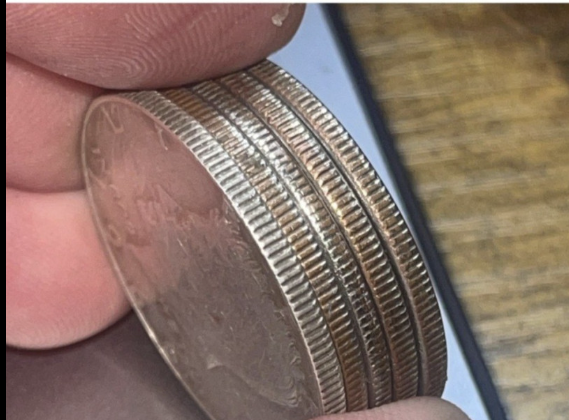
You’ve held them thousands of times—quarters, dimes, nickels, and pennies. Slipped them into parking meters, flipped them to make decisions, or stacked them on counters. Yet, have you ever really looked at a quarter? Run your thumb along its edge? Felt the tiny ridges that circle the coin’s perimeter? Those grooves aren’t mere decoration or a simple grip aid. They are a centuries-old invention designed to protect currency and ensure trust in every transaction. What you’re touching is a legacy of anti-theft technology dating back over 300 years.
In this extensive article, we’ll explore the origins of coin ridges, their critical role in financial security, and why they remain relevant even in today’s digital economy. We’ll also uncover the surprising benefits these ridges provide for accessibility and how they tie into a broader history of tamper-proof design.
The Origins: When Currency Was Worth Its Weight in Metal
Long before the era of paper bills and credit cards, coins were the primary medium of exchange. But these weren’t just symbolic representations of money; they were often made of precious metals such as silver and gold. This intrinsic value made coins not only currency but also an easy target for theft.
Imagine you are a thief in the 1600s or 1700s. You have a clever but illegal scheme to acquire wealth: coin clipping. This involved shaving off tiny slivers of precious metal from the edges of coins. These shavings could then be melted down and sold as bullion, while the clipped coin—now lighter but still looking intact—could be spent at full value. A small amount taken from each coin might seem insignificant, but repeated over hundreds or thousands of coins, it could amount to a fortune.
This rampant practice was a serious problem. Not only did it drain the precious metal reserves backing the currency, but it also undermined trust in the money itself. People began to question whether their coins were genuine or worth their face value.
The Ingenious Solution: Sir Isaac Newton and the Birth of Reeded Edges
In 1696, a remarkable man stepped into the role of Warden of the Royal Mint in England: Sir Isaac Newton. While best known today for his groundbreaking work in physics and mathematics, Newton’s job at the Mint was no less significant. He was tasked with reforming the coinage system and putting an end to widespread counterfeiting and coin clipping.
Newton’s solution was elegant and effective. He introduced ridges, or “reeds,” on the edges of coins. These ridges formed a continuous, intricate pattern that was nearly impossible to replicate without advanced minting technology. Most importantly, the ridges made it glaringly obvious when a coin had been tampered with—the shaved edges would disrupt the continuity of the pattern.
This innovation served as one of the earliest forms of anti-counterfeiting technology, protecting the economy and restoring public confidence in the currency. The ridges became a hallmark of coinage and have endured for centuries.
Why Do Some Coins Have Ridges While Others Don’t?
If you look closely at your change, you’ll notice a distinct pattern:
- Dimes, quarters, and half-dollars have ridged edges.
- Pennies and nickels have smooth edges.
This difference stems from historical value and metal content. Pennies and nickels have never contained precious metals, so they weren’t a target for clipping. Dimes and quarters, however, were traditionally made with significant amounts of silver, making them vulnerable to theft and requiring the anti-clipping protection of ridges.
Today’s coins no longer rely on precious metals, yet the tradition of ridging continues. The grooves serve multiple purposes beyond just security.
Coin Ridges as a Modern Security Feature
While the precious metal content of coins has diminished, the ridges remain a crucial security feature in modern currency. Counterfeiters often attempt to replicate coins, but duplicating the precise number, spacing, and depth of ridges is challenging even with today’s technology.
In fact, many vending machines, parking meters, and automated coin counters rely on edge detection as part of their verification process. Sensors can “read” the ridges to help determine whether a coin is genuine or fake. This adds an additional layer of security to protect both consumers and businesses.
Accessibility: How Ridges Help the Visually Impaired
Beyond preventing theft and fraud, coin ridges play a vital role in accessibility. For people who are blind or have low vision, distinguishing between coins can be difficult without visual cues.
The texture of ridges provides an intuitive way to identify coins by touch alone. A dime’s fine ridges feel different from the smoothness of a penny or the thicker ridges of a quarter. This tactile design feature enhances independence and usability for millions of people, making everyday transactions more manageable.
Interestingly, this was not a planned outcome when ridges were introduced in the 17th century, but it has become an invaluable benefit in modern society.
The Sensory Experience: Why We Feel Comfortable with Ridged Coins
Beyond security and accessibility, ridged coins create a sensory experience familiar to everyone. The sound of coins clinking, the feel of their edges, and the visual consistency contribute to our perception of what “real money” should be.
This tactile and auditory feedback fosters trust and familiarity, helping consumers feel confident when handling physical currency—even as digital payments continue to rise.
Why Pennies and Nickels Stay Smooth
As noted, pennies and nickels have smooth edges, reflecting their non-precious metal composition and lower value. Because there’s no incentive to clip these coins, the extra expense of adding ridges has traditionally been unnecessary.
This practical decision aligns with the value of the coins themselves and helps differentiate them by feel from their ridged counterparts.
Coin Ridges in the Digital Age: Why They Still Matter
In a world dominated by contactless payments, mobile wallets, and cryptocurrencies, physical coins might seem obsolete. However, they still play a significant role in daily life, especially in small transactions, vending, and tipping.
Click page 2 for more