Introduction: Why Grease Is One of the Most Frustrating Problems in Any Kitchen
There is a very specific type of frustration that comes from trying to clean greasy kitchen surfaces. It is not just dirt—it is sticky, stubborn, and almost invisible at first. You wipe once, and it feels like nothing changed. You wipe again, and suddenly the surface looks dull, smeared, or even worse than before.
Kitchen grease has a way of building up slowly. Every time you cook, tiny particles of oil travel through the air and settle on cabinets, countertops, and appliances. At first, you do not notice it. But over time, it forms a thin, sticky film that traps dust, dirt, and even bacteria.
And then one day, you touch your cabinet door… and it feels greasy.
That moment is when most people realize they need something stronger than just water or a basic cleaner.
This is where the idea of a “DIY miracle cleaner” becomes powerful—not because it is magical, but because it is simple, effective, and based on understanding how grease actually works.
Your mother-in-law’s recipe is likely one of those traditional, practical solutions that people have been using for years—not because it is trendy, but because it works.
In this article, we are going to go far beyond just giving you a recipe. You will learn:
- Why grease is so difficult to remove
- How different ingredients break it down
- The exact method to clean without damaging surfaces
- Mistakes that make cleaning harder
- How to maintain a grease-free kitchen with minimal effort
And most importantly, you will understand the logic behind everything—so you are not just following steps, but actually learning.
Understanding Grease: Why It Sticks and Why It Is So Hard to Remove
Before we talk about cleaning, you need to understand what you are dealing with.
What Is Kitchen Grease?
Grease is made of fats and oils that:
- Do not mix with water
- Stick to surfaces easily
- Attract dust and dirt
Teaching Concept: Oil and Water Do Not Mix
This is one of the most important concepts.
If you try to clean grease with only water:
- The water slides over the grease
- The grease stays attached
- You spread it instead of removing it
That is why basic cleaning often fails.
The Secret Behind “Miracle Cleaners”: It Is Chemistry, Not Magic
A good cleaner works because it breaks the structure of grease.
The Key Elements of an Effective Cleaner
- A degreasing agent (like dish soap)
- An acidic component (like vinegar)
- Warm water (to loosen grease)
Teaching Concept: Emulsification
Dish soap works because it can:
- Attach to oil
- Attach to water
It creates a bridge that allows grease to be lifted and washed away.
The DIY Miracle Cleaner Recipe (The Real Deal)
Here is a powerful, simple formula that aligns with what many experienced homemakers use.
Ingredients
- 1 cup warm water
- 1 tablespoon dish soap (preferably degreasing type)
- 1 tablespoon white vinegar
- Optional: a few drops of lemon juice (for scent and extra cutting power)
Why This Works
- Dish soap breaks grease
- Vinegar cuts through residue and disinfects
- Warm water softens buildup
This combination is simple—but extremely effective.
Step-by-Step Cleaning Method (This Is Where Most People Go Wrong)
Step 1: Prepare Your Surface
Before applying anything:
- Remove loose dust with a dry cloth
- This prevents turning dust into muddy residue
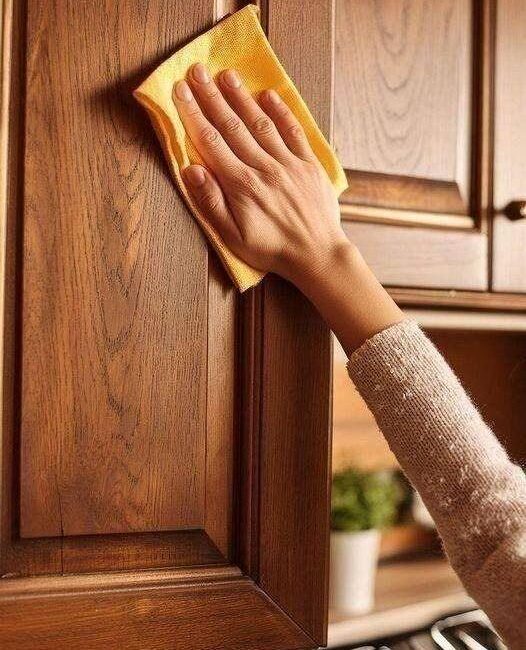
Step 2: Apply the Cleaner
Use a soft cloth or sponge.
Do not soak the surface—lightly damp is enough.
Step 3: Let It Sit (Important)
Leave the solution for 1–2 minutes.
Teaching Concept: Dwell Time
Cleaning is not just scrubbing.
The cleaner needs time to:
- Break down grease
- Loosen bonds
Step 4: Wipe Gently
Use circular motions.
Do not scrub aggressively unless necessary.
Step 5: Rinse
Use a clean damp cloth to remove residue.
Step 6: Dry Immediately
Drying prevents:
- Streaks
- Water damage
- Residue buildup
Why This Method Works Better Than Most Commercial Cleaners
Click page 2 to continue