Your vase can become a focal point depending on where you place it.
Living Room
Place it on a console table or coffee table to add vertical interest.
Bedroom
Use it on a nightstand with soft, calming décor elements.
Entryway
Create a welcoming statement with a tall version of the vase.
Office Space
Add a touch of creativity and calm to your work environment.
The Psychology of DIY: Why This Project Feels So Rewarding
There is a deeper reason why DIY projects like this feel so satisfying.
Creative Control
You are not just buying something—you are creating it. This gives you full control over the outcome.
Emotional Connection
Objects you create yourself often hold more meaning. They become part of your story.
Stress Relief
Working with your hands can be calming. It helps shift your focus away from daily stress.
Confidence Building
Completing a project like this reinforces your ability to learn and create.
Common Mistakes and How to Avoid Them
Uneven Spacing
Take your time when arranging the noodles. Symmetry is key for a clean look.
Weak Structure
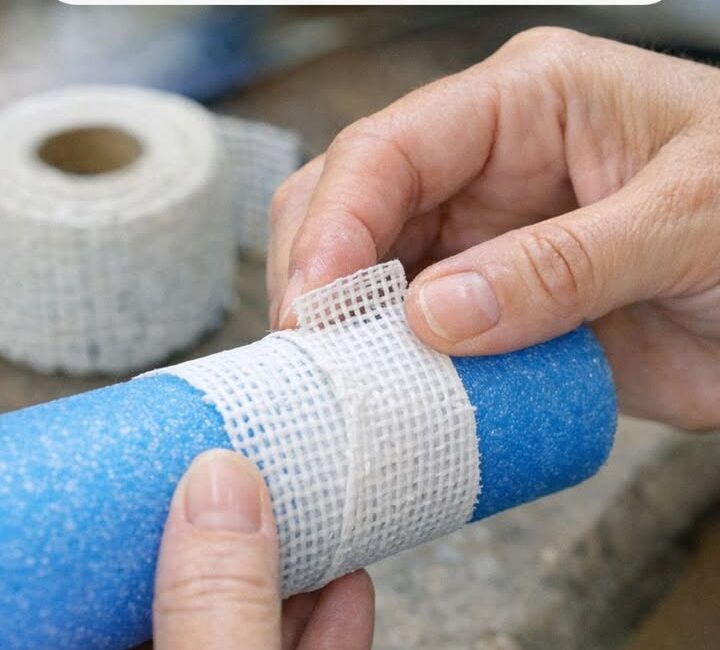
Make sure everything is securely glued before applying plaster.
Rushed Plaster Application
Applying plaster too quickly can result in uneven texture.
Skipping the Finish
Paint and sealing are what make the vase look professional. Do not skip this step.
Advanced Techniques: Taking Your Vase to the Next Level
Once you master the basics, you can explore more advanced ideas.
Layered Texture
Apply multiple layers of plaster for a thicker, more sculptural effect.
Mixed Materials
Combine plaster with wood, metal, or fabric for a unique look.
Sculptural Shapes
Experiment with curves or asymmetrical designs.
Lighting Integration
Place LED lights inside for a glowing decorative piece.
Teaching Moment: What You Learn From This Project
This project teaches more than just crafting.
Concept 1: Form vs. Function
The original function of pool noodles is irrelevant once you redefine their form.
Concept 2: Illusion in Design
You are creating the illusion of expensive material using simple techniques.
Concept 3: Layering
Design is often about layers—structure, texture, and finish.
Concept 4: Transformation Mindset
Learning to see potential in everyday objects is a powerful skill.
Cost Breakdown: Why This Project Is Budget-Friendly
Compared to buying a designer vase, this DIY version is incredibly affordable.
- Pool noodles: low cost
- Plaster tape: moderate cost
- Paint and glue: minimal additional expense
Yet the final result can easily resemble items that cost ten times more.
Sustainability Angle: Turning Waste into Value
This project also aligns with sustainable living principles.
- Reduces waste by repurposing materials
- Encourages mindful consumption
- Promotes creativity over buying new items
Conclusion: More Than Just a Vase
What starts as a simple DIY project becomes something much more meaningful. It becomes a lesson in creativity, design, and self-expression. It shows you that elegance is not about price, but about vision.
By transforming pool noodles into a fluted vase, you are not just making décor—you are redefining what is possible with the materials around you. You are training your eye to see beauty in unexpected places, and that is a skill that goes far beyond crafting.
The next time you walk through a store or look at everyday objects, you might begin to ask yourself a different question. Not “What is this used for?” but “What could this become?”
And that shift in thinking is where true creativity begins.