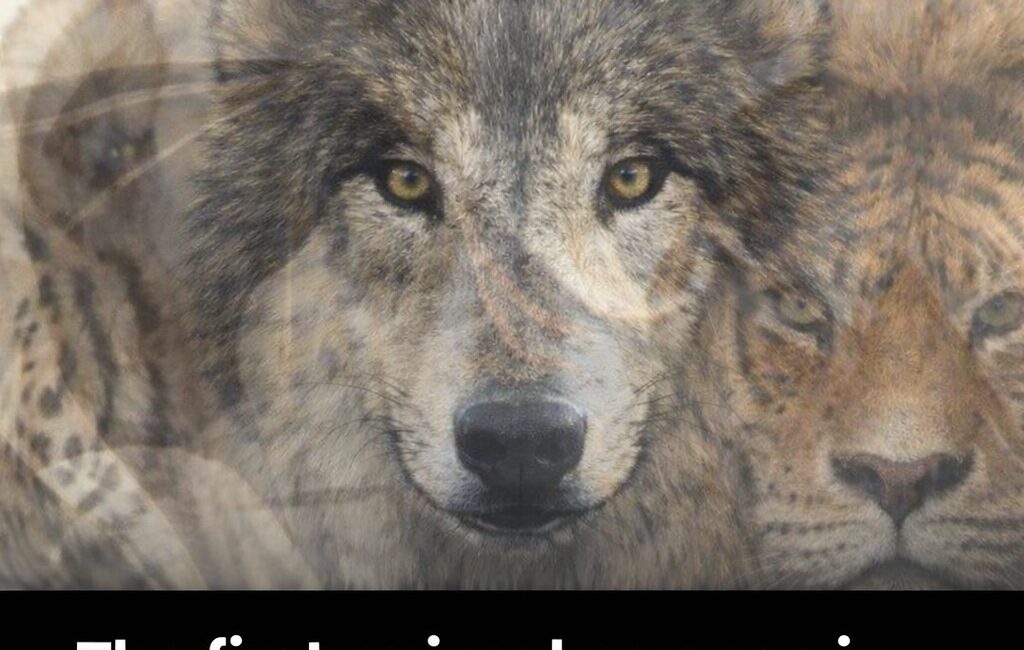
Human perception is a curious thing. Two people can look at the exact same image and see completely different things. One person might immediately notice a wolf hidden in a complex illustration, while another might instantly see an owl, a tiger, or even a playful puppy. This difference happens within seconds—sometimes within fractions of a second—yet it can feel surprisingly meaningful.
For decades, psychologists, artists, and researchers have been fascinated by these moments. Why does the brain choose one shape over another? Why do certain patterns jump out immediately while others remain hidden until someone points them out?
Visual personality tests built around optical illusions play with this mystery. They combine perception, intuition, and imagination to create a playful mirror of the mind. While these tests are not scientifically diagnostic tools, they reveal something genuinely interesting: the way our brains filter information, focus attention, and interpret the world around us.
When you glance at a complex image filled with intertwined animals, your brain makes a rapid decision about what stands out. That decision is influenced by many factors—your mood, your personality, your past experiences, and even the way your brain processes patterns.
In this article, we will explore the psychology behind these visual tests, why humans love them so much, and what it might mean if the first animal you see is a wolf, tiger, owl, puppy, or snake. More importantly, we will uncover what these reactions reveal about how the human mind works.
Because sometimes, the most revealing insights about ourselves come from the smallest and most unexpected moments.
The Curious Power of Optical Illusions
Optical illusions have fascinated humanity for centuries. Artists, philosophers, and scientists have all explored the strange phenomenon where the brain interprets an image in more than one possible way.
At its core, an optical illusion occurs when the brain’s interpretation of visual information differs from physical reality. The eyes capture shapes, colors, and patterns, but the brain organizes those signals into meaningful objects.
This process happens incredibly quickly. In fact, the human brain processes visual information in just a few hundred milliseconds.
When an image contains overlapping shapes—such as animals hidden within each other—the brain must decide which pattern to recognize first. That choice is influenced by what psychologists call selective attention.
Selective attention is the brain’s ability to focus on certain details while ignoring others. Without this ability, the world would appear chaotic and overwhelming.
Imagine walking through a busy street. Your brain filters thousands of visual signals—cars, people, signs, buildings—and focuses only on what matters in the moment.
In visual personality tests, selective attention becomes the key mechanism. The animal that captures your attention first might reflect how your brain prioritizes information.
It is important to emphasize that these interpretations are not strict psychological diagnoses. Instead, they are playful reflections that invite introspection.
Yet the reason these tests feel meaningful is that they tap into real cognitive processes—intuition, pattern recognition, and emotional associations.
And the human brain absolutely loves puzzles.
Why Humans Love Personality Tests
From ancient astrology to modern psychology quizzes, humans have always been fascinated by discovering what makes them unique.
There is a deep psychological reason behind this curiosity.
Humans possess a powerful drive for self-understanding. Knowing who we are, what motivates us, and how others perceive us helps us navigate social relationships and life decisions.
Personality tests—even playful ones—offer a moment of reflection. They encourage us to pause and think about our traits, habits, and tendencies.
Another factor is something psychologists call the Barnum effect.
The Barnum effect occurs when people recognize themselves in descriptions that are actually quite general. Statements such as “You are thoughtful but sometimes doubt yourself” apply to many people, yet individuals feel they are uniquely accurate.
Visual personality tests cleverly combine this effect with creativity. They allow people to project meaning onto symbols—like animals—that carry cultural associations.
For example:
- Wolves often symbolize independence and strength.
- Owls represent wisdom and observation.
- Tigers embody power and emotional intensity.
- Puppies symbolize warmth and loyalty.
- Snakes suggest strategy and calm calculation.
These symbolic meanings create a fascinating mirror where people can explore aspects of their identity.
Now let us examine what each animal might suggest about personality.
If You Saw the Wolf First: The Independent Spirit
Seeing the wolf first often suggests a personality guided by independence and instinct.
Wolves have long captured the human imagination. In many cultures, they represent freedom, loyalty, and strategic intelligence.
People who notice the wolf immediately may possess a strong sense of self-direction. They often trust their instincts and prefer forging their own path rather than following the crowd.
Independence does not necessarily mean isolation. Wolves, after all, are also deeply social animals that live in packs with strong bonds.
Similarly, individuals associated with the wolf archetype may balance autonomy with loyalty. They value close relationships but maintain a clear sense of personal identity.
These individuals often demonstrate resilience in challenging situations. Rather than seeking constant validation from others, they rely on inner confidence.
Psychologically, this trait relates to internal locus of control—the belief that one’s actions influence outcomes.
People with an internal locus of control tend to take responsibility for their choices and feel empowered to shape their future.
This mindset often leads to strong leadership qualities, calm decision-making, and a natural sense of authority.
At the same time, wolf-like personalities may sometimes struggle with trusting others fully. Their independence can occasionally create emotional distance.
Yet their quiet strength and authenticity often inspire admiration and respect.
If You Saw the Tiger First: The Empathetic Leader
The tiger is one of the most powerful symbols in the animal kingdom. Strong, graceful, and intensely focused, the tiger represents both emotional depth and inner strength.
If the tiger appeared first in your perception, it may suggest a personality rich in empathy and emotional awareness.
People who resonate with the tiger archetype often possess strong intuition about the feelings of others. They can sense tension in a room, notice subtle emotional cues, and respond with understanding.
Empathy is not weakness—it is a powerful social skill.
In fact, emotional intelligence plays a crucial role in leadership, relationships, and communication.
Those who identify with the tiger may naturally create environments where people feel safe expressing themselves. Their presence often brings calmness and reassurance.
Another interesting trait associated with tiger-like personalities is emotional courage.
These individuals are not afraid to face difficult emotions—both their own and those of others. This courage allows them to navigate complex social dynamics effectively.
However, high empathy also has challenges.
People who deeply absorb the emotions of others sometimes feel overwhelmed. Learning to maintain emotional boundaries becomes important for preserving personal well-being.
When balanced, empathy becomes one of the most powerful traits a person can possess.
If You Saw the Owl First: The Thoughtful Observer
Click page 2 to continue