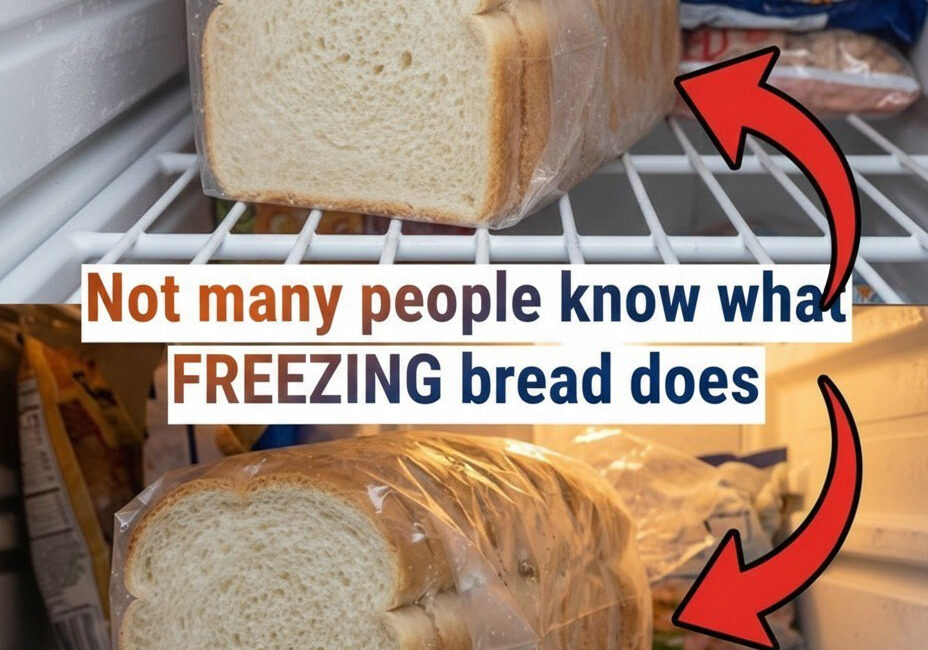
One challenge associated with freezing bread is freezer burn.
Freezer burn occurs when moisture evaporates from the surface of frozen food and forms ice crystals on the exterior. This leads to dry patches and unpleasant texture.
Bread is particularly vulnerable because of its porous structure.
To prevent freezer burn, proper packaging is essential.
The best methods include:
- Wrapping bread tightly in plastic wrap
- Placing wrapped bread inside airtight freezer bags
- Removing as much air as possible from packaging
This prevents moisture loss and protects the bread’s surface.
Freezing Whole Loaves vs. Sliced Bread
Different freezing methods work better depending on how the bread will be used later.
Freezing Whole Loaves
Freezing a whole loaf preserves moisture effectively because the interior crumb is protected by the crust.
However, thawing a whole loaf takes longer and may not be convenient if only a few slices are needed.
Freezing Sliced Bread
Freezing sliced bread allows individual slices to be removed and toasted immediately.
This method is especially practical for daily use.
Many commercial breads are frozen in sliced form before distribution, demonstrating how effective this method can be.
The Best Way to Thaw Frozen Bread
Proper thawing helps maintain bread quality.
The simplest method is room temperature thawing. Bread gradually returns to normal texture as the ice crystals melt and moisture redistributes.
Another option is to place frozen bread directly in a toaster or oven.
Heat softens the crumb and restores the crust’s crispness.
However, microwaving frozen bread can sometimes produce uneven heating, resulting in a rubbery texture.
Cultural Traditions of Bread Preservation
Freezing bread is relatively modern, made possible by widespread refrigeration technology.
Before freezers existed, people used other methods to preserve bread.
Some cultures dried bread into hard crackers or rusks. Others turned stale bread into soups, puddings, or stuffing.
These practices demonstrate the long-standing human effort to prevent food waste and extend the life of staple foods.
Today, freezing offers a simple and effective solution that preserves bread in nearly its original state.
The Environmental Impact of Freezing Bread
Food waste is a major global issue. Large amounts of bread are discarded each year because it becomes stale before it can be eaten.
Freezing bread helps reduce this waste by extending shelf life.
By storing bread properly, households can avoid throwing away unused portions and reduce the environmental impact associated with food production.
Bread may seem simple, but the resources required to produce it—including water, grain, energy, and labor—are significant.
Freezing helps ensure those resources are used efficiently.
Bread, Time, and Preservation
Bread is one of humanity’s oldest foods, yet its behavior remains scientifically fascinating.
Inside every loaf lies a dynamic structure that continues evolving long after baking.
When bread goes into the freezer, time slows down for that structure. Molecular movement pauses, chemical reactions halt, and the freshness of the loaf is preserved.
Far from damaging bread, freezing often protects it from the natural processes that cause staling.
With proper storage and thawing techniques, frozen bread can maintain much of its original flavor, texture, and nutritional value.
The freezer therefore becomes more than just a storage space—it becomes a way to preserve one of the world’s most beloved foods, capturing the moment when bread was at its best.
And sometimes, the quiet science behind everyday habits reveals just how complex even the simplest foods can be.