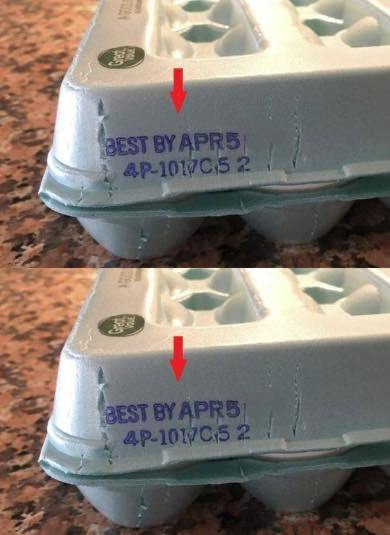
Egg freshness gradually declines over time, but eggs can remain safe to eat for several weeks when properly refrigerated.
Generally speaking, eggs remain fresh for four to five weeks after the packaging date.
However, the quality of the egg changes during this period.
Fresh eggs have firm whites and rounded yolks that hold their shape when cracked into a pan.
As eggs age, several chemical and physical changes occur.
Moisture slowly escapes through the shell.
Carbon dioxide diffuses outward.
Air enters the egg, enlarging the internal air pocket.
These changes cause the egg whites to become thinner and the yolk to flatten more easily.
Although older eggs may still be safe to eat, their texture and performance in cooking may be different.
What Happens Inside an Egg as It Ages
Eggs are remarkable biological structures designed to protect and nourish a developing chick.
Even after the egg is removed from the hen’s nest, the chemistry inside the egg continues to evolve.
One of the most noticeable changes involves the egg white, also known as the albumen.
Fresh egg whites contain tightly bound proteins that create a thick, gel-like consistency.
As the egg ages, these proteins gradually break down.
The albumen becomes thinner and spreads more easily when the egg is cracked.
At the same time, the yolk membrane weakens slightly, making the yolk more fragile.
Another important change involves the air cell.
When eggs are freshly laid, the air pocket inside the shell is very small.
As moisture escapes over time, the air cell grows larger.
This phenomenon explains a popular home freshness test known as the float test.
When placed in water, very fresh eggs sink and lie flat.
Older eggs may stand upright or float because the larger air pocket increases buoyancy.
Why Fresh Eggs Matter in Cooking
The freshness of eggs can significantly influence cooking results.
Certain dishes rely on the structure of fresh egg whites and yolks.
For example, poached eggs require firm whites that hold together in simmering water.
Fresh eggs produce neat, compact poached eggs with minimal spreading.
In contrast, older eggs with thinner whites tend to disperse in the water, creating wispy strands.
Similarly, baked goods such as soufflés and meringues benefit from stable egg proteins that trap air effectively.
Fresh eggs also tend to have richer flavor and better texture when scrambled or fried.
For everyday cooking, slightly older eggs may still work perfectly well. In fact, eggs that are a week or two old are often easier to peel when making hard-boiled eggs.
Understanding egg freshness simply allows cooks to choose the right eggs for the right purpose.
Practical Tips for Choosing the Freshest Eggs
Once you understand egg carton codes, selecting fresher eggs becomes easy.
Start by examining the Julian date printed on the carton.
Look for cartons with the highest three-digit number, which indicates the most recent packaging date.
Next, compare the Julian date with the sell-by date.
Cartons with dates closer together typically contain newer eggs.
Also check the condition of the carton and the eggs inside.
Cracked shells can allow bacteria to enter, so avoid cartons with damaged eggs.
Finally, store eggs in the refrigerator as soon as possible after purchase.
Cold temperatures slow the natural aging process and help preserve freshness.
Why Egg Labeling Systems Exist
Food labeling systems like the Julian date are part of a broader effort to ensure food safety and transparency.
Modern food systems involve large supply chains that connect farms, processing plants, distributors, and retailers.
Without standardized labeling, it would be difficult to track products if safety issues arise.
The egg industry adopted these codes so that every carton could be traced back to its source.
This traceability protects both consumers and producers.
If a problem occurs, only the affected batches need to be recalled rather than entire product lines.
The Science Behind Egg Storage
Temperature plays a major role in preserving egg freshness.
Eggs should be stored at temperatures below about 40 degrees Fahrenheit (4 degrees Celsius).
Refrigeration slows the chemical reactions that cause eggs to age.
It also reduces the growth of bacteria that could cause spoilage.
Many egg cartons include a recommendation to keep eggs refrigerated at all times.
Keeping eggs in their original carton also helps protect them from absorbing odors from other foods.
Egg shells are slightly porous, which means strong smells from items like onions or fish can migrate into the egg over time.
The Bigger Lesson: Reading Food Labels Carefully
Learning how to read egg carton codes reveals a broader truth about grocery shopping.
Many food packages contain information that most people overlook.
Labels may include manufacturing dates, lot numbers, ingredient origins, or storage instructions that can help consumers make better choices.
By paying attention to these details, shoppers gain greater control over the quality and freshness of the food they bring home.
Food labels are not just regulatory requirements.
They are tools that allow consumers to understand their food supply.
Final Thoughts: A Simple Code That Changes How You Shop
Eggs may appear to be one of the simplest foods in the supermarket, but the small codes printed on their cartons tell a much deeper story.
The Julian date quietly reveals when the eggs were packaged.
The plant code identifies where they were processed.
Together, these numbers provide a transparent record of the egg’s journey from farm to store.
Most shoppers never notice these details.
But once you understand them, you can choose eggs with greater confidence and ensure that your kitchen always starts with the freshest ingredients.
The next time you reach for a carton of eggs, take a moment to look beyond the expiration date.
That small three-digit number may be the most useful piece of information on the entire package.