Sweet alyssum may appear delicate, but its ecological influence is impressive.
This low-growing plant produces clusters of small white or purple flowers that emit a sweet fragrance. These blooms attract hoverflies, insects that resemble small bees but belong to the fly family.
Hoverfly larvae are voracious predators of aphids. A single larva can consume dozens of aphids per day.
By planting sweet alyssum beneath tomatoes, gardeners effectively invite a natural pest control team into their garden.
The plant also spreads across the soil surface, filling empty space while maintaining airflow around tomato stems.
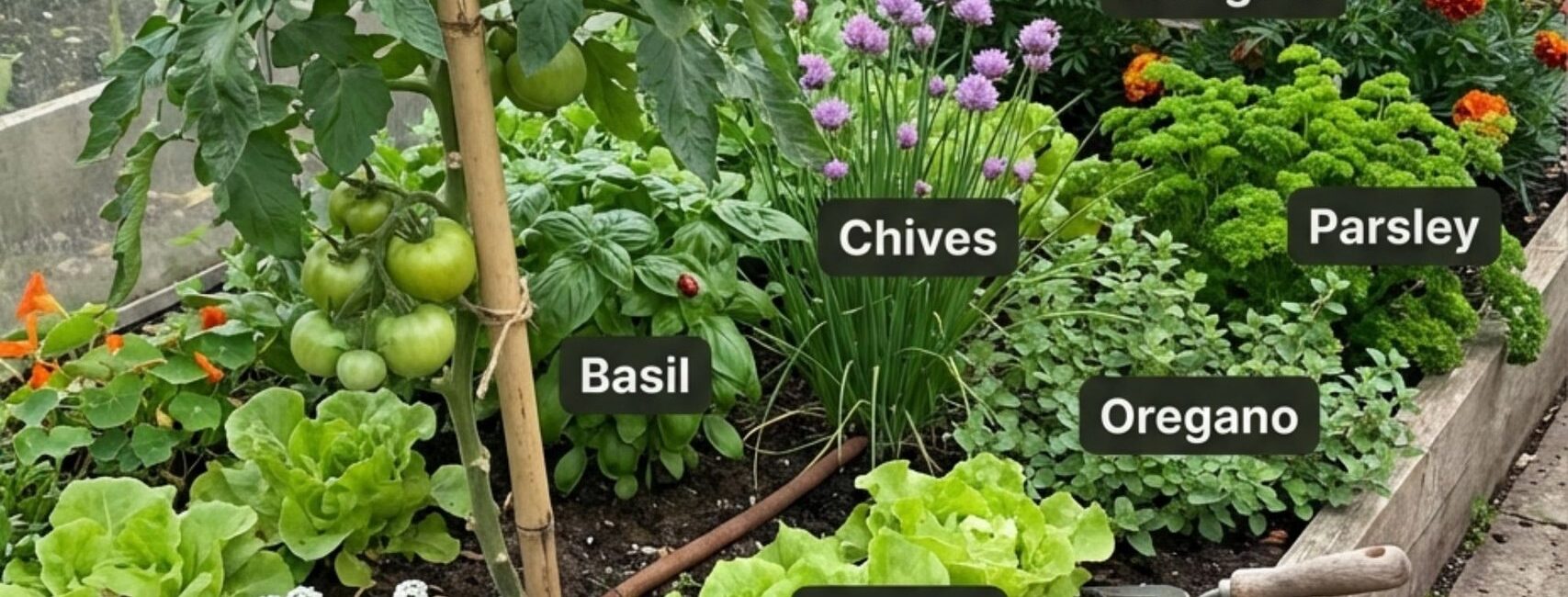
Parsley: A Host Plant for Beneficial Insects
Parsley is widely known as a culinary herb, yet it also plays a valuable ecological role.
The plant serves as a host for the larvae of swallowtail butterflies. While some gardeners worry about caterpillars feeding on their plants, these butterflies are important pollinators and part of a balanced ecosystem.
Parsley flowers also attract beneficial insects such as predatory flies.
When planted near tomatoes, parsley contributes biodiversity that supports pest control naturally.
Chives: Sulfur Compounds that Discourage Pests
Chives belong to the allium family, which includes onions and garlic. These plants contain sulfur compounds that produce their distinctive aroma.
Many insects dislike these compounds.
Planting chives near tomato stems can deter aphids and certain fungal diseases. Some gardeners believe that chives also help reduce the spread of blight when planted nearby.
Chives are compact plants that do not require much space. Their purple flowers attract pollinators while their slender leaves provide culinary uses in the kitchen.
Nasturtium: The Strategic Trap Crop
Nasturtium is an unusual companion plant because it intentionally attracts pests.
Aphids and blackflies are strongly drawn to nasturtium foliage. By planting nasturtiums near tomatoes, gardeners create a trap crop.
The pests gather on nasturtium leaves instead of attacking tomato plants.
Once concentrated on the trap crop, pests can be removed easily or left for beneficial predators to consume.
Nasturtiums also produce vibrant edible flowers and leaves, adding beauty and culinary value to the garden.
Oregano: Aromatic Groundcover with Pest-Confusing Scents
Oregano spreads outward as a dense mat of aromatic foliage.
As tomato plants grow taller and their canopy expands, oregano tolerates the increasing shade beneath them.
The strong scent released by oregano leaves can interfere with pest navigation. Many insects rely on chemical signals to locate host plants.
When surrounded by aromatic herbs, those signals become harder to detect.
Oregano’s spreading habit also provides ground coverage that reduces weed growth.
Lettuce: Fast Harvest and Soil Protection
Lettuce offers a practical advantage in tomato beds: speed.
Tomatoes take time to grow large enough to shade the ground. During this early period, lettuce can occupy the space beneath them.
Lettuce grows quickly and can be harvested before tomato plants require the full area.
While it grows, lettuce leaves shade the soil, reducing splash from rainfall that could spread soil-borne diseases onto tomato leaves.
This technique is sometimes called intercropping, where fast-growing plants occupy space temporarily before being harvested.
Building a Layered Tomato Ecosystem
When these companion plants are combined thoughtfully, they create a layered planting system.
The tomatoes form the upper canopy, capturing sunlight and producing fruit.
Below them, herbs and flowers occupy mid-level space.
At ground level, clover and other low-growing plants cover the soil surface.
Each layer performs a function that supports the others.
This arrangement resembles natural ecosystems, where plant diversity stabilizes environmental conditions.
Pest Control Through Biodiversity
A monoculture—growing a single plant species in isolation—creates ideal conditions for pests.
When insects find their preferred host plant, they encounter little resistance and can reproduce rapidly.
Companion planting disrupts this pattern by introducing diversity.
Predatory insects find nectar sources. Aromatic herbs confuse pests. Trap crops redirect infestations away from valuable plants.
The result is not total elimination of pests, which rarely occurs in nature, but a balanced system where pests remain at manageable levels.
Soil Health and Microbial Activity
Healthy soil contains billions of microorganisms that support plant growth.
These microbes break down organic matter, release nutrients, and form symbiotic relationships with plant roots.
Bare soil often becomes compacted and loses microbial diversity.
When companion plants cover the soil, their roots feed soil organisms through root exudates, which are sugars and organic compounds released into the soil.
This constant exchange strengthens the underground ecosystem.
Water Conservation Through Living Mulch
Living mulch refers to low-growing plants that perform the same function as traditional mulch materials such as straw or wood chips.
Unlike dead mulch, living mulch continues to grow and interact with the soil environment.
Clover, oregano, and lettuce act as living mulch beneath tomatoes.
They reduce evaporation, regulate soil temperature, and protect soil structure during heavy rain.
In regions with limited water resources, this can significantly reduce irrigation needs.
Designing an Efficient Tomato Bed
Creating a productive tomato bed requires thoughtful placement of companion plants.
Tall plants such as tomatoes should be spaced according to their mature size.
Low-growing companions can then be planted around their bases.
A balanced bed might include basil and chives near tomato stems, clover as groundcover, alyssum along edges, and occasional marigolds or nasturtiums for pest control.
This mixture creates visual diversity while supporting ecological functions.
A Garden That Works Even When You Are Not Watching
One of the greatest benefits of companion planting is resilience.
When a garden relies heavily on human intervention—constant watering, spraying, and weeding—it requires ongoing effort to maintain.
A layered, living tomato bed reduces that workload.
Beneficial insects patrol for pests. Groundcover suppresses weeds. Nitrogen-fixing plants enrich soil naturally.
The system begins to maintain itself.
Gardeners still play an important role in observation and care, but the ecosystem carries much of the workload.
The Philosophy Behind the Living Floor
The idea that bare soil is wasted space reflects a broader shift in modern gardening philosophy.
Rather than forcing plants into rigid arrangements, gardeners increasingly seek to work with natural systems.
By observing how plants interact in nature, they can design gardens that mimic those relationships.
Tomatoes growing above a diverse community of companion plants illustrate this principle beautifully.
Instead of isolated rows requiring constant maintenance, the garden becomes a dynamic ecosystem filled with life.
And beneath every thriving tomato canopy lies a living floor—quietly fixing nitrogen, attracting helpful insects, protecting soil, and ensuring that the garden continues to flourish even when the gardener steps away.