Many lawns fail in shaded areas beneath trees or along buildings.
Sweet woodruff thrives precisely in those conditions.
This delicate plant forms whorls of bright green leaves that resemble tiny starbursts. In spring, clusters of small white flowers appear above the foliage, releasing a subtle fragrance reminiscent of freshly cut hay.
Sweet woodruff spreads gently, creating elegant groundcover beneath trees or along woodland garden paths.
Its graceful appearance and shade tolerance make it a valuable alternative to patchy grass lawns in darker corners of the garden.
5. Ajuga (Bugleweed): Bold Color and Spring Flowers
Ajuga is a striking ground cover known for its glossy leaves and dramatic spring flower spikes.
Depending on the variety, the foliage may appear deep green, bronze, purple, or even variegated.
In spring, vertical spikes of blue or violet flowers rise above the foliage, creating a vivid display that attracts bees and other pollinators.
Ajuga spreads by runners and forms dense carpets that suppress weeds effectively.
Because it tolerates both sun and partial shade, it adapts well to a wide range of garden conditions.
6. Sedum (Stonecrop): Drought-Resistant Succulent Ground Cover
Sedum species are among the most drought-tolerant ground covers available.
These succulent plants store water in their fleshy leaves, allowing them to thrive in dry, sunny locations where grass would struggle.
Low-growing sedums create colorful carpets of foliage in shades ranging from green and blue to burgundy and silver.
In summer and early autumn, clusters of star-shaped flowers appear, providing nectar for pollinators.
Because sedum requires very little watering or maintenance, it is ideal for rock gardens, slopes, and xeriscaped landscapes.
7. Mazus: A Flowering Carpet for Moist Soils
Mazus is a lesser-known but highly effective ground cover.
It forms dense mats of green foliage that spread rapidly across soil surfaces. During late spring and early summer, mazus produces small purple or blue flowers that resemble miniature orchids.
The plant thrives in moist soil and tolerates light foot traffic, making it suitable for garden pathways or stepping-stone areas.
Mazus creates a lush, flowering lawn alternative that remains visually appealing throughout the growing season.
8. Corsican Mint: A Fragrant Miniature Landscape
Corsican mint is one of the smallest ground covers available, yet its impact can be extraordinary.
The plant forms extremely low mats of tiny leaves that release a refreshing mint scent when disturbed.
Although delicate in appearance, Corsican mint spreads gradually and produces tiny purple flowers in summer.
It thrives in partial shade and moist soil, making it perfect for planting between stepping stones or along shaded pathways.
The fragrance adds a sensory dimension to the garden experience.
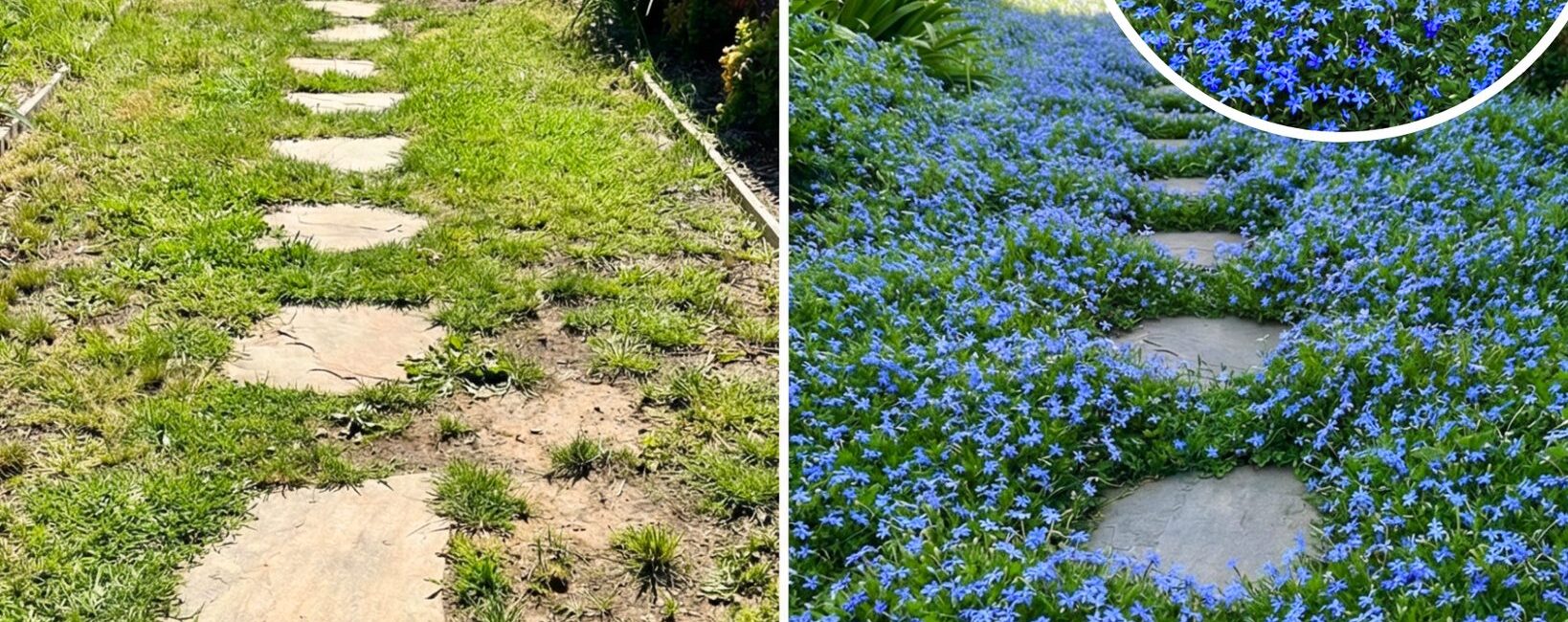
9. Blue Star Creeper: A Soft Flowering Carpet
Blue star creeper is prized for its delicate flowers and soft texture.
This ground cover forms a dense mat of tiny leaves and produces star-shaped blue or lavender flowers throughout the growing season.
The plant tolerates light foot traffic and adapts well to sunny or partially shaded areas.
Because of its compact growth habit, blue star creeper is frequently used between pavers, along garden edges, or as a lawn substitute in small spaces.
10. Dichondra: Silvery Elegance in the Landscape
Dichondra is a unique ground cover known for its round, coin-shaped leaves.
Some varieties display soft green foliage, while others produce shimmering silver leaves that reflect sunlight beautifully.
Dichondra spreads across soil surfaces in gentle waves, creating a soft, flowing landscape effect.
Although it produces small flowers, its primary appeal lies in the elegant foliage that adds texture and contrast to garden spaces.
Designing a Ground Cover Landscape
Transitioning from traditional lawn to ground covers requires thoughtful planning.
Instead of one uniform surface, gardeners can combine multiple species to create visually rich landscapes.
For example:
- Creeping thyme in sunny areas
- Sweet woodruff beneath trees
- Sedum on dry slopes
- Mazus along pathways
This mosaic approach creates a garden that evolves throughout the year.
Supporting Pollinators and Biodiversity
One of the greatest benefits of flowering ground covers is their support for pollinators.
Traditional lawns rarely produce flowers and therefore provide little nectar or pollen for insects.
Ground covers, by contrast, create miniature ecosystems where bees, butterflies, and beneficial insects thrive.
This biodiversity strengthens the entire garden environment.
Water Conservation and Climate Resilience
Water scarcity is becoming an increasingly important issue in many regions.
Traditional lawns often require regular irrigation to remain green, particularly during hot summers.
Many ground covers, especially drought-tolerant species like sedum and creeping thyme, require significantly less water once established.
This makes them an environmentally responsible landscaping choice.
A Garden That Works with Nature
The concept of replacing lawns with spreading ground covers reflects a broader shift in gardening philosophy.
Rather than forcing landscapes into uniform patterns, gardeners are embracing diversity, resilience, and ecological harmony.
Ground covers protect soil, support wildlife, and reduce maintenance while still creating beautiful outdoor spaces.
They remind us that gardens do not need to be rigid carpets of grass to feel welcoming and vibrant.
The Future of the Lawn
As environmental awareness continues to grow, the traditional lawn is gradually evolving.
Many homeowners now view their outdoor spaces as living ecosystems rather than decorative surfaces.
Spreading ground covers represent a step toward that future.
They offer lush greenery, seasonal flowers, and year-round interest without the endless cycle of mowing and watering.
Most importantly, they transform gardens into vibrant habitats that support life—from soil microbes beneath the surface to pollinators dancing among the blossoms.
In this way, replacing even a portion of a lawn with ground covers becomes more than a landscaping decision.
It becomes a small but meaningful contribution to healthier, more sustainable environments—one living carpet at a time.