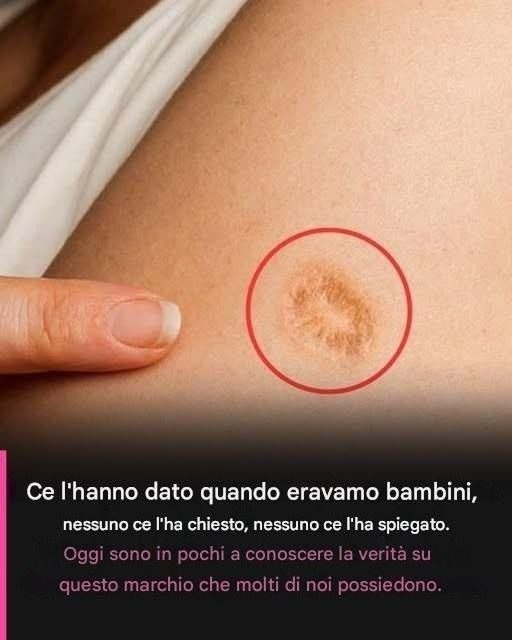
After eradication was declared in 1980, routine smallpox vaccination ceased worldwide.
The reason was simple: if the virus no longer existed in nature, widespread vaccination was no longer necessary.
Vaccines, while overwhelmingly beneficial, are not risk-free. The smallpox vaccine used a live virus (vaccinia), which could cause complications in rare cases, particularly in immunocompromised individuals.
Once the disease was gone, the risk of vaccination outweighed the risk of infection.
Today, smallpox vaccines are stored in secure laboratories and administered only under specific circumstances — such as for certain laboratory personnel or military units.
For the majority of people born after the early 1980s, that circular scar is absent.
And that absence itself tells a story.
Does the Old Smallpox Vaccine Still Offer Protection Today?
In recent years, interest in the smallpox vaccine has resurfaced due to outbreaks of related viruses, such as monkeypox (now often referred to as mpox).
The virus that causes smallpox belongs to the orthopoxvirus family. Monkeypox is part of that same family.
Studies suggest that people vaccinated against smallpox decades ago may retain partial cross-immunity against related viruses. The immune system’s memory can persist for many years — sometimes even a lifetime.
This does not mean full protection is guaranteed. Immunity can decline over time. But evidence indicates that vaccinated individuals may experience milder disease if exposed to related viruses.
This possibility highlights something powerful about vaccines: their impact can extend far beyond the moment of injection.
The scar is old. The immunity may still echo.
The Social Meaning of the Scar
Beyond biology, the smallpox scar carries social meaning.
For an entire generation, it symbolized participation in a collective effort.
Parents brought children to vaccination clinics not knowing that their small act was contributing to a global milestone. Healthcare workers in remote villages may not have realized they were helping eliminate a disease that had haunted humanity since ancient times.
But they were.
The scar represents:
- Trust in science
- International cooperation
- Public health infrastructure
- Shared responsibility
It is rare in human history for all countries to unite around a common health goal and succeed.
The smallpox eradication campaign stands as proof that coordinated action can overcome seemingly unstoppable threats.
The Emotional Impact of Visible Vaccination Marks
There is something uniquely powerful about a visible medical mark.
Most modern vaccinations leave no permanent trace. Once the needle withdraws, the skin heals invisibly.
The smallpox scar is different.
It is a permanent, visible reminder of a medical intervention.
For some, it evokes pride — a badge of survival and participation.
For others, it is simply a curiosity — a faint circle noticed in passing.
Yet it connects individuals across continents. A grandmother in Morocco, a grandfather in India, a retired teacher in Brazil, a former soldier in Europe — all may share the same circular imprint.
It is a global signature.
What Younger Generations Should Understand
If you do not have the scar, that absence is not trivial.
It means you were born into a world where smallpox no longer circulates naturally.
You were born into the result of decades of scientific effort.
That is a privilege often taken for granted.
Modern vaccination debates sometimes overlook history. When diseases fade from memory, their threat feels abstract. But the scar on an older relative’s arm is a reminder that these diseases were once real, visible, and terrifying.
Eradication was not automatic. It was earned.
Lessons for the Future
The story of the smallpox scar offers several enduring lessons.
First, global cooperation works. Disease does not respect borders. Eradication required collaboration across political systems, cultures, and languages.
Second, science evolves. The bifurcated needle was a technological innovation that improved efficiency and consistency in vaccination campaigns.
Third, public trust matters. Vaccination campaigns succeed only when communities participate.
Finally, persistence is powerful. Smallpox was not defeated in one year. It required surveillance, adaptation, and relentless follow-up.
The scar is a reminder that progress is possible — but not effortless.
A Mark That Changed the World
If you see a circular, sunken scar on the upper left arm of someone older, you are not just looking at skin.
You are looking at history.
You are looking at evidence of one of humanity’s greatest medical triumphs.
You are looking at a time when a tiny bifurcated needle — making 15 rapid punctures in a small patch of skin — helped dismantle a virus that had shaped empires and erased populations.
That mark reveals participation in a turning point.
It represents the moment when humanity proved it could eliminate a disease entirely from nature.
There are few symbols as profound as that.
So the next time you notice that small circle, do not mistake it for a birthmark.
It is a testament.
A quiet, circular monument.
And proof that sometimes the smallest scars tell the largest stories.