Avocado plants contain a compound called persin.
Persin is generally harmless to humans in small amounts but can be toxic to certain animals, including birds and some livestock, in larger quantities.
Most of the persin is found in leaves and skin, but seeds may contain trace amounts.
Animal studies suggest that very high doses of avocado seed compounds could cause harm.
This reinforces a simple rule:
Avocado pit consumption should always be minimal and occasional.
Not habitual. Not excessive.
Pregnant or breastfeeding individuals should avoid experimentation due to limited safety data.
Anyone with avocado allergies should also avoid the pit.
And individuals taking medications — particularly blood thinners — should consult a healthcare professional before consuming concentrated plant polyphenols.
How to Prepare Avocado Pits Safely (If You Choose To)
If someone decides to experiment, preparation is critical.
Step 1: Clean Thoroughly
Remove all remaining avocado flesh. Residual fruit can spoil.
Step 2: Dry Completely
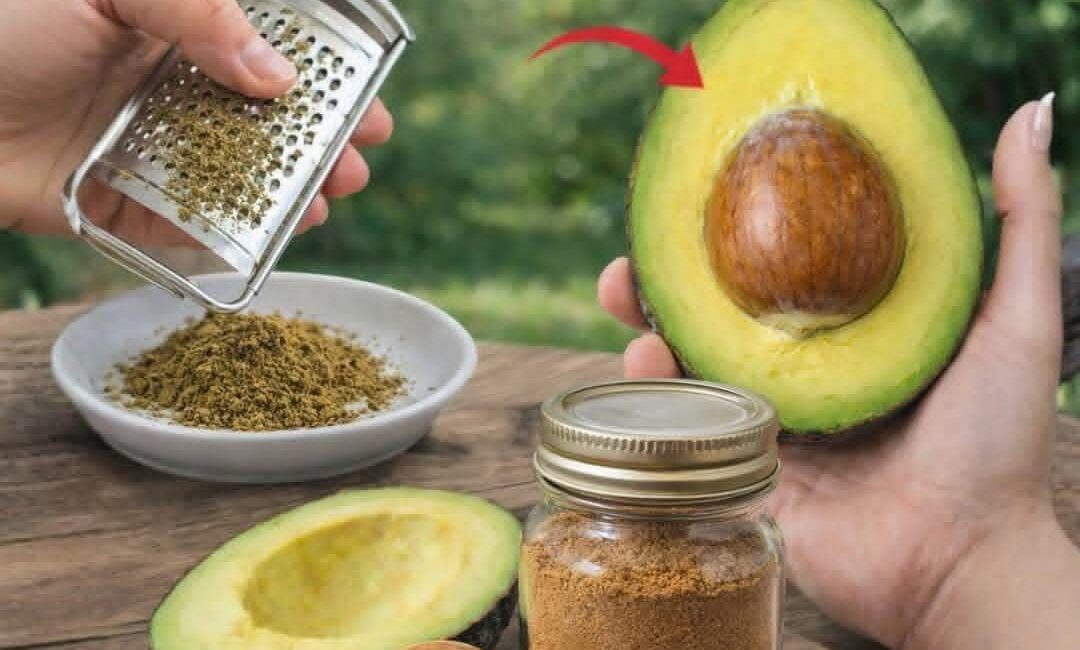
Air-dry for several days or bake at low heat (about 120°C / 250°F) for 1–2 hours until fully dry and hardened.
Step 3: Grind Finely
Use a strong blender or spice grinder. The result must be a fine powder. Chunks are difficult to digest and unpleasant.
Step 4: Store Properly
Keep in an airtight container, away from moisture and heat. Use within a few weeks.
Step 5: Use Sparingly
Start with a pinch. Evaluate tolerance. Do not treat it as a daily supplement.
If nausea, rash, or digestive upset occurs, discontinue immediately.
The phrase “natural” does not mean “risk-free.”
Non-Food Uses: Where Avocado Pits Truly Shine
Here is where things become genuinely exciting.
The greatest value of avocado pits may not be nutritional — but practical and sustainable.
Natural Fabric Dye
When boiled in water, avocado pits release a soft pink to dusty rose pigment.
This natural dye works beautifully on:
- Cotton
- Linen
- Wool
The color develops without synthetic chemicals and can vary depending on water pH and fabric type.
For sustainability enthusiasts, this transforms kitchen waste into art.
DIY Exfoliating Scrub
Finely ground pit powder mixed with oil can create a natural exfoliant.
Use sparingly and gently — the texture can be abrasive.
Craft and Paper Projects
The natural pigment can tint handmade paper or be used in eco-friendly craft experiments.
Growing a Tree
Perhaps the most satisfying reuse: sprouting a new avocado plant.
Suspend the pit over water using toothpicks. Roots form first. Then a sprout emerges.
It may not produce fruit easily indoors, but watching a tree grow from kitchen waste is deeply rewarding.
This transforms disposal into regeneration.
Sustainability: The Overlooked Benefit
Globally, food waste is a significant environmental issue.
Avocados are resource-intensive crops. Water, land, and transport all contribute to their footprint.
When we discard parts of food without thought, we perpetuate a culture of disposability.
Reusing avocado pits — whether for dye, compost, or plant growth — fosters mindfulness.
It shifts perspective.
The pit becomes not waste, but material.
That mindset shift is powerful.
Sometimes the healthiest habit is not about adding more supplements.
It is about wasting less.
Composting: The Simplest Reuse
If culinary experimentation feels uncertain, composting is a safe and eco-friendly alternative.
Avocado pits break down slowly but contribute organic matter to soil.
Crushing or chopping the pit speeds decomposition.
In compost, the seed returns nutrients to earth rather than landfill.
It completes a cycle.
What Science Still Needs to Discover
Institutions including the National Institutes of Health note that research into avocado seeds is ongoing.
Scientists are exploring:
- Functional food applications
- Cosmetic ingredient potential
- Biodegradable material development
- Industrial antioxidant extraction
But until human trials expand, avocado pits should remain experimental, not foundational, in the diet.
Curiosity is welcome.
Exaggeration is not.
Frequently Asked Questions
Can you eat avocado pits raw?
No. They are extremely hard and difficult to digest. Proper drying and grinding are required before any consumption.
How much is safe?
There is no official dosage. Most cautious recommendations suggest no more than ¼ teaspoon occasionally, not daily.
Do they taste good?
They are bitter and earthy. Most people mix very small amounts into smoothies or tea to mask flavor.
Are they necessary for health?
No. There are many well-established sources of fiber and antioxidants.
The Real Takeaway
The avocado pit is not a miracle superfood.
It is not a hidden cure.
It is not a mandatory addition to your diet.
It is a seed — biologically designed for growth.
Its nutritional compounds are intriguing but not fully studied in humans.
Its greatest value may lie in creativity and sustainability.
When you stop seeing the pit as trash, you begin seeing possibilities:
- A plant
- A dye
- Compost
- A small experiment in mindful living
Wellness is often marketed as addition — more supplements, more powders, more exotic ingredients.
But sometimes wellness begins with subtraction — less waste, less automatic disposal, less assumption.
The next time you slice an avocado, pause before tossing the pit.
Not because it will transform your health overnight.
But because reconsidering what we throw away transforms how we think.
And thinking differently is often the most sustainable habit of all.