Understanding What Retirees Can Expect, What’s Confirmed, What’s Uncertain, and What It Means for Purchasing Power
Each year, retirees across France watch closely for news about pension increases. For many, pensions are not just income — they are security, dignity, stability, and the means to live independently. When announcements are made, retirees parse every sentence for hints about inflation adjustments, political maneuvering, and the future of their financial well-being.
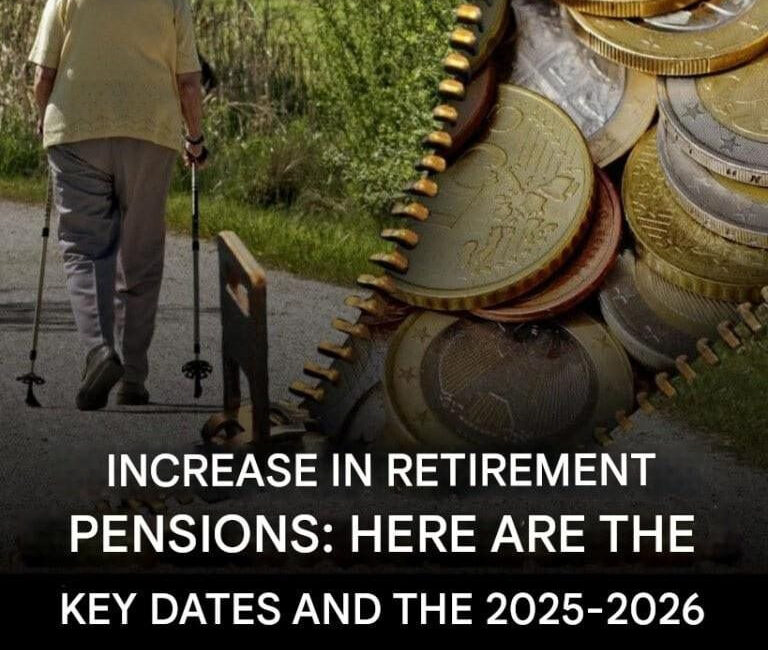
The year 2025 has already brought confirmed increases for both basic and supplementary pensions, but the situation for 2026 remains unresolved. Doubts swirl over whether pensions will continue to be indexed to inflation, be partially frozen, or even see no increase at all — a scenario sometimes referred to as a “blank year,” a term once mentioned by former Prime Minister François Bayrou before his government fell.
The head of government since September 2025, Sébastien Lecornu, is navigating a strained public budget and a politically sensitive pension system. He has backtracked on some unpopular proposals but has been careful to remain discreet about the future of pension increases. Understandably, this has left many retirees anxious, asking the same pressing question:
Will pensions rise in 2026? Or could they remain flat?
To understand what’s at stake and how pension adjustments work, it’s important to look not only at the confirmed changes but also at the political, economic, and social factors shaping the timetable for 2026.
1. What Happened in 2025: Confirmed Pension Increases
A. Agirc-Arrco Supplementary Pensions — November 2025
Retirees in the private sector receive two pension components:
- A basic pension, based on contributions to France’s public retirement system.
- A supplementary pension, particularly for private-sector workers, managed by Agirc‑Arrco, which adds income beyond the basic pension.
Starting November 1, 2025, nearly 14 million private-sector retirees will see their Agirc-Arrco supplementary pensions rise.
This increase is calculated based on the French inflation rate excluding tobacco, as published by INSEE — but with a 0.4 percentage point reduction applied. This discount aims to help preserve the financial stability of the pension fund.
Inflation in 2025 is projected to be approximately 1%. After applying the discount, the actual increase is expected to fall between 0.6% and 0.8%.
For retirees, this means:
- A supplementary pension of €1,300 per month could increase by €8 to €10 per month, or €95 to €125 per year.
- The first payments reflecting this increase will be made on November 3, 2025.
This supplementary increase comes in addition to the earlier adjustment applied to basic pensions in January 2025, which amounted to +2.2%.
B. Basic Pension Increase — January 2025
The basic pension portion was already adjusted at the very beginning of 2025, with a +2.2% increase tied to inflation at that time.
Together, these adjustments mean that 2025 will bring a modest but confirmed improvement in pension incomes for most retirees.
However, confirmed increases in 2025 do not guarantee the same trend in 2026 — and this uncertainty is the focus of heated debate.
2. Why 2026 Is Still Uncertain
Unlike the confirmed timetable for 2025 adjustments, the pension outlook for 2026 remains unresolved and subject to political negotiation.
A. The ‘Blank Year’ Concept
Under the previous government, led by François Bayrou before it fell, the idea of a “blank year” in 2026 was floated. This would mean no increase in basic pensions, which would theoretically save several billion euros in government spending.
While this proposal was never finalized into law, it has not been fully abandoned either. Some political leaders and budget analysts still consider it a possible cost-saving measure.
B. Continuing the Current Indexing Rule
The standard rule for pension increases has been indexing to inflation. If this rule continues into 2026 without modification, pensions would rise in line with the inflation rate.
Based on current forecasts, that could mean an increase around 1.2% in January 2026, with the adjustment effective in the February 2026 payment cycle.
However, this figure — like the policy itself — is not yet confirmed. Final decisions will be made when the French budget and Social Security financing law are debated and voted on in autumn 2026.
3. How These Increases Translate for Retirees: A Practical Example
To understand the real financial impact, let’s look at a concrete example.
Imagine a retiree with:
- A basic pension of €1,000
- A supplementary pension of €600
- A total of €1,600 per month
In 2025:
- January 2025: Basic pension increases by 2.2%, or €22 per month (~€264 per year).
- November 2025: Supplementary pension increases by 0.6%–0.8%, or €3.60–€4.80 per month (~€43–€58 per year).
Total estimated increase in income for 2025: ~€310–€320 over the course of the year.
Potential 2026 Adjustments:
If pensions are indexed to inflation, a 1.2% increase might apply:
- January 2026: Basic pension rises by 1.2%, or ~€12 per month (~€144 per year).
But if a blank year is implemented, this increase could disappear entirely.
In practical terms, that could mean:
- A modest rise if indexing continues
- No increase at all if pensions are frozen
This uncertainty makes pension planning difficult for retirees, especially given rising living costs.
4. Key Points of Debate for 2026
Several factors are contributing to the ongoing discussion about pension increases in 2026:
A. The Risk of a Blank Year
Some political leaders still view a freeze in pension increases as a way to reduce government spending. If basic pensions are not updated in 2026, retirees’ incomes would effectively stagnate, even as the cost of living continues to rise.
B. Possible Under-Indexing
Even if pensions are increased, the increases could be below inflation — a scenario called under-indexing. When this happens, pensions may technically rise, but still lose purchasing power because living costs grow faster than the pensions themselves.
C. Taxation Changes
The current 10% tax allowance on pensions could be revised. If that happens, retirees may face higher tax burdens, especially those with incomes above specific thresholds. Even with a nominal pension increase, real income after tax could stagnate or decline.
D. Real-Life Inflation vs. Official Statistics
Retirees often feel price increases more sharply than official inflation indices suggest. Essentials like energy, healthcare, and food may rise faster than the official figures used to calculate pension increases.
This difference between lived experience and official statistics can mean that even a technically inflation-linked increase might not feel sufficient in day-to-day life.
5. Political Context: Fiscal Restraint vs. Social Guarantees
The French government has been navigating a difficult budgetary landscape, balancing:
- Rising social spending
- Economic uncertainty
- Increases in public debt
- Political pressures from various interest groups
On one hand, fiscal restraint advocates argue that limiting pension increases could help stabilize the public budget. On the other hand, many political parties, unions, and civil society groups push for maintaining or expanding pension protections for retirees.
In 2025, the government opted to maintain increases, but with moderated supplementary pension growth. Whether this reflects a long-term compromise or a temporary pause remains to be seen.
The key decision point will be in autumn 2026 when the government adopts the Social Security financing law, which sets the operational parameters for pension indexing.
6. The Broader Economic Impact
Changes in pension policy do not just affect individual retirees. They have broader implications for:
A. Consumer Spending
Retirees represent a large segment of consumption — groceries, utilities, medical care, transportation, cultural activities. Stagnant or insufficient pension increases can dampen consumer spending overall.
B. Savings Behavior
Click page 2 to continue