- Families clean graves before religious holidays.
- Flowers are placed on anniversaries.
- Candles are lit in remembrance.
- Names are spoken aloud.
These acts reaffirm continuity.
Whether one believes the dead perceive it or not, the ritual sustains identity across generations.
What If the Dead Do Not Feel?
Let us consider the possibility that death is the end of subjective experience.
Does that make visiting meaningless?
Not at all.
It means the visit serves the living.
It provides:
- Closure.
- Emotional regulation.
- Reflection.
- Gratitude.
- Moral continuity.
The impact is psychological, relational, and symbolic.
Meaning does not require reciprocal awareness.
What If the Dead Do Feel?
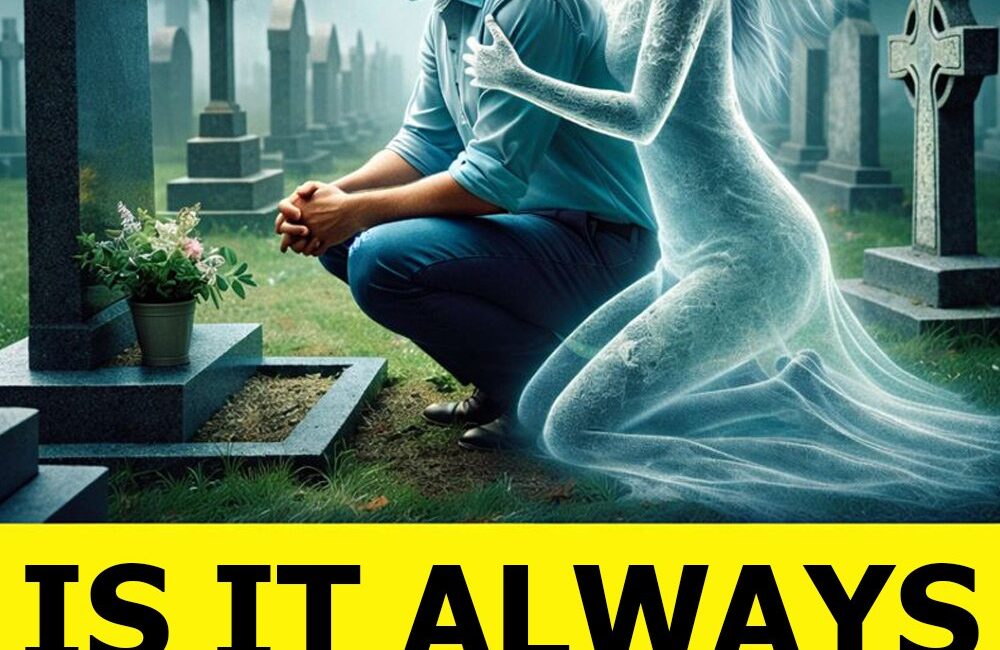
If one adopts a spiritual framework in which consciousness continues, then visiting a grave may be seen as an act of communication.
In such frameworks, the emotional tone matters more than physical presence.
Prayers, remembrance, and good deeds performed in someone’s name become acts of relational continuity.
Whether or not measurable evidence supports this, for many believers it provides comfort and ethical motivation.
The Deeper Truth: What Changes Is the Relationship
When someone dies, the relationship does not vanish instantly. It transforms.
The external interaction stops.
The internal relationship continues.
Visiting a grave externalizes that internal bond.
It creates a space where grief, gratitude, and love coexist.
Why This Question Matters
This question matters because it touches on:
- Mortality.
- Identity.
- Attachment.
- Consciousness.
- Love.
It is less about whether the dead feel.
It is about whether connection ends.
From a scientific standpoint, individual subjective awareness ends with brain death.
From many religious perspectives, the soul continues.
From a psychological standpoint, bonds persist in memory and behavior.
From a philosophical standpoint, consciousness remains an open mystery.
A Gentle Reflection
When you stand at a grave and speak softly, what happens?
The wind moves. The world continues. The stone remains silent.
But something shifts inside you.
Memory becomes active.
Emotion surfaces.
Perspective changes.
You remember that life is temporary.
You remember that love once lived vividly.
You remember your own mortality.
Whether the dead feel your presence or not, the encounter shapes you.
And perhaps that is the deeper purpose.
Conclusion: What We Can Say Honestly
Based on current scientific understanding, the dead do not have subjective experiences after brain death. They do not feel visits in a biological sense.
Religious traditions offer diverse interpretations, some suggesting awareness continues.
Psychologically, visiting graves activates memory networks and emotional bonds, creating a powerful sense of connection.
The feeling you experience during a grave visit is real.
The peace, sadness, or warmth is real.
The meaning is real.
Whether that meaning is shared across the boundary of death depends on the framework you choose to believe.
But here is something grounded and certain:
The act of remembrance transforms the living.
And in that transformation, the legacy of the dead continues.
Perhaps the most honest answer is this:
We do not know with empirical certainty what happens to subjective awareness after death.
But we know what happens to love.
It changes form.
It moves inward.
And sometimes, it leads us quietly back to a simple stone in the ground, where memory and silence meet.