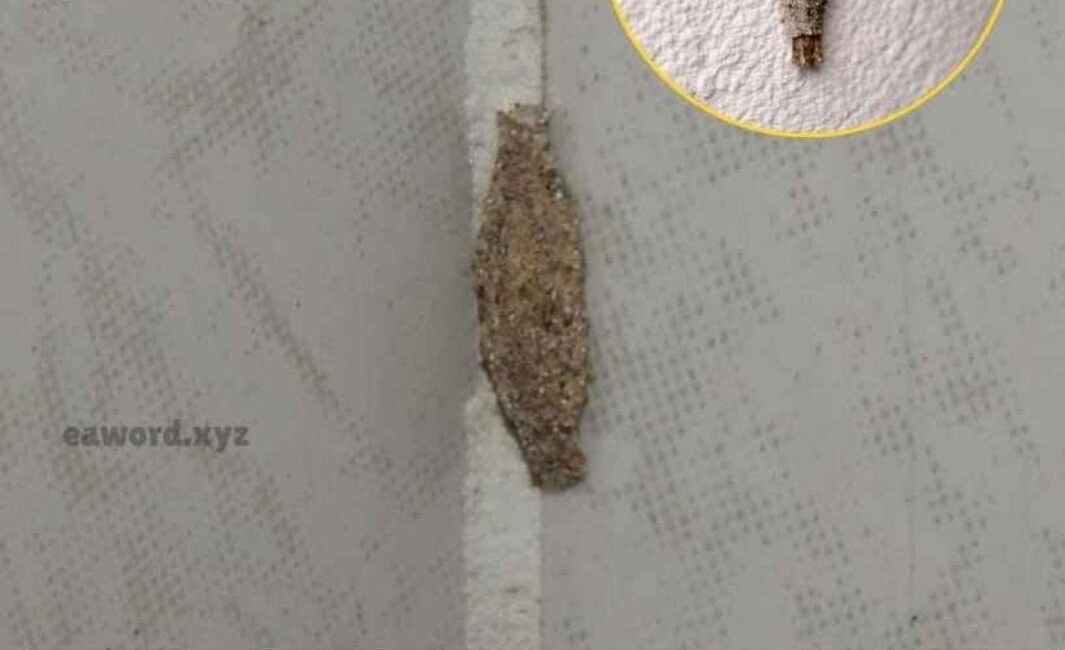
The Surprising Science of the Case-Bearing Moth (and Why It’s More Curious Than Dangerous)
You notice it one afternoon.
A tiny, grain-shaped capsule stuck to the wall.
Or the ceiling corner.
Or near the closet baseboard.
It doesn’t move.
It looks like a speck of lint… or a bit of dust.
Maybe dirt.
You ignore it.
Days later, you see another.
And then another.
And suddenly you wonder:
What are these tiny capsules?
The little-known answer often surprises people.
They belong to a remarkably specialized insect:
The case-bearing moth.
Despite the unsettling feeling their presence can trigger, they are far more fascinating than frightening.
In this article, we’ll explore:
- What these tiny cases actually are
- The biology behind them
- Why they appear indoors
- Whether they’re dangerous
- What they eat
- How to manage them safely
- The ecological role they play
- And what their presence really says about your home
Let’s pull back the curtain on one of the most misunderstood household visitors.
🦋 What Is a Case-Bearing Moth?
Case-bearing moths are small moth species whose larvae construct portable protective cases from surrounding materials.
One of the most common indoor species is:
The household casebearer (often called plaster bagworm in some regions).
These insects belong to the family Tineidae, which also includes clothes moths.
But case-bearing moths are behaviorally unique.
Their larval stage is the most visible and most misunderstood part of their life cycle.
🧬 The Most Distinctive Feature: The Portable Case
Unlike many other insects, case-bearing moth larvae build and carry their homes.
Imagine being born and immediately constructing a tiny sleeping bag from your surroundings — and carrying it everywhere you go.
That’s what they do.
Their case:
- Is made from silk produced by the larva
- Covered with dust, lint, fibers, hair, and debris
- Camouflages perfectly against walls
- Serves as both armor and shelter
The case has two open ends.
The larva can:
- Extend its head from either end
- Crawl slowly
- Retract instantly when disturbed
It’s a portable survival capsule.
🔍 Why They’re Often Mistaken for Dirt
Their camouflage is extremely effective.
Because they incorporate:
- Dust
- Spider webs
- Textile fibers
- Pet hair
- Wall debris
They blend in seamlessly.
Most people overlook them entirely.
Others assume:
It’s accumulated dirt.
Or lint.
Or a harmless speck.
Until they realize it’s actually biological.
🧪 The Life Cycle of a Case-Bearing Moth
Understanding their life cycle helps reduce fear.
They go through four stages:
1️⃣ Egg
2️⃣ Larva (the case-carrying stage)
3️⃣ Pupa
4️⃣ Adult moth
Let’s examine each.
🥚 Stage 1: Eggs
Adult female moths lay eggs in:
- Hidden corners
- Closets
- Baseboards
- Attics
- Ceilings
The eggs are tiny and rarely noticed.
They hatch into larvae.
🐛 Stage 2: Larval Case Builder
This is when you see the “capsule.”
The larva:
- Begins producing silk
- Collects nearby debris
- Constructs its protective case
- Moves slowly across surfaces
It feeds while protected inside the case.
This stage can last several months.
💤 Stage 3: Pupation
When ready to transform:
The larva anchors its case to a wall or ceiling.
Inside the case, it undergoes metamorphosis.
It becomes a pupa.
Eventually, an adult moth emerges.
The empty case may remain stuck to the surface.
🦋 Stage 4: Adult Moth
The adult moth:
- Is small
- Lives briefly
- Does not cause damage directly
- Focuses mainly on reproduction
Then the cycle repeats.
🏠 Why They Appear Indoors
Case-bearing moths prefer:
- Warm environments
- Moderate humidity
- Access to organic material
Homes provide ideal conditions.
They’re especially common in:
- Closets
- Garages
- Storage rooms
- Laundry rooms
- Attics
Their presence does NOT automatically mean your home is dirty.
But it may mean there’s:
- Lint buildup
- Dust accumulation
- Pet hair
- Fabric storage
They feed on natural fibers.
🍽 What Do They Eat?
This is where things become important.
Larvae consume:
Click page 2 to continue