The common trap?
Complacency.
When training stops, fat gain can happen quickly.
⚖️ Part 5: The Endomorph
Physical Characteristics
- Wider hips
- Thicker limbs
- Greater fat storage tendency
- Strong lower body
Endomorph does not mean “unhealthy.”
It means:
Higher efficiency at energy storage.
Metabolism Reality
Endomorph tendencies are often linked to:
- Higher insulin sensitivity in fat tissue
- Lower spontaneous movement
- Strong appetite signals
But metabolism is adaptable.
Training Strategy
Endomorphs often excel in:
- Strength sports
- Powerlifting
- Short burst activities
However, fat loss requires:
- Calorie awareness
- Consistent cardio
- Resistance training to preserve muscle
Nutrition Strategy
- Higher protein
- Moderate carbs (timed around workouts)
- High fiber
- Controlled calorie intake
The biggest mistake?
Excessive restriction leading to rebound overeating.
🔬 Part 6: Why Modern Science Sees Body Types as a Spectrum
You are not purely one type.
You are a blend.
Most people are combinations:
- Ecto-meso
- Meso-endo
- Ecto-endo
Genetics influence:
- Muscle fiber distribution
- Fat cell number
- Hormonal profile
- Appetite regulation
But lifestyle overrides genetics significantly.
Training changes body composition.
Nutrition changes fat distribution.
Sleep alters hormone balance.
Stress shifts metabolism.
Your body type is not a prison.
It’s a starting point.
🧠 Part 7: The Psychology of Body Typing
Labels are powerful.
They can:
Motivate.
Excuse.
Limit.
Empower.
If someone believes:
“I’m an endomorph. I’ll always be overweight.”
They may unconsciously stop trying.
If someone believes:
“I’m an ectomorph. I can’t gain muscle.”
They may under-eat.
Identity shapes behavior.
Behavior shapes results.
Be careful what label you internalize.
🧬 Part 8: Hormones Matter More Than Wrist Size
Fat storage is influenced by:
- Insulin
- Cortisol
- Estrogen
- Testosterone
- Thyroid hormones
Stress alone can increase abdominal fat.
Sleep deprivation increases hunger hormones.
Hormonal imbalances can override “body type.”
So always consider:
- Sleep quality
- Stress management
- Blood sugar control
- Thyroid health
Before blaming your wrist.
🏃 Part 9: Exercise According to Physiology — Not Stereotype
Instead of rigidly following somatotype rules:
Ask:
- Do I gain fat easily?
- Do I struggle to gain muscle?
- Do I fatigue quickly?
- Do I overtrain?
Then adapt.
If you gain fat easily:
→ Monitor calories carefully.
If you struggle to build muscle:
→ Increase protein and rest.
If you plateau:
→ Change stimulus.
Customization beats categorization.
🍽 Part 10: Diet Is About Energy Balance
Regardless of type:
Weight gain = calorie surplus.
Weight loss = calorie deficit.
Macronutrients affect:
- Satiety
- Hormones
- Performance
But energy balance rules body composition.
Your body type influences how easy or hard it feels.
It does not override physics.
🧠 Part 11: Lifestyle Is the Hidden Variable
Your daily habits matter more than your wrist.
- Steps per day
- Sleep duration
- Stress levels
- Meal timing
- Alcohol consumption
- Resistance training consistency
These shape your physique more than skeletal frame.
🎯 Final Reality Check
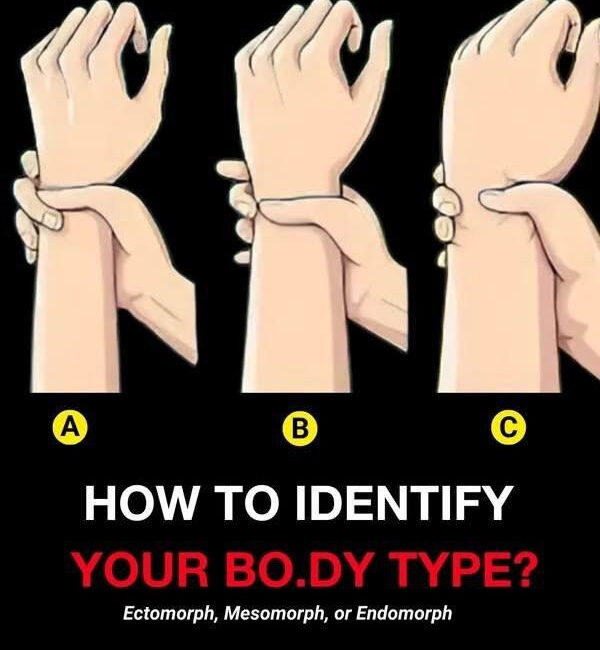
The wrist test tells you about:
Frame size.
It does not define:
Your metabolism.
Your potential.
Your destiny.
Body types are useful as loose guides.
But rigid adherence creates limitation.
The truth?
You are adaptable.
Muscle can be built.
Fat can be lost.
Strength can increase.
Metabolism can improve.
Regardless of category.
🧠 The Real Takeaway
Your body type may influence:
Starting point.
Training response.
Fat distribution patterns.
But it does not determine outcome.
Understanding your tendencies helps you:
Train smarter.
Eat strategically.
Recover properly.
Live sustainably.
The question isn’t:
“What body type am I?”
The better question is:
“How does my body respond — and how can I work with it instead of against it?”
That mindset will always outperform labels.
And that’s where real transformation begins.