The Truth About Body Types, Finger-to-Wrist Tests, Metabolism Myths, and How to Actually Train and Eat for Your Physiology
You’ve probably seen it before.
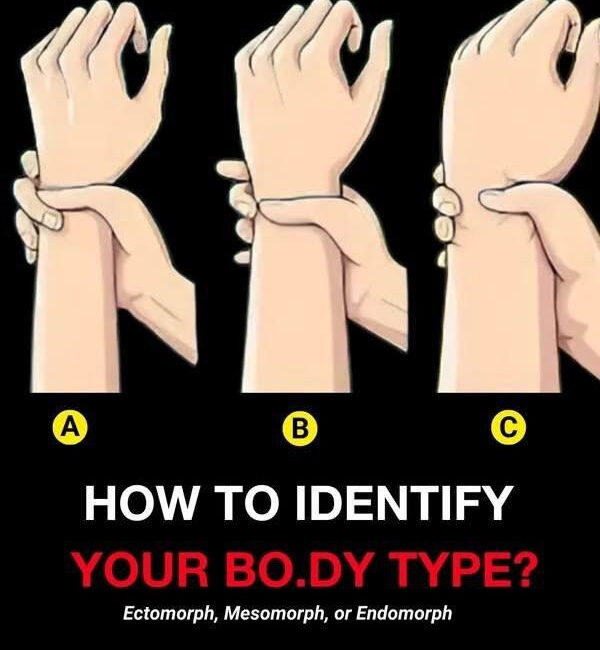
Wrap your thumb and middle finger around your wrist.
Do they overlap?
Just touch?
Not reach?
And suddenly — according to the internet — you’re classified:
Ectomorph.
Mesomorph.
Endomorph.
With that label comes advice:
- Eat more carbs.
- Avoid carbs.
- Lift heavy.
- Do cardio.
- Bulk.
- Cut.
- Accept your fate.
It feels simple. Almost too simple.
But here’s the deeper question:
Can your wrist really determine how your body stores fat, builds muscle, or burns calories?
Let’s unpack this fully — scientifically, historically, practically — and go far beyond oversimplified body-type advice.
This is not just about labeling yourself.
It’s about understanding how your physiology interacts with training, nutrition, hormones, and lifestyle.
And separating myth from useful insight.
🧠 Part 1: Where the Ectomorph–Mesomorph–Endomorph Idea Came From
The body type theory originated in the 1940s, proposed by psychologist William Sheldon.
He categorized bodies into three “somatotypes”:
- Ectomorph – Thin, linear
- Mesomorph – Muscular, athletic
- Endomorph – Rounder, softer
But here’s something most articles don’t mention:
Sheldon linked body types to personality traits.
Yes — he believed ectomorphs were introverted, mesomorphs dominant, endomorphs relaxed.
That personality link has been scientifically rejected.
However, the physical classification persisted — especially in fitness culture.
Today, the somatotype concept is used loosely to describe:
- Frame size
- Fat distribution tendencies
- Muscle-building response
But modern science views body composition as far more complex than three categories.
Still, there are useful insights buried in the model.
Let’s examine them.
📏 Part 2: The Wrist Test — Does It Actually Work?
The wrist test is based on bone structure and frame size.
When you wrap your thumb and middle finger around your wrist:
- Overlap = smaller bone circumference
- Just touching = medium frame
- No contact = larger frame
This reflects skeletal width.
But skeletal width does NOT directly determine metabolism or fat storage.
It indicates:
- Bone density potential
- Frame structure
- Joint width
Your metabolism is influenced by:
- Muscle mass
- Hormones
- Thyroid function
- Activity level
- Genetics
- Age
- Sleep
- Diet history
The wrist test is a quick proxy for frame size — not a metabolic diagnosis.
So instead of treating it as destiny, treat it as data.
Now let’s go through each body type deeply — not superficially.
🧬 Part 3: The Ectomorph
Physical Characteristics
- Narrow shoulders
- Long limbs
- Smaller joints
- Lower body fat percentage
- Often fast metabolism
But here’s nuance:
Ectomorphs aren’t “immune” to weight gain.
They simply often have:
- Higher NEAT (non-exercise activity thermogenesis)
- Faster spontaneous movement
- Lower appetite signals
Metabolism Myth
Many ectomorphs say:
“I can eat anything and not gain weight.”
Usually, that means:
They underestimate intake.
They unconsciously move more.
They skip meals unintentionally.
Training Strategy
Ectomorphs often struggle with muscle gain due to:
- Lower appetite
- Lower testosterone (in some cases)
- Overtraining tendencies
Best approach:
- Prioritize compound lifts (squats, deadlifts, presses)
- Limit excessive cardio
- Focus on progressive overload
- Ensure caloric surplus
Muscle gain requires energy.
If you don’t eat enough, growth won’t happen.
Nutrition Strategy
- Higher calorie intake
- Protein: 1.6–2.2g per kg bodyweight
- Carbohydrates are beneficial
- Don’t fear healthy fats
The biggest mistake?
Training intensely without eating enough.
🏋️ Part 4: The Mesomorph
Physical Characteristics
- Broad shoulders
- Narrow waist
- Naturally muscular appearance
- Gains muscle relatively easily
Mesomorphs often respond quickly to training.
But here’s a hidden challenge:
They can gain fat just as efficiently if careless.
Metabolism Reality
Mesomorphs usually have:
- Balanced hormone profile
- Moderate insulin sensitivity
- Good muscle protein synthesis response
But balance doesn’t mean immunity.
Training Strategy
Mesomorphs thrive on:
- Mixed training (strength + cardio)
- Periodized workouts
- Balanced intensity
They often excel in sports due to:
- Fast-twitch muscle fiber dominance
Nutrition Strategy
- Moderate carbs
- Sufficient protein
- Monitor caloric intake
- Avoid assuming “natural leanness” is permanent
Click page 2 to continue