Cream cheese needs acid.
Capers deliver.
Niçoise Salad
Tuna, olives, capers.
Mediterranean alignment.
🥗 Part IX: Modern Uses You Might Not Have Tried
Capers are versatile beyond classic recipes.
Try them in:
- Scrambled eggs
- Tuna salad
- Deviled eggs
- Potato salad
- Mustard vinaigrettes
- Compound butter
- Grain bowls
- Avocado toast
Anywhere you want a salty-sour spark.
🧠 Part X: Why Capers Make Food Taste “Better”
Capers stimulate:
- Salty receptors
- Sour receptors
- Umami receptors
That triple activation creates flavor depth.
In culinary science, this is called flavor layering.
Capers don’t add bulk.
They add dimension.
They sharpen and widen the flavor field.
🧂 Part XI: Choosing the Right Capers
Size matters.
Smaller capers (Nonpareil):
- More delicate
- Less acidic
- More expensive
Larger capers:
- Softer
- More sour
- More intense
The smaller the bud, the earlier it was harvested.
Earlier harvest = tighter texture = milder flavor.
🧼 Part XII: To Rinse or Not to Rinse?
Capers are salty.
Rinsing them:
- Reduces sodium
- Softens intensity
- Makes them more balanced
If using in a delicate dish, rinse lightly.
If using in a bold tomato sauce, you may not need to.
Taste and decide.
💪 Part XIII: Are Capers Healthy?
Capers contain:
- Antioxidants (quercetin)
- Vitamin A
- Vitamin E
- Iron
- Calcium
They are low in calories.
However:
They are high in sodium.
Rinsing helps reduce sodium load.
Like olives and pickles, moderation matters.
🌍 Part XIV: The Cultural Story of Capers
Capers have been used for thousands of years.
They appear in:
- Ancient Roman cooking
- Greek cuisine
- North African tagines
- Middle Eastern dishes
In ancient texts, capers were even considered medicinal.
Their resilience in harsh climates made them symbolic of survival.
They grow in stone walls.
In dry cliffs.
In heat.
They are botanical survivors.
🧂 Part XV: Substitutes When You Don’t Have Capers
If needed, you can use:
- Chopped green olives
- Preserved lemons
- Cornichons
- Artichoke hearts
- Anchovies
- Flaky sea salt + lemon zest
But none perfectly replicate capers.
Because capers uniquely combine:
Salt + acid + umami + floral notes.
🍞 Part XVI: Capers Beyond Savory
You can:
- Fold them into focaccia
- Add to savory scones
- Mix into herb butter
- Blend into aioli
They elevate simple foods.
Even a spoonful in cottage cheese can transform it.
🧠 Part XVII: The Mindset Shift
Many home cooks think capers are “restaurant food.”
They are not.
They are pantry flavor insurance.
Once you start using them, you begin noticing where food feels flat.
And a small spoonful fixes it.
🌟 Final Thoughts: The Tiny Ingredient That Changes Everything
Capers are:
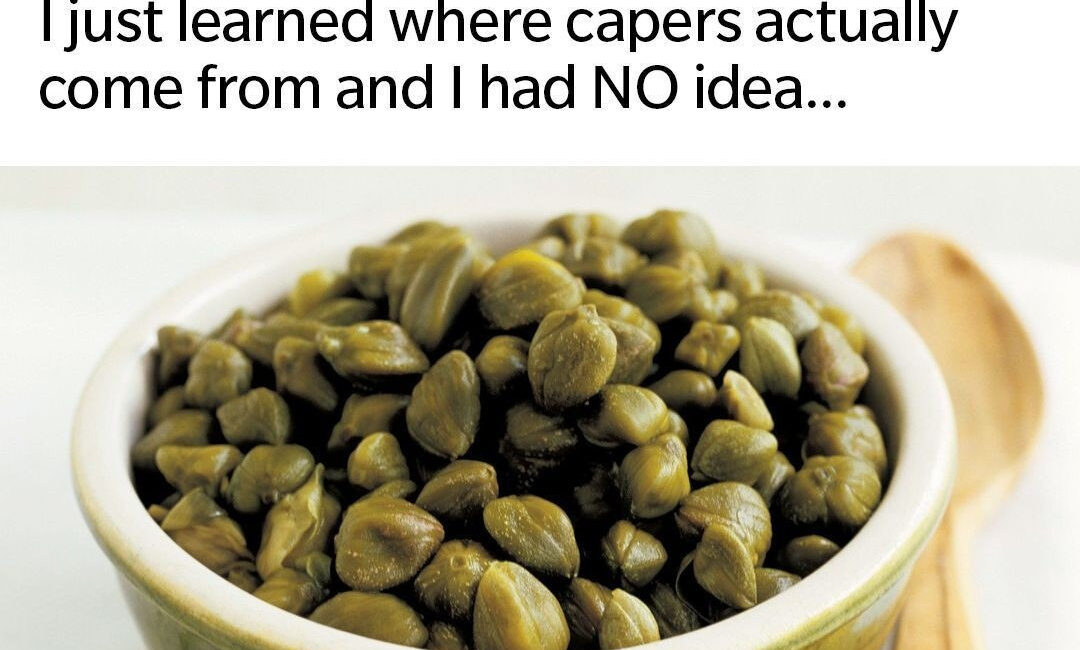
- Flower buds
- Preserved potential
- Briny sparks
- Flavor multipliers
They are small but decisive.
They don’t dominate dishes.
They refine them.
If you’ve never kept capers in your kitchen, consider this your invitation.
Think of them not as garnish —
but as a seasoning with personality.
A jar of capers in the fridge is like having a secret weapon.
Small.
Green.
Salty.
Transformative.
And once you learn how to use them, you’ll wonder how your cooking ever felt complete without them. 🌿