What Are Capers, Really? A Deep Dive into Their Origin, Flavor, Science, History, and How to Cook with Them
Capers are one of those ingredients that quietly sit in the back of the pantry — mysterious, tiny, and briny — until one day you taste them properly and realize:
They are not garnish.
They are transformation.
At first glance, they look insignificant. Small green buds floating in salty liquid. But once you understand what they are and how they function in food, you begin to see them differently.
Capers are not just an ingredient.
They are a flavor amplifier.
They are Mediterranean sunlight preserved in brine.
They are the culinary equivalent of a punctuation mark — small, sharp, and capable of changing the whole sentence.
Let’s explore capers properly — not just what they are, but why they matter.
🌱 Part I: What Are Capers, Botanically Speaking?
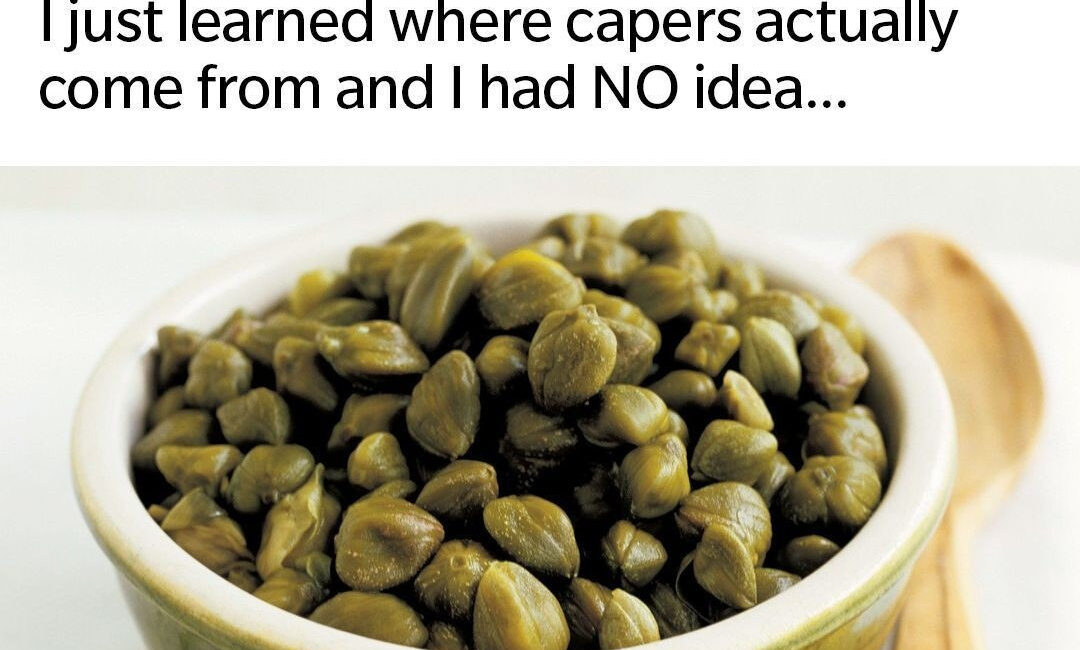
Capers are the unopened flower buds of a plant called Capparis spinosa.
This plant — often called the caper bush — grows in:
- Southern Italy
- Greece
- Spain
- Morocco
- Turkey
- North Africa
- The Middle East
It thrives in:
- Rocky soil
- Dry climates
- Coastal Mediterranean heat
It is a plant built for resilience.
The buds are harvested before they bloom.
If left on the plant, these buds would open into beautiful white flowers with long purple stamens.
But instead, they are picked early — while still tight and green.
And here’s the key:
Fresh capers are not delicious.
They are bitter.
It’s the curing process that transforms them.
🧂 Part II: The Alchemy of Brining
Raw caper buds are intensely bitter due to compounds called glucosinolates.
To make them edible, they are:
- Sun-dried
- Salt-cured
- Or soaked in vinegar/brine
This fermentation-like process does something magical.
It breaks down bitter compounds and develops:
- Salinity
- Umami depth
- Slight acidity
- Subtle floral brightness
It’s similar to how olives are cured.
Without curing, olives are unpleasant.
With curing, they become addictive.
The same transformation happens with capers.
🍋 Part III: What Do Capers Actually Taste Like?
Capers are:
- Salty
- Briny
- Slightly sour
- Citrus-bright
- Deeply savory
They contain natural compounds that stimulate umami receptors — the same receptors activated by:
- Parmesan
- Anchovies
- Mushrooms
- Soy sauce
That’s why capers make food taste fuller.
They don’t dominate.
They enhance.
A spoonful of capers can season an entire dish.
They are flavor concentration in botanical form.
🫒 Part IV: Capers vs. Olives
People often confuse capers and olives.
Let’s clarify.
Olives are fruit.
They grow on olive trees.
They contain oil.
They have flesh.
Capers are flower buds.
They contain no oil.
They are fibrous.
They are botanical potential — frozen before bloom.
Flavor comparison:
| Capers | Olives |
|---|---|
| Brighter | Richer |
| Saltier | Oilier |
| More acidic | More buttery |
| No pit | Stone fruit with pit |
Olives coat the mouth.
Capers cut through richness.
That’s why they work beautifully together in dishes like puttanesca.
🍇 Part V: Capers vs. Caperberries
If you leave the bud unpicked, it becomes a fruit.
That fruit is a caperberry.
Caperberries are:
- Larger
- Milder
- Crunchier
- Less intense
They are usually served whole with stems attached.
They taste more vegetal and less concentrated.
Capers = impact.
Caperberries = texture and visual appeal.
🇮🇹 Part VI: Why Italy Loves Capers
Travel through southern Italy — Sicily especially — and you’ll see capers everywhere.
They appear in:
- Pasta sauces
- Stews
- Fish dishes
- Salads
- Tapenade
- Eggplant dishes
On the island of Pantelleria, capers are a protected product.
They grow in volcanic soil and are hand-harvested.
There, capers aren’t garnish.
They’re identity.
Mediterranean cooking relies on balance:
- Fat
- Acid
- Salt
- Bitter
- Sweet
Capers contribute salt and acid simultaneously.
That makes them incredibly efficient.
🍳 Part VII: How to Cook with Capers (Beyond the Basics)
The simplest way to think about capers:
Use them like salt with personality.
1️⃣ Add During Cooking
Drop them into:
- Tomato sauces
- Braises
- Pan sauces
They infuse flavor throughout.
2️⃣ Add at the End
Sprinkle on:
- Grilled fish
- Roasted vegetables
- Salads
They provide a finishing burst.
3️⃣ Fry Them
Yes — fry them.
When shallow-fried in olive oil:
- They open slightly
- Become crispy
- Lose some brine
- Develop nutty flavor
Crispy capers are extraordinary on:
- Salmon
- Pasta
- Caesar salad
🍝 Part VIII: Famous Caper Dishes
Let’s explore their culinary legacy.
Chicken Piccata
Butter + lemon + capers.
The capers prevent richness from becoming heavy.
Pasta Puttanesca
Tomatoes + olives + anchovies + capers.
A brine symphony.
Vitello Tonnato
Cold sliced veal + tuna sauce + capers.
Salty brightness against creamy depth.
Smoked Salmon & Bagels
Click page 2 to continue