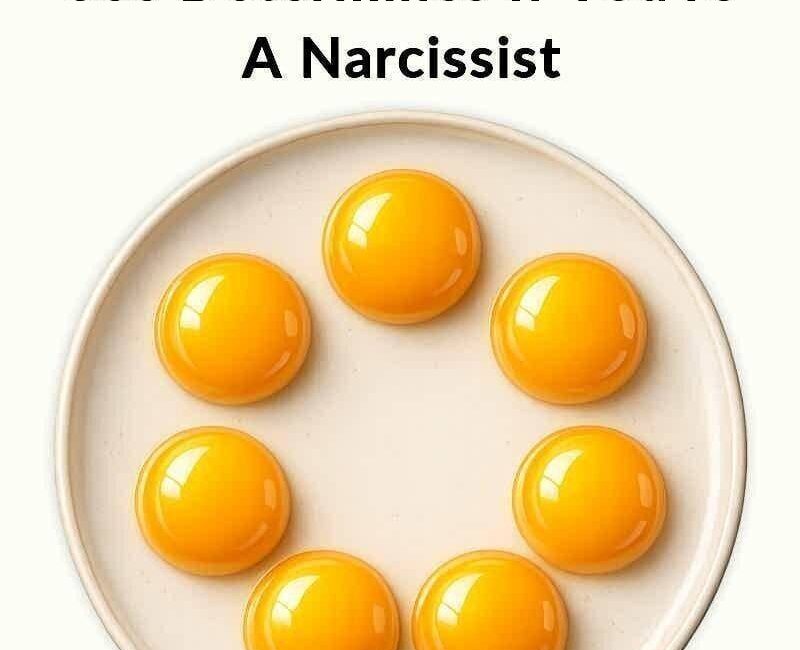
The number of circles you saw reflects how wide your spotlight naturally spreads.
Part X: Why These Tests Feel So Personal
When you count circles and receive a personality interpretation, your brain engages in:
- Self-evaluation
- Identity comparison
- Emotional reaction
Your reaction matters more than the number.
If you felt:
Defensive → Ego sensitivity
Curious → Openness
Dismissive → Emotional distancing
Amused → Psychological flexibility
The emotional response reveals deeper patterns than the count itself.
Part XI: The Brain’s Need for Categorization
Humans crave labels.
We like simple explanations for complex traits.
“Five circles = narcissist.”
“Ten circles = empathetic.”
But personality is multidimensional.
You cannot compress identity into a number.
What you can explore is how you focus.
And attention patterns influence:
- Relationships
- Leadership style
- Conflict management
- Decision-making
Part XII: The Hidden Power of Selective Perception
Selective perception shapes reality.
If you naturally see fewer circles, you may:
- Focus on main goals
- Ignore distractions
- Move forward quickly
If you see many circles, you may:
- Notice hidden implications
- Anticipate complications
- Think deeply before acting
Both are strengths.
Problems arise only when flexibility is absent.
Part XIII: Is Seeing Fewer Circles a Bad Thing?
Not at all.
People who focus on central features often:
- Excel in leadership
- Thrive in high-pressure environments
- Make bold decisions
- Inspire action
However, blind spots may include:
- Missing subtle social cues
- Overlooking others’ needs
- Acting before fully processing
Awareness turns blind spots into growth opportunities.
Part XIV: Is Seeing Many Circles Always Better?
Also no.
Detail-oriented individuals may:
- Overthink
- Struggle with decisiveness
- Absorb too much emotional input
- Experience analysis paralysis
Balanced attention is ideal.
The goal is flexibility.
Part XV: Why Social Media Loves This Concept
This test spreads because it:
- Feels revealing
- Sparks debate
- Encourages sharing
- Triggers identity curiosity
It offers a low-risk way to explore ego without clinical judgment.
And humans love introspection — especially when it feels visual and immediate.
Part XVI: The Science vs. Entertainment Boundary
Let’s be clear:
This test is not scientifically validated as a narcissism diagnostic tool.
However, it loosely reflects real concepts:
- Selective attention theory
- Ego involvement
- Cognitive filtering
- Visual processing styles
- Personality-attention correlation
It is a mirror — not a medical instrument.
Part XVII: What You Should Really Ask Yourself
Instead of:
“Am I a narcissist?”
Ask:
- Where does my attention naturally go?
- Do I focus only on dominant features?
- Do I miss subtle cues?
- Do I overanalyze?
- How wide is my perceptual spotlight?
Growth begins with observation.
Part XVIII: Balancing Narcissistic Tendencies
Healthy narcissism is necessary.
To balance it:
- Practice active listening
- Slow down judgments
- Seek feedback
- Reflect before reacting
- Acknowledge others’ perspectives
You don’t need less confidence.
You need broader awareness.
Part XIX: The Deeper Truth
The circle test isn’t about narcissism.
It’s about attention.
And attention shapes identity.
Where you place your attention determines:
- What you value
- What you ignore
- How you interpret situations
- How others experience you
The number of circles you saw is less important than recognizing:
Your brain chose that number for a reason.
Final Thoughts
The number of circles you see does not define you.
It reflects how your mind organizes the world.
Narcissism is not evil.
It is not binary.
It is not diagnosed by viral images.
It is a spectrum of self-focus.
The real insight lies here:
Do you focus only on what stands out?
Or do you explore the full picture?
And more importantly:
Can you shift when necessary?
Because true psychological maturity is not about seeing more circles.
It’s about being able to widen or narrow your focus consciously.
Once you understand that, the illusion stops being about narcissism.
It becomes about awareness.
And awareness is power.