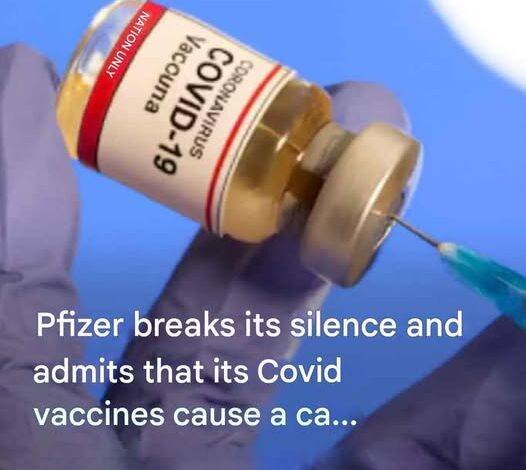
“Company admits vaccine causes heart inflammation”
gets more attention than:
“Rare cases of mild myocarditis observed at low rates; risk-benefit remains favorable.”
3. Misunderstanding Statistical Risk
When people hear “increased risk,” they may imagine widespread danger.
But “increased risk” can mean:
From 1 in a million to 5 in a million.
Relative risk and absolute risk are often confused.
Absolute vs. Relative Risk
Relative risk compares percentages.
Absolute risk shows actual frequency.
For example:
If a condition increases from 1 case per million to 3 cases per million, that is a 200% relative increase.
But the absolute increase is 2 additional cases per million.
Without context, statistics can sound alarming.
Ongoing Research
Vaccine safety studies continue.
Research includes:
- Long-term follow-up
- Age-specific risk analysis
- Booster dose evaluation
- Comparison between vaccine types
As data evolves, recommendations may adjust.
That is not evidence of failure.
It is evidence of continuous monitoring.
Transparency in Modern Medicine
It is important to understand that vaccine safety information is:
- Publicly available
- Reviewed by independent experts
- Published in peer-reviewed journals
Medical products are among the most scrutinized interventions in modern healthcare.
The Broader Context: Public Health Impact
COVID-19 vaccines have been associated with:
- Reduced hospitalization
- Reduced severe disease
- Reduced mortality in high-risk populations
While no medical intervention is without risk, decisions are made by comparing:
Risk of intervention
Versus
Risk of disease
For older adults and high-risk individuals, the protective benefit has been significant.
Why Age and Risk Profile Matter
Younger individuals have lower baseline COVID mortality risk.
Older adults have higher risk.
That is why some countries adjust recommendations based on:
- Age
- Comorbidities
- Exposure risk
Medicine is not one-size-fits-all.
Understanding Medical Uncertainty
Science rarely speaks in absolutes.
Instead, it evaluates probabilities.
Statements such as:
“Associated with rare cases”
“Small increased risk observed”
“Causal relationship under investigation”
are part of scientific language.
They do not imply concealment.
They reflect evolving data interpretation.
How to Evaluate Health Claims Critically
When encountering claims like:
“Pfizer admits…”
Ask:
- What was the exact statement?
- Was it published in an official document?
- What is the absolute risk?
- What do independent regulators say?
- What is the comparison to infection risk?
Critical thinking reduces fear-based interpretation.
The Role of Informed Consent
In medicine, informed consent means:
Patients are told about:
- Benefits
- Risks
- Alternatives
COVID-19 vaccines include documented rare risks.
These are not hidden.
They are part of patient information sheets.
Long-Term Monitoring
Long-term vaccine safety monitoring continues globally.
To date, serious long-term complications remain rare.
However, research is ongoing.
Science does not freeze in time.
The Complexity of Public Trust
Trust in institutions varies.
Pandemic policies, political divisions, and misinformation have affected perception.
Clear communication remains essential.
But so does careful interpretation.
Final Perspective
Pfizer and regulatory agencies have acknowledged rare cases of myocarditis associated with mRNA vaccines, particularly in young males.
This acknowledgment has been public for several years.
It does not represent a sudden revelation.
It reflects ongoing pharmacovigilance.
The overall data continues to show that:
For many populations — especially older adults and high-risk individuals — benefits have outweighed risks.
Medical decisions are personal and should involve consultation with healthcare professionals who understand individual health history.
In complex issues like this, nuance matters more than headlines.
Science operates through transparency, monitoring, and revision.
And understanding that process is essential to evaluating any medical claim responsibly.