Every family has that one person who seems to carry quiet knowledge the rest of us overlook. For me, it was my grandpa. He didn’t own fancy tools. He didn’t buy expensive repair kits. But when a scratch appeared on wood furniture, he never panicked.
He would walk to the kitchen.
Open a drawer.
And fix it in less than a minute.
No sanding.
No refinishing.
No chemicals.
Just one simple ingredient.
And every time, the scratch seemed to vanish.
Let’s talk about the trick — and more importantly, the science behind why it works.
First: Why Wood Scratches Look So Obvious
Before understanding the solution, you need to understand the problem.
Most wooden furniture is finished with:
- Varnish
- Lacquer
- Oil
- Polyurethane
When you scratch wood, one of two things happens:
- You scratch only the surface finish.
- You penetrate into the wood fibers themselves.
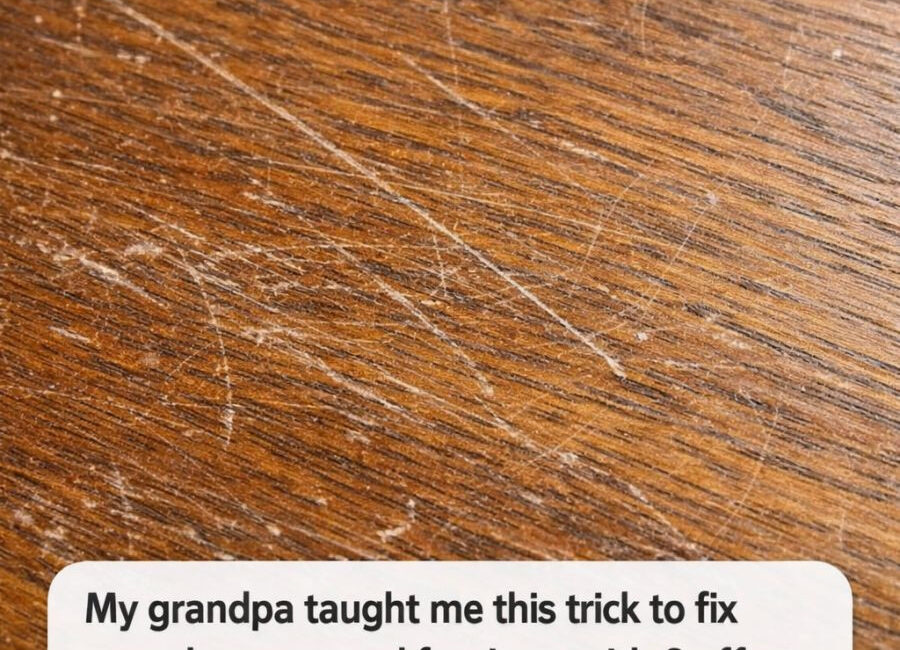
In many cases, especially light scratches, the damage isn’t deep.
It’s a disruption of light reflection.
Scratches scatter light differently than smooth wood. That scattering makes the mark look pale or white.
So the scratch often looks worse than it actually is.
The Trick: A Walnut
Yes.
A regular walnut.
My grandpa would take a walnut, crack it open, remove the nut, and gently rub it along the scratch.
Back and forth.
Within seconds, the scratch would darken and blend into the surrounding wood.
No magic.
Just chemistry.
Why a Walnut Works
Walnuts contain natural oils.
Those oils:
- Penetrate shallow scratches
- Darken exposed wood fibers
- Restore uniform light reflection
- Hydrate dried-out finish
The result?
The pale scratch line disappears because the exposed wood is no longer dry and reflective.
Instead of scattering light, it absorbs it more evenly.
Your eye stops detecting contrast.
Scratch gone.
Or at least… nearly invisible.
Why It Feels Like “Zero Effort”
There’s no preparation.
No drying time.
No tools.
Just rub, wipe, and walk away.
That’s why older generations loved this method.
It’s practical.
It’s immediate.
It works especially well on:
- Medium to dark wood
- Oak
- Walnut
- Cherry
- Mahogany
Lighter woods may require testing first.
How to Do It Properly
Step 1: Clean the surface lightly with a dry cloth.
Step 2: Rub the walnut meat directly over the scratch.
Step 3: Use small circular motions or follow the grain.
Step 4: Let the oils sit for 5–10 minutes.
Step 5: Buff gently with a soft cloth.
That’s it.
Click page 2 to continue