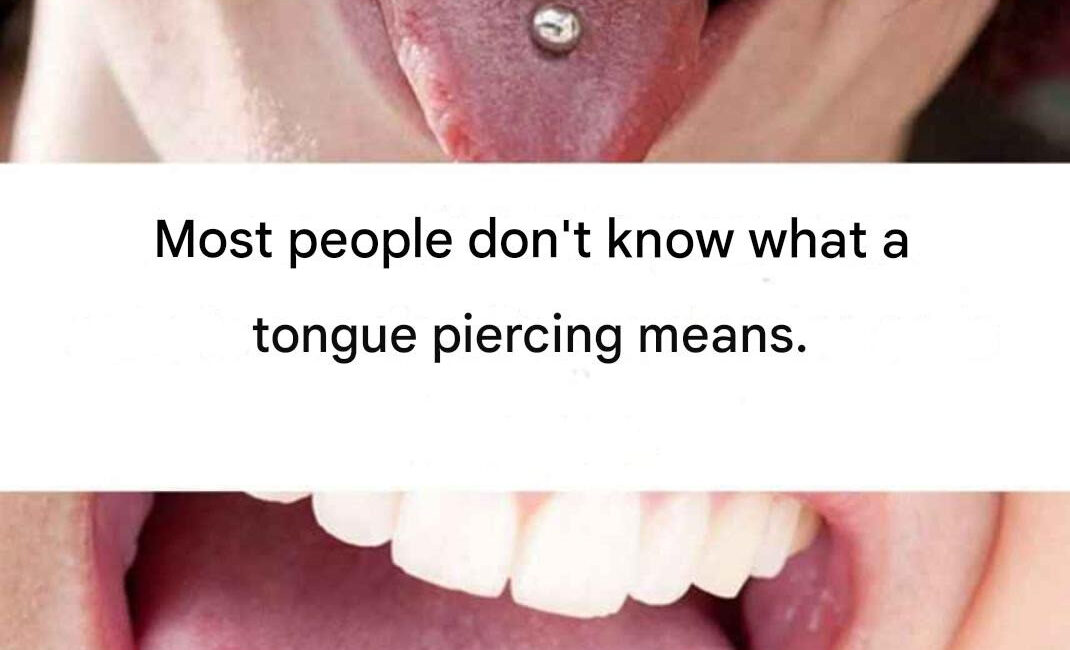
Today, tongue piercings are widely accepted in many communities.
They no longer automatically signal rebellion.
Instead, they often represent:
- Personal taste
- Aesthetic exploration
- Individual identity
In a world increasingly focused on self-definition, body modification can serve as:
- A form of authorship over one’s appearance
- A small act of defiance against uniformity
- A statement of “this is me”
And sometimes, that’s enough.
Cultural Differences Matter
In some cultures, visible piercings may still be considered inappropriate or rebellious.
In others, they are normalized.
Meaning is shaped by environment.
A tongue piercing in a conservative setting might symbolize bold independence.
In a progressive urban environment, it may symbolize nothing more than fashion.
Symbolism is never universal.
It evolves.
Health Considerations
While symbolism is fascinating, practicality matters.
Tongue piercings carry risks, including:
- Swelling
- Infection
- Dental damage
- Speech changes during healing
Proper care is essential:
- Professional piercing only
- Sterile equipment
- Following aftercare instructions
- Avoiding unnecessary irritation
The tongue heals quickly compared to other areas, but it requires responsibility.
Symbolism does not protect against bacteria.
Why It Still Captivates People
The tongue piercing remains intriguing because it is:
- Hidden yet revealing
- Subtle yet provocative
- Personal yet visible
It sits at the intersection of:
- Voice
- Identity
- Intimacy
- Expression
Few piercings carry such layered psychological and cultural associations.
That’s why it continues to spark conversation.
Final Reflection
The tongue piercing is not just a trend.
It has roots in ritual, transformation, and symbolism.
It has passed through eras of devotion, rebellion, sensuality, and self-expression.
For some, it means nothing.
For others, it carries deep personal weight.
But at its core, it represents something timeless:
The human desire to shape our own identity.
And sometimes, that desire is expressed not through words—
But through the tongue itself.