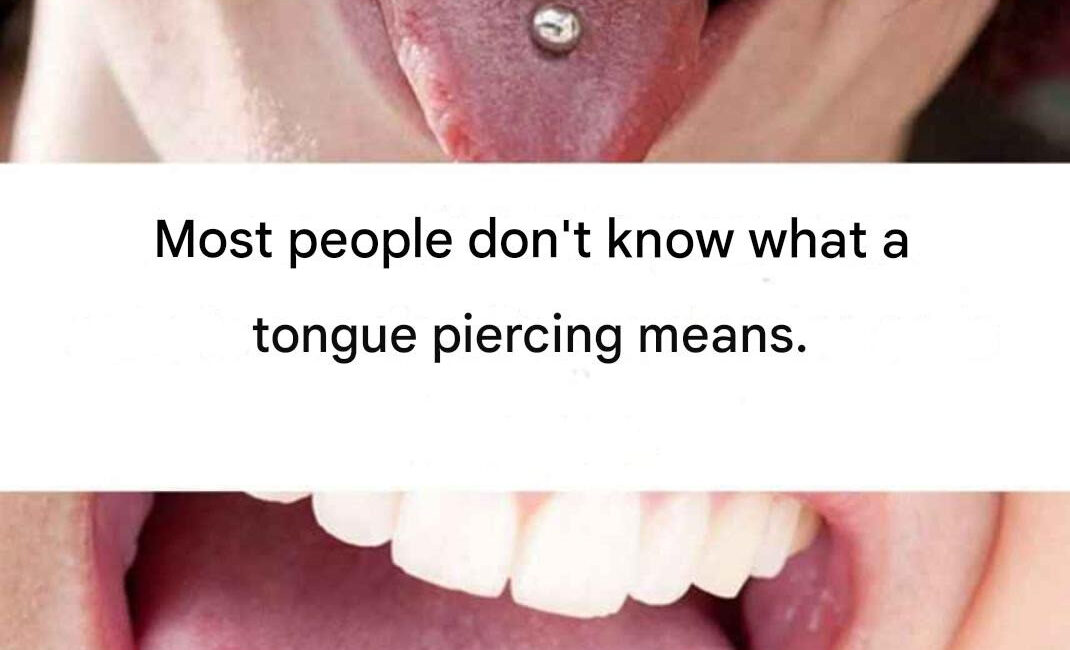
A tongue piercing is small. Almost invisible unless someone speaks, laughs, or smiles wide enough to reveal it. And yet, despite its subtlety, it carries layers of meaning that stretch across history, spirituality, rebellion, and modern self-expression.
Most people assume tongue piercings are a recent trend—something born from alternative fashion or early 2000s pop culture. But the truth is far older, stranger, and more symbolic than many realize.
Let’s trace where this piercing comes from, what it has meant in different eras, and why it still sparks curiosity today.
Ancient Origins: Ritual, Power, and Spiritual Communication
Tongue piercing is not a modern invention.
Historical and anthropological evidence suggests that ritual tongue piercing existed among ancient Mesoamerican civilizations, including the Maya and Aztec cultures.
In these societies, piercing the tongue was not decorative.
It was ceremonial.
Priests and royalty would pierce their tongues as part of bloodletting rituals—an act believed to:
- Communicate with deities
- Open spiritual channels
- Enter trance states
- Demonstrate devotion and sacrifice
Blood, in many ancient cultures, symbolized life force. Offering it was seen as a powerful spiritual exchange.
The tongue, specifically, represented speech, truth, and sacred communication.
Piercing it symbolized a deeper connection between voice and spirit.
This wasn’t rebellion.
It was reverence.
The Symbolism of the Tongue
The tongue is more than a muscle.
Symbolically, it represents:
- Speech
- Expression
- Truth
- Seduction
- Power of words
In many philosophical traditions, speech is creation. Words shape reality.
So piercing the tongue can symbolize control over one’s voice—or transformation of it.
Some interpret it as reclaiming expression.
Others see it as a reminder of restraint and intention.
Even in modern times, the symbolism lingers beneath the surface.
From Ritual to Rebellion
Fast forward to the 20th century.
Tongue piercings reemerged in Western culture primarily through underground body modification communities.
In the 1980s and 1990s, professional body piercing studios began expanding beyond ear piercings.
The tongue became part of a broader movement that included:
- Facial piercings
- Body piercings
- Tattoos
- Alternative aesthetics
This era framed piercings as:
- Defiance of conventional beauty standards
- Rejection of mainstream norms
- Assertion of bodily autonomy
Unlike ancient ritual piercings, modern tongue piercings were usually about identity, not sacrifice.
But there was still symbolism.
It said:
“I choose what happens to my body.”
“I control how I present myself.”
And that message mattered.
The Early 2000s and Cultural Mainstreaming
By the early 2000s, tongue piercings moved from subculture to pop culture.
Celebrities, musicians, and influencers made them visible.
The piercing gained a new layer of association:
- Sensuality
- Boldness
- Confidence
- Sexual symbolism
This is when the piercing’s meaning shifted in public perception.
It was no longer just about rebellion.
It became flirtatious. Expressive. Sometimes controversial.
But cultural meaning is fluid.
The same piercing can symbolize:
- Spiritual devotion (ancient past)
- Subcultural identity (late 20th century)
- Personal empowerment (modern perspective)
- Aesthetic preference (present day)
Meaning depends on context.
Is There a “Secret Meaning”?
You may hear claims that tongue piercings signal specific lifestyles or hidden identities.
In reality, most of these interpretations are exaggerations or social myths.
Unlike some symbols that carry fixed meanings, tongue piercings are highly personal.
For some, it means:
- Nothing deeper than style.
For others:
- A private reminder of resilience.
- A statement of independence.
- A mark of transformation.
Symbolism becomes powerful only when the individual assigns meaning to it.
Without that intention, it is simply jewelry.
Pain, Risk, and the Psychology of Choice
There is another layer often overlooked: the psychological dimension.
The tongue is sensitive. Piercing it is not casual.
Choosing to pierce it can symbolize:
- Tolerance for discomfort
- Willingness to step outside comfort zones
- Ownership of risk
In psychology, controlled exposure to pain in safe settings can sometimes serve as:
- A rite of passage
- A marker of change
- A symbolic reset
Body modification has historically been tied to transitions—into adulthood, into new identities, into new life chapters.
Even if someone does not consciously frame it this way, the ritual aspect lingers.
Modern Interpretations: Identity and Autonomy
Click page 2 to continue