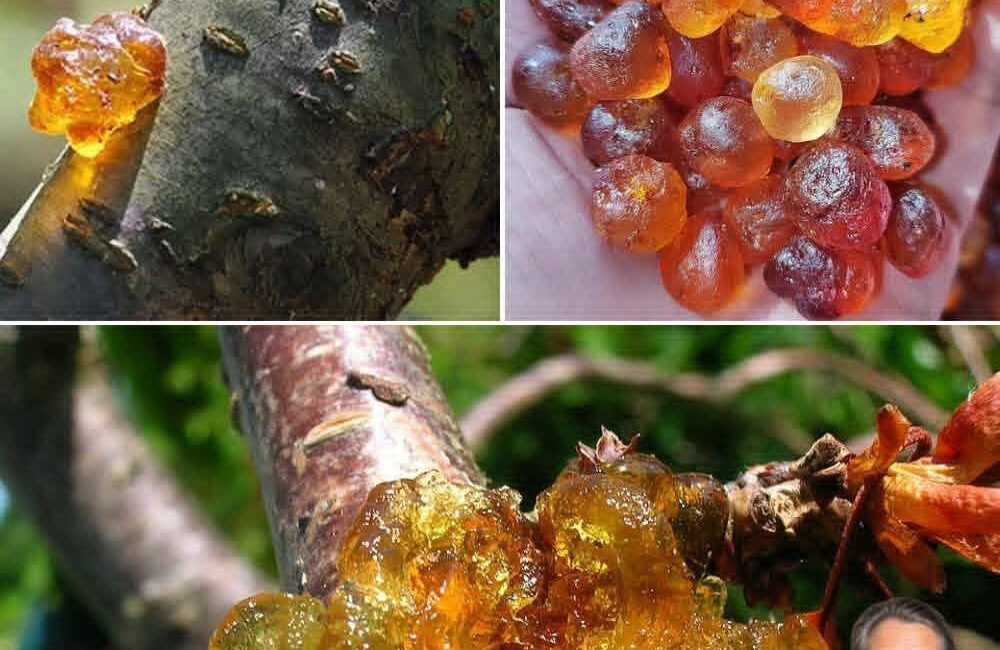
At first glance, it looks like golden candy melting from a tree branch.
Translucent. Amber-colored. Glowing in sunlight.
But this isn’t sugar.
It’s tree resin — and in some parts of the world, certain types of resin are worth more than you might expect.
So why is this sticky substance sometimes so expensive?
And what makes it “powerful”?
Let’s unpack the science, the history, and the economics behind this fascinating natural material.
What You’re Looking At: Natural Tree Resin
The images show resin exuding from tree bark. When a tree is injured — whether by insects, cuts, or environmental stress — it produces resin as a defense mechanism.
Resin:
- Seals wounds
- Protects against bacteria and fungi
- Deters insects
- Hardens when exposed to air
It’s basically the tree’s immune system in liquid form.
Over time, this resin can solidify into hardened amber-like chunks — sometimes harvested for various uses.
But not all resin is equal.
The Most Valuable Resins in the World
Some of the most expensive and sought-after resins include:
- Frankincense
- Myrrh
- Pine resin (colophony)
- Mastic
- Dragon’s blood resin
Each has a unique chemical composition and historical significance.
The most famous? Frankincense.
Why Is Frankincense So Valuable?
Frankincense comes from Boswellia trees, typically grown in dry regions of the Middle East and parts of Africa.
It’s harvested by:
- Making careful cuts in the tree bark.
- Allowing resin to seep out.
- Letting it harden into tear-shaped droplets.
- Collecting the dried pieces.
This process requires:
- Skilled labor
- Specific climate conditions
- Time (resin doesn’t flow instantly)
Scarcity + manual harvesting = higher cost.
But that’s not the whole story.
What Makes It “Powerful”?
When people say resin is “powerful,” they usually mean one of three things:
1. Medicinal Properties
Certain resins contain bioactive compounds.
Frankincense, for example, contains boswellic acids, which have been studied for:
- Anti-inflammatory properties
- Potential immune modulation
- Traditional use in respiratory support
Historically, resin has been used in herbal medicine, though modern science continues to evaluate these claims carefully.
2. Aromatic Power
Burning resin releases strong, complex fragrances.
Resins have been used for centuries in:
- Religious ceremonies
- Meditation rituals
- Perfume making
- Incense production
Their aromatic oils are highly concentrated and can be extracted for essential oils — another reason they hold value.
3. Industrial Uses
Pine resin derivatives are used in:
- Adhesives
- Varnishes
- Violin bows
- Printing inks
- Soap production
It’s not just spiritual or medicinal — it’s chemically useful.
Why It Can Be Expensive
Resin pricing depends on:
- Tree species
- Purity
- Harvesting method
- Geographic origin
- Demand
High-quality frankincense resin can sell for significant amounts per kilogram.
Rare resins harvested from limited regions fetch even more.
If a tree produces small amounts per year and harvesting requires skill, the price increases naturally.
The Amber Confusion
Sometimes people confuse resin with amber.
Here’s the difference:
Resin = fresh or semi-hardened tree secretion.
Amber = fossilized resin, millions of years old.
Amber can contain preserved insects and plant material — and it can be extremely valuable in jewelry markets.
But the images you’re seeing show fresh resin, not fossilized amber.
The Science Behind the Stickiness
Resins are composed of:
- Terpenes
- Volatile organic compounds
- Resin acids
These molecules:
- Evaporate slowly
- Harden when exposed to oxygen
- Form protective barriers
Click page 2 to continue