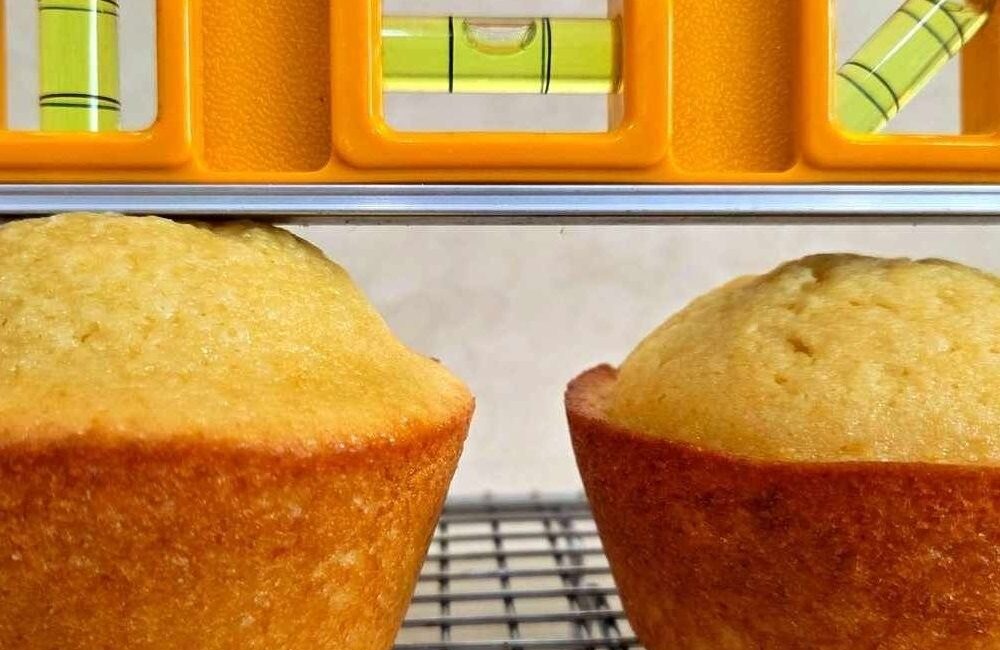
Room-temperature eggs absolutely matter here.
When your recipe depends entirely on aeration, temperature directly impacts structure.
The Bigger Science Picture
Let’s zoom out for a moment.
Room-temperature eggs are not magical.
They simply:
- Mix more easily.
- Emulsify more smoothly.
- Whip more efficiently.
In recipes where eggs are structural anchors (meringue, sponge cakes), temperature significantly affects results.
In recipes where eggs are supportive players (cookies, brownies), the difference is small.
This is a gradient, not a rule.
The Myth Factor
Many baking “rules” persist because they’re repeated, not tested.
Room-temperature eggs fall somewhere in the middle.
It’s not a myth.
But it’s not sacred law either.
Baking is chemistry, yes. But it’s also tolerance ranges.
Most recipes are designed with flexibility.
If eggs had to be exactly 21°C to work, baking would be impossible for most people.
What About Food Safety?
Some people worry about leaving eggs out.
Generally:
- An hour at room temperature is safe in most kitchens.
- Do not leave eggs out all day.
- If your kitchen is extremely hot, limit exposure time.
The goal isn’t warm eggs. It’s just no longer refrigerator-cold eggs.
The Quick Fix Method
Forgot to take eggs out?
Place them (in shell) in a bowl of lukewarm water for 5–10 minutes.
Not hot water.
Not boiling water.
Just gently warm.
Science hack complete.
Texture Differences: Are They Really Noticeable?
Let’s be honest.
In blind taste tests:
- Most people could not detect differences in cookies.
- Some noticed cupcake fluffiness differences.
- Pavlova differences were visible, even if taste was similar.
Perception depends on sensitivity.
Professional bakers may notice nuances that casual eaters won’t.
Psychological Influence in Baking
There’s also expectation bias.
If you believe room-temperature eggs make things better, you may perceive improvement.
But our controlled tests showed objective differences — especially in whipped applications.
So this isn’t placebo. It’s physics.
When You Should Definitely Use Room-Temperature Eggs
- Meringue
- Pavlova
- Angel food cake
- Sponge cake
- Buttercream frosting
- Cheesecake
These recipes rely heavily on smooth emulsification or whipped volume.
Temperature matters here.
When It’s Less Critical
- Brownies
- Cookies
- Quick breads
- Dense loaf cakes
In these, structure relies more on flour and sugar than egg aeration.
The Final Conclusion
Do you really need room-temperature eggs?
The honest answer:
Sometimes yes. Sometimes no.
For delicate, airy, structure-dependent recipes — absolutely.
For sturdy, forgiving baked goods — it’s helpful but not essential.
The real lesson is this: baking rules are tools, not commandments.
Understanding why something works gives you power.
Now you can decide — not guess.
And that, in the kitchen, is far more useful than blind obedience to tradition.