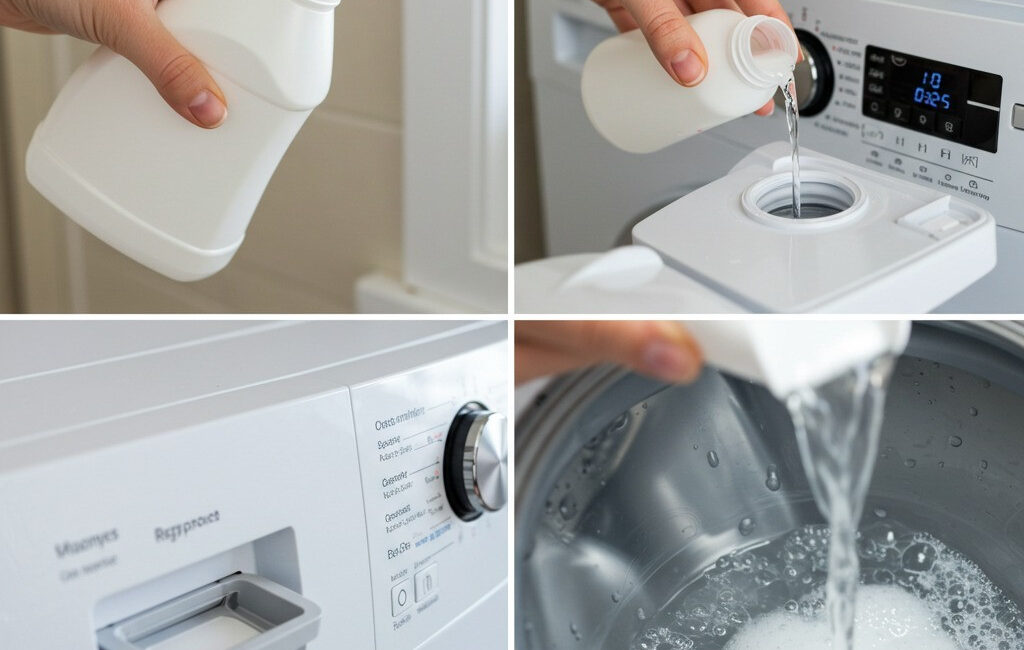
- Wash them with detergent as usual
- Add 1 cup of vinegar to the rinse
- Skip fabric softener entirely
For extremely stiff towels:
- Wash once with hot water and no detergent, adding vinegar
- Then wash again normally with a reduced amount of detergent
This strips years of buildup.
Vinegar and Fabric Safety: What You Should Know
Used correctly, vinegar is safe for most fabrics.
Safe for:
- Cotton
- Linen
- Polyester
- Towels
- Sheets
- Athletic wear
Use caution with:
- Silk
- Wool
- Delicate finishes
For delicate fabrics, use a smaller amount and cold water.
Never pour vinegar directly onto fabric in concentrated form. Always dilute it through the rinse cycle.
Why Vinegar Is Especially Powerful for Towels
Towels are meant to absorb water. Fabric softeners coat towel fibers, making them water-repellent over time. That’s why softener-treated towels often feel soft but don’t dry well.
Vinegar removes this coating.
After a few washes with vinegar:
- Towels absorb better
- Dry faster
- Smell fresher
- Feel fluffier without residue
This is real softness, not artificial slip.
The Myth of Scented Softness
Many people associate softness with fragrance. This is a learned association, not a physical reality.
Fragrance does not equal softness.
Clean fibers equal softness.
Vinegar neutralizes odor-causing bacteria instead of covering them. That’s why laundry treated with vinegar smells neutral and clean rather than perfumed.
If you enjoy scent, add it after drying using natural methods like linen sprays or sachets—not during washing.
Vinegar vs Baking Soda: A Common Confusion
Baking soda is often mentioned alongside vinegar, but they do different jobs.
- Baking soda is alkaline and helps deodorize during washing
- Vinegar is acidic and works best during rinsing
Do not mix them together in the same cycle—they neutralize each other.
If you want both benefits:
- Use baking soda in the wash
- Use vinegar in the rinse
Why This Works Even Better Over Time
The first vinegar wash improves softness.
The second restores it.
The third maintains it.
Over time, reduced buildup means you can:
- Use less detergent
- Wash in cooler water
- Extend the life of your clothes
This is not a one-time trick. It’s a system reset.
The Environmental Bonus
Commercial fabric softeners:
- Contain synthetic fragrances
- Leave chemical residue in water systems
- Contribute to microplastic pollution
Vinegar:
- Biodegradable
- Inexpensive
- Widely available
- Minimal environmental impact
Soft laundry doesn’t need to cost the planet.
Common Mistakes to Avoid
Even simple methods can fail if misused.
Avoid:
- Pouring vinegar directly onto clothes
- Using too much detergent alongside vinegar
- Combining vinegar with bleach
- Expecting instant miracles from one wash on heavily coated fabrics
Laundry softness is cumulative.
The Psychology of Softness
Soft clothing is not just about comfort. It affects mood, sleep quality, and even stress levels.
Soft sheets improve sleep perception.
Soft clothes reduce sensory irritation.
Soft towels feel luxurious and calming.
This is not trivial. Small comforts compound into daily well-being.
A Habit, Not a Hack
The reason this “secret ingredient” works so well is because it’s not a gimmick. It’s chemistry applied gently and consistently.
Once you understand why vinegar works, you stop chasing expensive solutions. You stop blaming machines and fabrics. You realize softness was always possible—you were just washing against it.
Final Thought: Softness Is About Simplicity
Laundry doesn’t need to be complicated.
Softness doesn’t come from more products. It comes from fewer layers of buildup.
One simple ingredient, used thoughtfully, can undo years of residue and restore the natural feel of fabric.
Your clothes don’t need perfume.
They don’t need waxy coatings.
They need to breathe.
And when they do, they become exactly what they were meant to be:
Soft. Light. Comfortable.
Soft as a cloud.