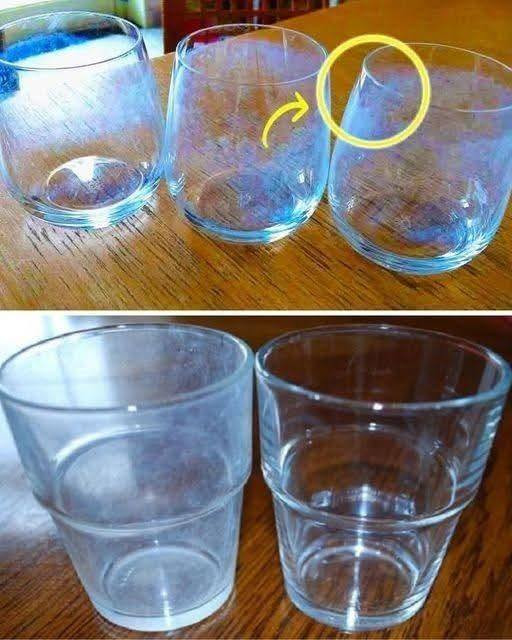
Several factors contribute to glass clouding:
- High temperatures
- Alkaline detergents
- Hard water minerals
- Incomplete rinsing
- Drying cycles that bake residue onto surfaces
Even premium dishwashers cannot overcome mineral-heavy water without help.
The Role of Rinse Aid (And Its Limits)
Rinse aid helps water sheet off glass rather than forming droplets. This reduces mineral spotting.
However:
- It does not remove existing patina
- It does not neutralize mineral content
- It only helps prevent new buildup
Rinse aid is a preventive tool, not a cure.
How Often Should You Restore Glasses?
If your water is hard:
- Deep cleaning every 2–3 months is ideal
- Light vinegar rinses monthly help prevent buildup
Consistency matters more than intensity.
How to Prevent White Patina from Returning
Once your glasses shine again, prevention becomes the priority.
Use Less Detergent
Most people use too much. Excess detergent leaves residue that traps minerals.
Lower Dishwasher Temperature
High heat accelerates mineral deposition.
Skip Heated Drying
Let glasses cool slightly, then towel-dry.
Use Vinegar in the Rinse Cycle
A small amount in the rinse compartment helps neutralize alkalinity.
Dry by Hand
Manual drying prevents water spots entirely.
The Emotional Side of Shiny Glasses
This may sound trivial, but visual clarity affects perception.
Clear glasses:
- Make drinks look more appealing
- Enhance table presentation
- Signal cleanliness and care
- Improve sensory experience
Cloudy glasses subtly reduce enjoyment, even when unnoticed.
Why People Think Cloudy Glass Is “Old”
Cloudiness is often mistaken for aging. In reality, glass does not naturally become cloudy with time. It becomes cloudy with neglect of chemistry.
Well-maintained glassware can last decades without losing clarity.
When Glass Is Truly Beyond Saving
If vinegar soaking produces no improvement at all, etching may be present.
Etched glass:
- Cannot be restored fully
- Can sometimes be improved visually with polishing compounds
- Will never regain original transparency
At that point, replacement may be the only option.
A Note on Safety and Myths
Vinegar does not weaken glass.
It does not remove protective coatings.
It does not make glass fragile.
These are common myths.
Glass is resistant to mild acids. Minerals are not.
The Broader Lesson: Clean vs Clear
Many things in life look clean but aren’t clear.
Glassware teaches an important principle: true clarity requires removal, not masking.
Perfumes mask odor.
Softeners mask stiffness.
Detergents mask residue.
Acids remove.
Final Thought: Shine Is Not Luxury, It’s Knowledge
Shiny glasses are not a sign of expensive kitchens or premium brands. They are the result of understanding what glass needs—and what it doesn’t.
White patina is not inevitable.
Cloudiness is not permanent.
Replacement is not always necessary.
Sometimes, all it takes is:
- One simple ingredient
- A little warmth
- A little patience
- And the right technique
When you restore clarity to glass, you restore something else too: the quiet satisfaction of making something old feel new again.
And that kind of shine is always worth it.