The Simple Orchid Revival Method That Turns Near-Dead Plants Into Thriving Showpieces
At some point, almost every orchid owner experiences the same quiet disappointment. The flowers fall. The leaves lose their shine. The roots shrivel, turn brown, or vanish entirely inside the pot. What once looked like a luxury houseplant now resembles a fragile, dried remnant clinging to life. Many people assume the story ends there. The orchid gets pushed to a corner, watered half-heartedly, or thrown away altogether.
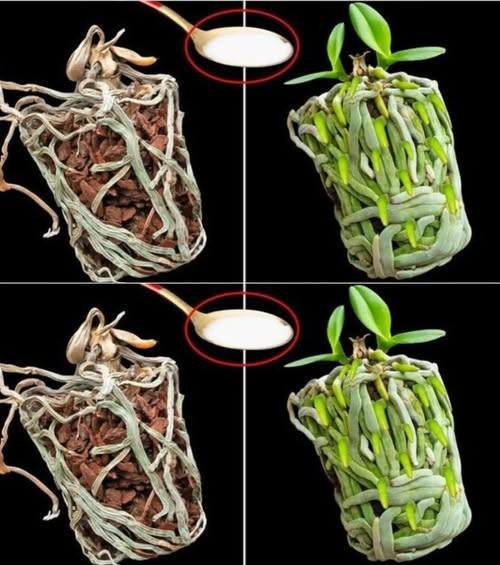
But orchids are far more resilient than they appear. Beneath their delicate reputation lies a survival mechanism honed over millions of years. With the right conditions—and surprisingly little effort—a dried orchid can rebound with astonishing force. In fact, one of the most effective revival methods requires nothing more than a spoon, patience, and a basic understanding of how orchids actually grow.
This is not folklore or wishful thinking. When done correctly, this approach can trigger an explosion of fresh, green roots that quickly fill the pot and restore the plant’s vitality from the inside out.
Why Orchids Die in Homes (And Why They’re Often Misdiagnosed)
Most orchids sold for indoor use are epiphytes. In nature, they do not grow in soil. They cling to trees, rocks, or bark, absorbing moisture and nutrients from the air, rain, and organic debris around them. Their roots are designed to breathe.
When orchids struggle in homes, it is rarely because they are weak. It is because they are misunderstood.
The most common causes of orchid decline include:
Overwatering that suffocates roots
Compact or decomposed potting media that traps moisture
Mineral buildup from tap water
Lack of airflow around the roots
Incorrect feeding practices
As roots suffocate or rot, the orchid can no longer absorb water efficiently—even if the pot is constantly wet. Leaves begin to wrinkle. Growth stalls. Eventually, the plant appears dried and lifeless, even though moisture may be present.
This is where the revival process begins—not by adding more water, but by restoring the root system.
The Secret: Stimulating Roots, Not Leaves
Orchid recovery does not start with flowers or foliage. It starts underground—or more accurately, inside the pot.
Healthy orchid roots are firm, plump, and green or silvery when dry. When watered, they turn bright green, signaling active absorption. Dried orchids often lack these living roots, leaving the plant unable to sustain itself.
The goal of the spoon method is to gently reintroduce nutrients and encourage root growth without overwhelming the plant.
This approach works because orchids respond best to consistency and precision, not excess.
Why a Spoon Makes a Difference
A spoon is not magical—but it enforces discipline.
Many orchids die because they receive too much of everything: too much fertilizer, too much water, too much “help.” A spoon limits quantity and encourages careful observation.
Using a spoon ensures:
Controlled nutrient delivery
Reduced risk of fertilizer burn
Gentle stimulation instead of shock
Better monitoring of plant response
This controlled approach mimics the orchid’s natural environment, where nutrients arrive in small, diluted doses over time.
Preparing the Orchid for Revival
Before introducing anything new, the orchid must be assessed honestly.
Remove the plant from its pot and examine the roots. Dead roots are mushy, hollow, or brittle. Living roots feel firm and show some color, even if minimal.
Trim away completely dead roots using clean, sterilized scissors. Do not over-prune. If a root shows any firmness or green tissue, leave it.
Inspect the crown of the plant—the area where leaves emerge. As long as this is firm and not rotting, the orchid has a strong chance of recovery.
Repot the orchid into fresh, airy orchid bark or a well-draining orchid mix. Avoid standard potting soil entirely.
At this stage, the orchid may look unimpressive. That is normal. The real transformation happens below the surface.
The Spoon Method Explained
The spoon method revolves around diluted nourishment, applied sparingly but consistently.
Instead of soaking the plant or flooding the pot, nutrients are introduced gradually, encouraging roots to grow toward the source rather than retreat from it.
A common approach involves:
A teaspoon-sized feeding
Highly diluted orchid fertilizer or organic nutrient solution
Application directly to the potting medium, not the leaves
The spoon ensures that nutrients reach the root zone without saturating the plant.
This slow, measured feeding mimics how orchids absorb nutrients in the wild—from rainwater trickling through bark, carrying trace minerals.
Why Roots Respond So Quickly
Orchid roots are opportunistic. When conditions improve, they act fast.
Once moisture, airflow, and nutrients are balanced, dormant root nodes activate. New root tips emerge bright green and pointed, seeking space and stability. These roots grow rapidly, often surprising growers who assumed the plant was finished.
As new roots develop:
Water uptake improves
Leaves regain firmness
Photosynthesis increases
Overall growth accelerates
It is not uncommon for a previously dried orchid to fill its pot with roots within weeks when conditions are right.
The Importance of Patience and Observation
One of the most overlooked aspects of orchid care is restraint.
After applying the spoon method, resist the urge to “check” constantly. Overhandling disrupts root development and stresses the plant.
Instead, observe signs of progress:
Green root tips
Increased leaf turgor
Subtle new growth at the base
These changes indicate success long before flowers appear.
Click page 2 to continue