It happened in the most ordinary way possible. No dramatic discovery, no antique shop, no dusty attic. Just a neighbor, a trash bin, and an object seconds away from disappearing forever.
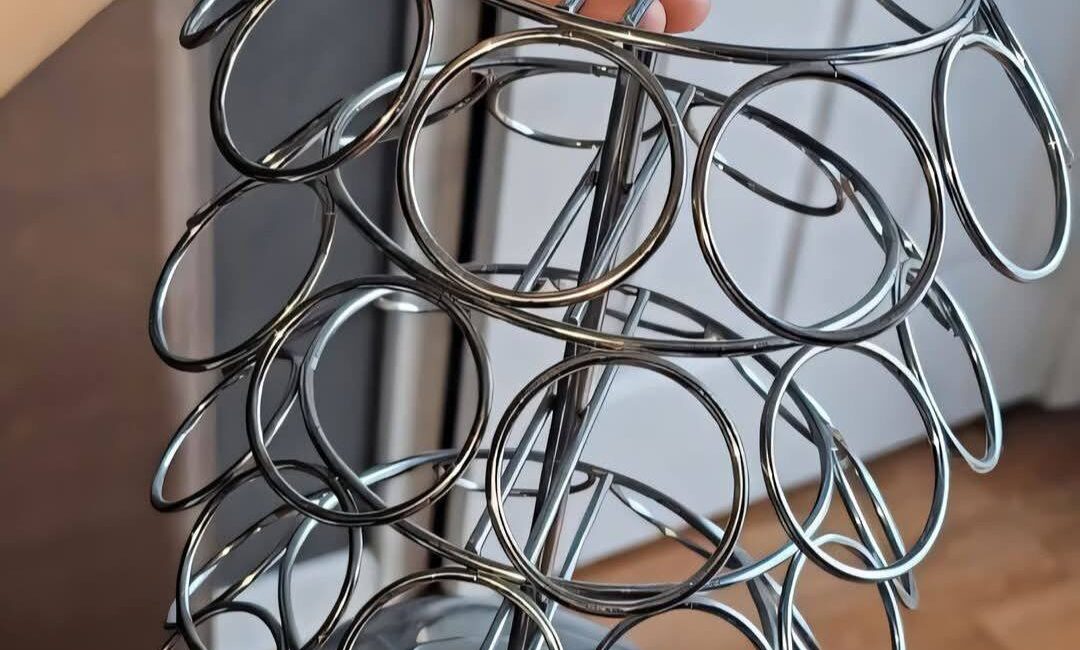
I was walking past her porch when I noticed her hovering over the bin, holding something small and strangely shaped in her hand. It didn’t look broken. It didn’t look disposable. It looked… specific. Purposeful. The kind of object that once had a job, even if that job had been forgotten.
Out of instinct more than anything else, I asked if she was throwing it away.
She laughed and said yes. She had found it while cleaning and had absolutely no idea what it was or what it was used for. It wasn’t labeled. It wasn’t familiar. It didn’t match anything else in her kitchen. So into the trash it was about to go.
That’s when I asked if I could have it.
She shrugged, handed it to me, and said something that stuck with me:
“If you can figure out what to do with it, be my guest.”
WHY SOME OBJECTS FEEL TOO INTERESTING TO THROW AWAY
There is something deeply unsettling about throwing away an object whose purpose you don’t understand. It feels like closing a book halfway through the story. Objects like this carry quiet histories. They were designed, manufactured, sold, used, and relied upon — sometimes for decades — before falling out of collective memory.
This wasn’t trash. It was a question mark.
The shape alone suggested intention. Not decorative, not random. Balanced in the hand. Made of material that had clearly survived years of use. Whatever it was, it had been useful enough to exist in the first place.
That’s why I took it.
Not because I needed it — but because I needed to understand it.
THE STRANGE DISAPPEARANCE OF EVERYDAY TOOLS
One of the most fascinating side effects of modern life is how quickly useful objects become obsolete. Not because they stop working, but because we stop recognizing them.
Kitchen drawers used to be full of single-purpose tools: things designed to do one job exceptionally well. As appliances became multifunctional and packaging became more standardized, many of those tools quietly vanished.
When they resurface today, they look foreign. Almost suspicious.
And that’s exactly what makes them so interesting.
FIRST IMPRESSIONS: WHAT IT WASN’T
When I got home, the first thing I did was rule things out.
It wasn’t electrical.
It wasn’t decorative.
It wasn’t broken.
It wasn’t a toy.
There were no moving parts that suggested wear or damage. No sharp edges that suggested danger. No obvious connection points that suggested it belonged to a larger machine.
It stood alone.
Which usually means one thing: it was designed to be held, used, and put back — again and again.
THE SHAPE TELLS A STORY
Good tools communicate their purpose through form. Even if you don’t immediately know what something does, the shape often hints at how it’s meant to be used.
This one felt right in the hand. Balanced. Not heavy, but not flimsy. The material suggested durability rather than disposability. The design felt intentional, not improvised.
That ruled out novelty items or gimmicks.
This was something practical — something someone once relied on.
THE MOMENT IT CLICKED: THINKING LIKE A KITCHEN
The breakthrough didn’t come from guessing wildly. It came from changing perspective.
Instead of asking “What is this?” I asked:
“What kind of task would benefit from this shape?”
That’s when the kitchen came into focus.
Not modern, appliance-heavy cooking — but older styles of cooking. The kind that involved hands, precision, repetition, and care. Recipes where detail mattered. Where uniformity mattered. Where touch mattered.
Suddenly, it made sense.
This wasn’t a general-purpose tool.
It was a precision helper.
WHY MODERN KITCHENS DON’T RECOGNIZE IT ANYMORE
Today, many tasks this object was designed for are handled by machines, pre-processed ingredients, or shortcuts. What used to require skill and repetition is now outsourced to packaging and automation.
That doesn’t mean the tool lost its value.
It means the context disappeared.
And when context disappears, objects look meaningless.
WHAT THIS OBJECT IS PERFECT FOR TODAY
Once you understand its role, you realize something surprising: this little forgotten tool still makes perfect sense — especially for people who enjoy cooking slowly, intentionally, and creatively.
It shines in recipes where:
Precision matters
Uniform results are important
Hands-on control improves the outcome
Small details elevate the final dish
It’s the kind of tool that doesn’t replace skill — it supports it.
And once you see that, it becomes obvious why throwing it away would have been a mistake.
ONE PERSON’S TRASH, ANOTHER PERSON’S “WAIT A MINUTE…”
This is how knowledge disappears — not dramatically, but quietly. Objects get discarded not because they’re useless, but because their purpose is no longer obvious.
If I hadn’t asked that question, this tool would be gone forever. Not broken. Not worn out. Just misunderstood.
That’s the strange fate of many well-designed things.
WHY KEEPING IT FELT IMPORTANT
It’s not just about the object itself. It’s about preserving the idea that tools once existed to make small tasks easier, more precise, and more satisfying — not faster or more disposable.
This little thing is a reminder that function doesn’t always shout. Sometimes it whispers.
And if you don’t listen closely, you miss it.
THE QUIET JOY OF REDISCOVERY
There is a unique pleasure in learning how something works — especially when it has been hiding in plain sight. The moment of recognition turns confusion into respect.
Suddenly, the object feels intelligent.
Suddenly, it earns its place.
And suddenly, you realize how many similar tools have already disappeared simply because no one stopped to ask, “What is this for?”
A FINAL THOUGHT ON SAVING THE UNFAMILIAR
Not everything old is valuable. But everything purposeful deserves a second look.
Sometimes, the most interesting objects are the ones that make us pause — the ones we don’t immediately recognize. They remind us that knowledge is fragile, and usefulness is often contextual.
This little kitchen tool didn’t change my life.
But it did save a small piece of practical wisdom from the trash.
And that feels like a win.