A Forgotten Household Tool That Once Defined Daily Life
At first glance, it looks heavy.
Strange.
Almost decorative — yet intimidating.
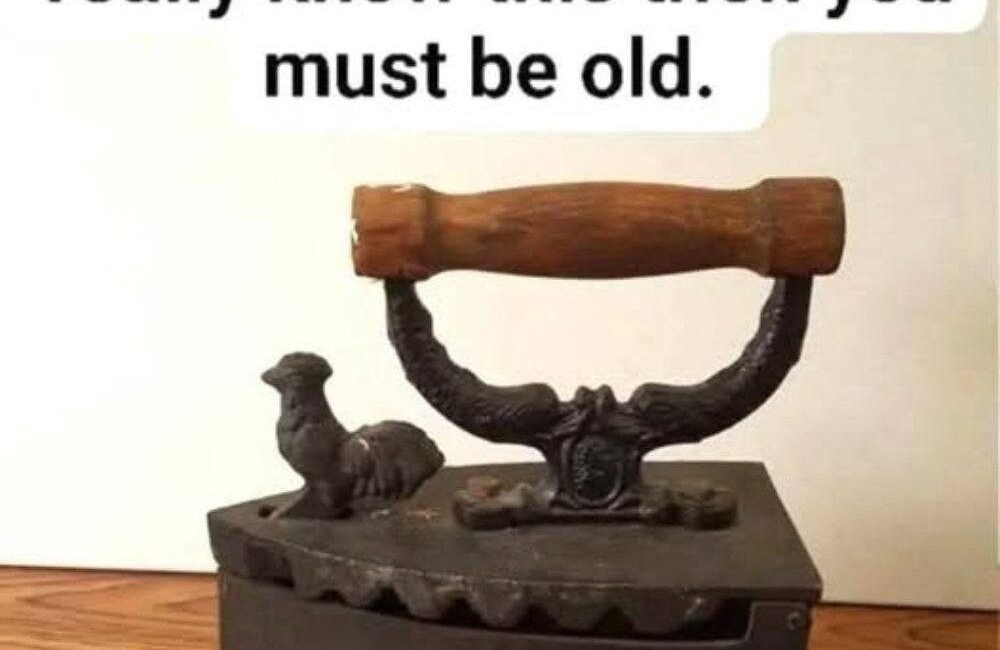
Most people today would guess it’s a doorstop, a weapon, or some obscure industrial tool. And when someone finally says, “It’s an iron,” the reaction is usually disbelief.
But not just any iron.
This object is a charcoal box iron, a household essential that once sat at the center of daily life for millions of families around the world. Long before electricity, long before steam, long before temperature dials and safety shut-offs, this was how clothes were pressed, wrinkles were removed, and respectability was maintained.
This iron isn’t just a tool.
It’s a window into how people lived, worked, and endured.
What Exactly Is a Charcoal Box Iron?
A charcoal box iron is an early form of clothes iron that used hot charcoal or embers as its heat source.
Unlike the solid flat irons that were heated directly on a stove, this type of iron had:
- A hollow metal body
- A hinged lid or opening
- Air vents on the sides
- A wooden handle to protect hands from heat
Inside the metal “box,” users placed glowing charcoal or embers. The heat radiated through the thick metal base, allowing clothes to be pressed.
No cords.
No electricity.
Just fire, metal, and patience.
Why It Looks So Heavy (Because It Is)
Charcoal box irons were intentionally massive.
They were made of:
- Cast iron or thick steel
- Reinforced hinges
- Heavy bases designed to retain heat
Weight was an advantage. The pressure helped flatten fabric while the retained heat reduced the need for constant reheating.
Lifting and maneuvering one of these irons for hours was physically demanding, especially when laundering was done weekly for entire households.
Ironing was not a quick chore.
It was labor.
The Purpose of the Vents and Chimney
One of the most curious features of charcoal irons is the ventilation system.
Those holes and slots were not decorative.
They were essential.
- Charcoal needs oxygen to stay hot
- Air vents allowed embers to burn evenly
- Some irons even had small chimneys to improve airflow
Without proper ventilation, the charcoal would smother and cool — forcing the user to stop, reopen the iron, and restart the fire.
Ironing required constant attention.
Why the Handle Is Made of Wood
Touching a charcoal iron directly would be impossible.
The wooden handle served multiple purposes:
- Insulation from extreme heat
- Grip stability
- Distance between the user’s hand and the hot metal
Even so, burns were common.
Ironing demanded focus, experience, and caution. There were no safety standards — only learned skill.
The Ritual of Ironing in the Past
Using a charcoal iron wasn’t a simple plug-and-go process.
It involved a routine:
- Lighting charcoal or embers
- Waiting until they reached the right heat
- Carefully placing them inside the iron
- Regulating airflow
- Testing heat on scrap fabric
- Pressing clothes in sections
- Reheating when necessary
Smoke, ash, and sparks were constant companions.
And yet, perfectly pressed clothes were still expected.
Why This Iron Was So Common
Charcoal box irons were widespread because they were:
- Affordable
- Independent of electricity
- Durable
- Repairable
They were used in homes, laundries, and tailors’ shops across Europe, Asia, Africa, and the Americas.
In many regions, they remained in use well into the mid-20th century — even after electric irons existed.
Why?
Because electricity was unreliable or unavailable.
The Social Meaning of Ironed Clothes
Today, wrinkled clothes are a minor inconvenience.
In the past, they were a social statement.
Pressed clothing signaled:
- Discipline
- Cleanliness
- Respectability
- Readiness for public life
Ironing wasn’t about fashion.
It was about dignity.
And this iron made that possible.
Why Younger Generations Don’t Recognize It
Modern irons are:
- Lightweight
- Temperature-controlled
- Fast
- Clean
We no longer associate ironing with fire, smoke, or physical strain.
So when people see a charcoal iron today, it feels alien — almost medieval. The design belongs to a time when everyday objects were built to last decades, not years.
Recognizing it often means:
- You’ve seen one used
- You grew up around older relatives
- You’ve lived in places where electricity wasn’t always guaranteed
That’s why people joke: “If you know what this is, you must be old.”
But age isn’t the point.
Experience is.
Why These Irons Are Collected Today
Charcoal box irons are now:
- Antiques
- Decorative objects
- Museum pieces
- Symbols of resilience
Collectors value them for:
- Craftsmanship
- Weight and solidity
- Historical significance
Some still work — a testament to how overbuilt they were.
A Quiet Reminder Hidden in Metal
This iron tells a story modern appliances never will.
A story of:
- Slower time
- Manual effort
- Heat controlled by instinct
- Tasks done without shortcuts
It reminds us that what we now call “convenience” was once earned through endurance.
Final Thought
The object in the photo isn’t mysterious at all.
It’s a charcoal box iron — a tool that once turned fire into order, chaos into neat lines, and raw cloth into wearable respect.
It doesn’t just belong to the past.
It belongs to the memory of a world where everyday life required strength, patience, and skill — and where even something as simple as ironing was an act of perseverance.
Heavy.
Hot.
Unforgiving.
And yet… indispensable.