Few foods carry memory the way a tomato does. The scent alone can pull the mind backward through time: warm soil under bare feet, sun hitting skin in late afternoon, hands stained slightly red from harvesting. A truly ripe tomato is not just food. It is a season, a rhythm, a promise that life can be simple and abundant at the same time. The tragedy of tomatoes is not that they disappear in winter, but that most preservation methods strip away the very thing that makes them special. Texture collapses, sweetness dulls, acidity sharpens, and what remains is useful but soulless.
After more than a decade of experimenting with preservation methods—freezing, slow-drying, oven-drying, pressure canning, turning them into sauce, paste, purée, and concentrate—one method stands above all others for preserving tomatoes as close as possible to their summer self. It is not trendy. It is not industrial. It is quiet, traditional, and profoundly effective. The jar method preserves whole tomatoes gently, without forcing them into another identity. The result is something remarkable: tomatoes that, even in the depth of winter, still taste like sunlight.
This method does not chase perfection or longevity at the expense of flavor. It respects the tomato’s natural structure and chemistry. It allows the fruit to remain whole, surrounded by its own juice, protected rather than transformed. When done correctly, the jar becomes a time capsule. Opening it months later feels less like using preserved food and more like reopening a season.
WHY MOST TOMATO PRESERVATION METHODS FAIL TO PRESERVE THE EXPERIENCE
Tomatoes are complex. Their flavor is not just sweetness or acidity but a balance of sugars, organic acids, volatile aroma compounds, and water content that exists in a fragile equilibrium. Most preservation techniques disrupt this balance.
Freezing ruptures cell walls. When thawed, tomatoes collapse into watery softness. Drying removes water so aggressively that sugars concentrate but freshness disappears. Canning sauces requires long cooking times that deepen flavor but erase brightness. Paste is powerful but heavy, a completely different product than a fresh tomato.
These methods are not wrong. They are useful. But they do not preserve the experience of biting into a tomato that still remembers the vine.
The jar method works because it minimizes intervention. It avoids excessive heat. It keeps tomatoes whole or gently halved. It allows natural juices to act as both flavor carrier and protective medium. Instead of fighting the tomato’s nature, it collaborates with it.
THE SCIENCE BEHIND THE JAR METHOD
At the heart of this method is a simple principle: reduce oxygen exposure while maintaining structural integrity. Tomatoes spoil primarily due to microbial activity and oxidation. Both processes require oxygen. By sealing tomatoes in sterilized glass jars and processing them just long enough to create a vacuum seal, the environment inside the jar becomes hostile to spoilage while remaining gentle on flavor.
Glass is inert. It does not interact chemically with acids. It does not absorb odors. It does not leach compounds. This makes it ideal for long-term storage of acidic foods like tomatoes.
The heat used in this method is not meant to cook the tomatoes into submission. It is designed to neutralize microorganisms and activate the sealing process. The tomatoes soften slightly, just enough to settle into their jars, but they do not disintegrate.
The result is preservation without aggression.
THE IMPORTANCE OF TOMATO SELECTION
This method begins before the kitchen. It begins with the tomato itself. Not all tomatoes are equal when it comes to preservation.
The best candidates are fully ripe but still firm. Overripe tomatoes will break down too quickly. Underripe tomatoes lack the sugar balance needed for flavor retention. Heirloom varieties with thin skins and complex flavor profiles work beautifully, though sturdier garden varieties also perform well.
What matters most is integrity. Tomatoes must be unblemished, free from cracks, mold, or bruising. Any weakness becomes a liability in long-term storage.
Washing should be thorough but gentle. Dirt introduces bacteria. Rough handling introduces damage. This is preservation that rewards care.
BLANCHING AS A TRANSITION, NOT A TRANSFORMATION
Blanching is often misunderstood as a cooking step. In this method, it is not about cooking but about loosening the skin and preparing the tomato for preservation.
A brief immersion in boiling water followed by an immediate ice bath shocks the skin into releasing itself. This allows peeling without tearing flesh. Removing the skin is essential. Tomato skins toughen during preservation and interfere with texture. They also harbor microorganisms.
The blanching time is intentionally short. Thirty to sixty seconds is enough. Anything longer begins to alter internal structure.
Peeling should feel effortless. If it does not, the tomato was either not ripe enough or blanched insufficiently. The goal is ease, not force.
THE JAR AS A MICRO-ENVIRONMENT
Sterilized glass jars are not merely containers. They are controlled environments. Cleanliness here is non-negotiable. Any contamination compromises the entire batch.
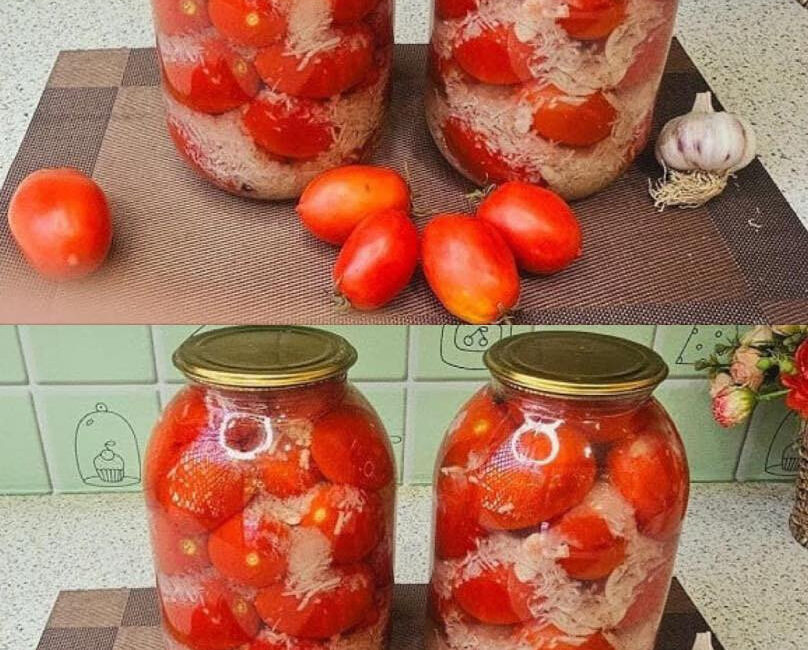
Sterilization ensures that the only life inside the jar is the tomato itself. When the jar is filled, the tomatoes release their own juice, creating a natural brine that protects flavor and texture.
Salt is optional. When used, it enhances flavor but does not act as a primary preservative in this method. The preservation comes from heat processing and vacuum sealing.
Packing should be firm but gentle. Tomatoes should be nestled, not crushed. Pressing releases juice but structure must remain recognizable.
HEAT PROCESSING AND THE CREATION OF SAFETY
The final heating step is what transforms jars from containers into time capsules. Placing sealed jars into a water bath and maintaining a steady simmer allows internal pressure to equalize and air to escape.
As the jars cool, the lids seal tightly, creating a vacuum. This vacuum is the guardian of freshness. It prevents oxygen from entering and microbes from surviving.
The processing time is long enough to ensure safety but short enough to protect flavor. This balance is what makes the method exceptional.
Cooling must be undisturbed. Movement during cooling can interfere with sealing. Patience here pays dividends months later.
STORAGE AS A SLOW, QUIET PARTNERSHIP
Once sealed, jars should be stored in a cool, dark place. Light degrades flavor compounds. Heat accelerates breakdown. Darkness and stability preserve quality.
A pantry, cellar, or cupboard away from appliances is ideal. Over time, the tomatoes mellow slightly but retain brightness. Their juice becomes richer, infused with their own essence.
Properly stored jars last up to a year, sometimes longer, without losing character.
WHAT THESE TOMATOES BECOME IN WINTER
Opening a jar months later is an experience. The scent released is unmistakably tomato, not sauce, not paste, not acid-heavy concentrate. The texture is softened but intact. The flavor is rounded, sweet, and balanced.
These tomatoes integrate effortlessly into winter cooking. They elevate soups without overpowering. They enrich stews without dominating. They form the backbone of sauces that taste alive rather than cooked-down.
Even eaten gently warmed with olive oil and bread, they carry the memory of summer forward.
They are not substitutes for fresh tomatoes. They are preserved tomatoes that remember what fresh once meant.
EMOTIONAL AND CULTURAL DIMENSIONS OF PRESERVATION
This method is not just practical. It is cultural. Across generations, preserving whole tomatoes in jars has been a way to bridge seasons, to ensure continuity, to honor abundance by refusing waste.
There is something grounding about lining shelves with jars of red. It is a visible reminder that time can be bent with care and attention. That effort today becomes comfort tomorrow.
In a world obsessed with speed and convenience, this method asks for slowness and intention. It rewards patience with something no store-bought product can replicate.
WHY THIS METHOD ENDURES WHEN OTHERS FADE
Trends come and go. Appliances evolve. Shortcuts promise convenience. Yet this method persists because it aligns with how tomatoes want to be treated.
It does not force them into another form. It preserves identity rather than replacing it. That is why it works year after year.
After ten years of relying on this technique, it becomes less of a method and more of a ritual. A seasonal rhythm. A quiet agreement between gardener, cook, and future self.
Every jar is a small act of trust. Trust that summer will return, and that when it does not, its flavor still can.
A METHOD THAT TEACHES MORE THAN PRESERVATION
Beyond food, this technique teaches restraint. It demonstrates that preservation does not require domination. That sometimes the best way to keep something is to interfere as little as possible.
It teaches respect for raw materials, for process, for time. It teaches that quality comes not from excess effort but from appropriate effort.
And perhaps most importantly, it reminds that some pleasures are worth saving properly.
When winter feels long and heavy, opening a jar of tomatoes preserved this way does not just feed the body. It feeds memory, patience, and the quiet belief that seasons always return, even if only through glass and careful hands.