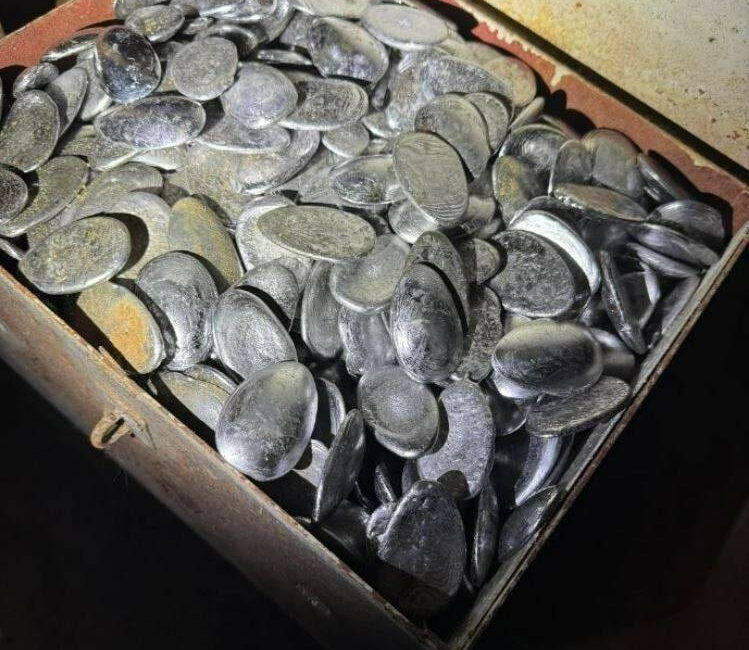
When someone stumbles upon a box, a crate, or an entire shelf filled with heavy cast iron spoons in the basement of an old house, confusion is almost guaranteed. They look too thick to be kitchen utensils. Too crude to be decorative. Too uniform to be random junk. The immediate questions follow naturally: What are these things. Why are there so many. And why were they kept down here, hidden away from the living spaces of the home.
To modern eyes, the answer feels unexpected, sometimes even unsettling. These were not cooking tools. They were working tools. Specifically, many of these cast iron spoons were used as bullet molds or lead ladles, part of a time when households regularly made their own ammunition and fishing weights at home.
This discovery opens a small but powerful window into how people lived, worked, learned, and survived before convenience replaced necessity.
WHEN MAKING THINGS AT HOME WAS NORMAL
In the late nineteenth and early twentieth centuries, self-sufficiency was not a lifestyle trend. It was reality. Rural households, frontier families, and even many town dwellers could not rely on constant access to manufactured goods. If something was needed regularly, it was often cheaper and more reliable to make it yourself.
Ammunition was one of those items. Hunters depended on it for food. Farmers needed it to protect livestock. Fishermen relied on weighted lines. Buying pre-made bullets or sinkers was not always practical or affordable, especially in remote areas.
Cast iron spoons became a solution. Iron handled heat well. It was durable. It was cheap. And most importantly, it could safely hold molten metal without deforming. These spoons were not refined kitchenware. They were tools built for endurance, not elegance.
WHY THEY WERE STORED IN THE BASEMENT
The basement was the workshop of the house. It was cooler, better ventilated, and isolated from daily living spaces. Fire hazards, fumes, and heavy tools stayed below ground level.
Storing cast iron spoons used for melting lead in the basement was not accidental. It was deliberate. The space allowed for safer handling of heat and materials that did not belong near food preparation or children’s play areas.
Basements also served as storage for scrap materials. Old pipes, damaged car parts, and leftover metal were often collected and reused. Nothing went to waste. A pile of identical spoons in the basement usually meant one thing: this process happened often.
A HOUSEHOLD SKILL, NOT A FACTORY OPERATION
It is important to understand that this was not industrial manufacturing. This was domestic production. Families melted small amounts of metal at a time. They worked carefully, methodically, and with purpose.
The cast iron spoon was part of a larger ecosystem of tools: simple molds, basic heat sources, protective gloves, and a practiced routine passed down through observation rather than manuals. These skills were learned by watching, not by reading instructions.
Children grew up seeing adults handle tools with seriousness and respect. They learned patience, precision, and caution. They learned that dangerous materials demanded focus and discipline. This knowledge was not abstract. It was embedded in everyday life.
THE CULTURE OF MAKING INSTEAD OF BUYING
What these spoons represent goes beyond their physical function. They symbolize a mindset. A belief that you could solve problems with your hands. That you were not helpless without a store. That knowledge lived in people, not in packaging.
This culture created pride. Not the loud kind, but the quiet confidence that came from competence. Making what you needed fostered independence and resilience. It connected families through shared tasks and responsibilities.
In many homes, these moments were communal. Someone gathered materials. Someone managed the heat. Someone prepared molds. It was work, but it was also togetherness.
WHY SO MANY OF THEM EXISTED
Finding one cast iron spoon might feel unremarkable. Finding dozens raises eyebrows. But quantity made sense.
Metal tools cracked, warped, or became contaminated over time. Having multiple spoons allowed rotation. Some were reserved for specific metals. Others were backups. In some cases, neighbors shared or traded tools, and collections grew.
Additionally, these spoons were inexpensive and durable. Once acquired, they were rarely thrown away. They accumulated quietly, year after year.
THE DISAPPEARANCE OF EVERYDAY KNOWLEDGE
As industrial production expanded and regulations increased, home metal casting faded. Ready-made goods became cheaper and safer. Skills that were once common became niche.
The cast iron spoon bullet mold shifted from necessity to curiosity. What was once normal now feels obscure. That gap in understanding is why modern homeowners are puzzled when they uncover these objects.
Without context, tools lose their voice. With context, they speak volumes.
A MODERN REDISCOVERY OF OLD SKILLS
Today, there is renewed interest in historical craftsmanship. Not because people need these skills to survive, but because they crave connection to something tangible and real.
Hobbyists, historians, and collectors seek out these tools to understand how everyday people once lived. Museums display them. Workshops discuss them. They are studied as artifacts of domestic industry rather than weapons.
The focus has shifted from use to understanding.
WHAT THESE SPOONS REALLY REPRESENT
A cast iron spoon found in a basement is not just a piece of metal. It is evidence of a different relationship with labor, materials, and self-reliance. It tells a story of households that did not separate living from making.
It reminds us that basements were not just storage spaces. They were centers of production. Places where skills were practiced, passed on, and respected.
Finding many of them together suggests routine, not secrecy. Habit, not danger. It was simply part of life.
WHY THEY WERE KEPT, NOT THROWN AWAY
People did not discard functional tools lightly. Even when they stopped using them, they kept them. Tools carried value, memory, and potential future use.
Basements became time capsules. When families moved on, modernized, or left homes behind, these objects stayed exactly where they had always been.
That is why they surface decades later, still heavy, still intact, still confusing to modern eyes.
A SMALL OBJECT WITH A BIG STORY
In the end, those cast iron spoons are storytellers. They speak of ingenuity, caution, craftsmanship, and community. They represent a time when making things yourself was not a hobby but a skill of survival.
So when you find a ton of them in an old basement, you are not looking at junk. You are looking at evidence of how ordinary people once shaped their world with their hands.
Quietly. Carefully. And together.