- Flour
- Sugar
- Baking powder
- Salt
- Butter
This coats the flour particles in fat, preventing gluten formation.
Result: unbelievably tender crumb.
Step 2: Add Liquids Slowly
Milk is added gradually, then egg whites and vanilla.
This controlled hydration creates:
- Even structure
- No air tunnels
- Silky texture
No aggressive mixing. No rushing.
Baking: Where Softness Is Decided
- Oven temperature: 160–170°C (325°F)
- Bake just until the center springs back
- Do not wait for browning
White cakes should not turn golden.
If they do, they’re already past perfect.
The Moment You Know You Did It Right
When the cake cools:
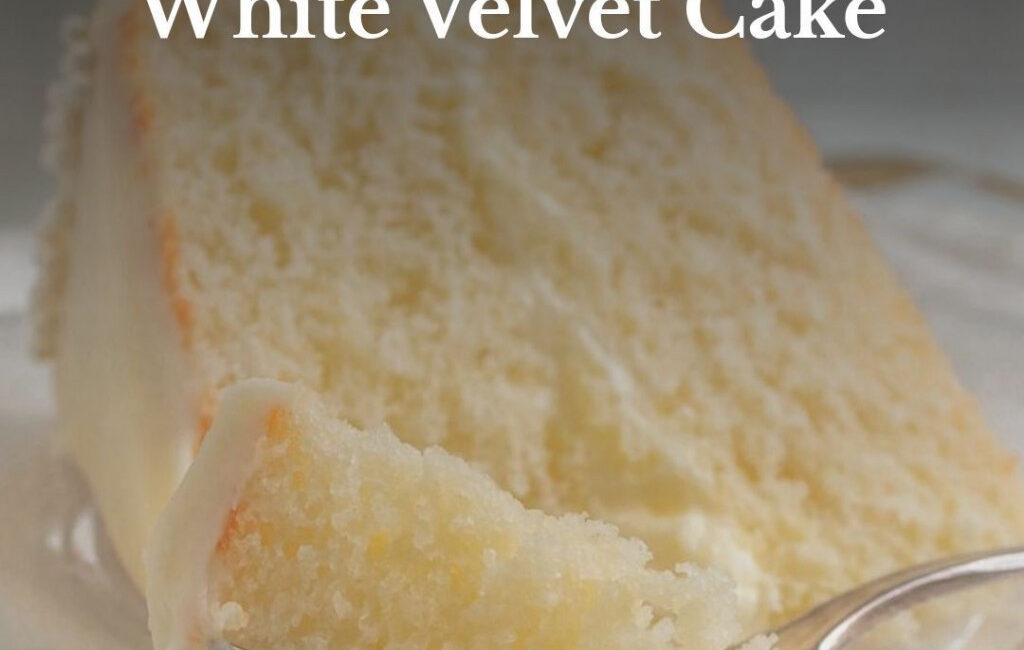
- The surface is smooth and pale
- The crumb is tight and uniform
- The texture feels almost plush
When sliced:
- No crumbs fall apart
- The knife glides through
- The inside looks like soft cotton
That’s velvet.
Frosting That Complements (Not Overpowers)
This cake pairs best with:
- Whipped vanilla frosting
- White chocolate buttercream
- Light cream cheese frosting
Avoid heavy, overly sweet frostings.
The cake’s elegance deserves balance.
When This Cake Is Perfect
This is the cake people choose for:
- Weddings
- Birthdays where elegance matters
- Layer cakes with colored decorations
- Any moment you want clean, refined beauty
It’s also the cake people ask for again—because softness like this is unforgettable.
Common Mistakes to Avoid
- Using all-purpose flour
- Overbeating egg whites
- Baking too hot
- Substituting yolks
- Overmixing “just to be safe”
White velvet cake rewards confidence and calm.
Final Thought
A truly bright white cake isn’t about decoration.
It’s about discipline.
When done right, it doesn’t need fruit, syrup, or tricks.
Its beauty is in its purity.
Its luxury is in its texture.
Soft as velvet.
Bright as snow.
And once you make it correctly, no other white cake will ever compare.