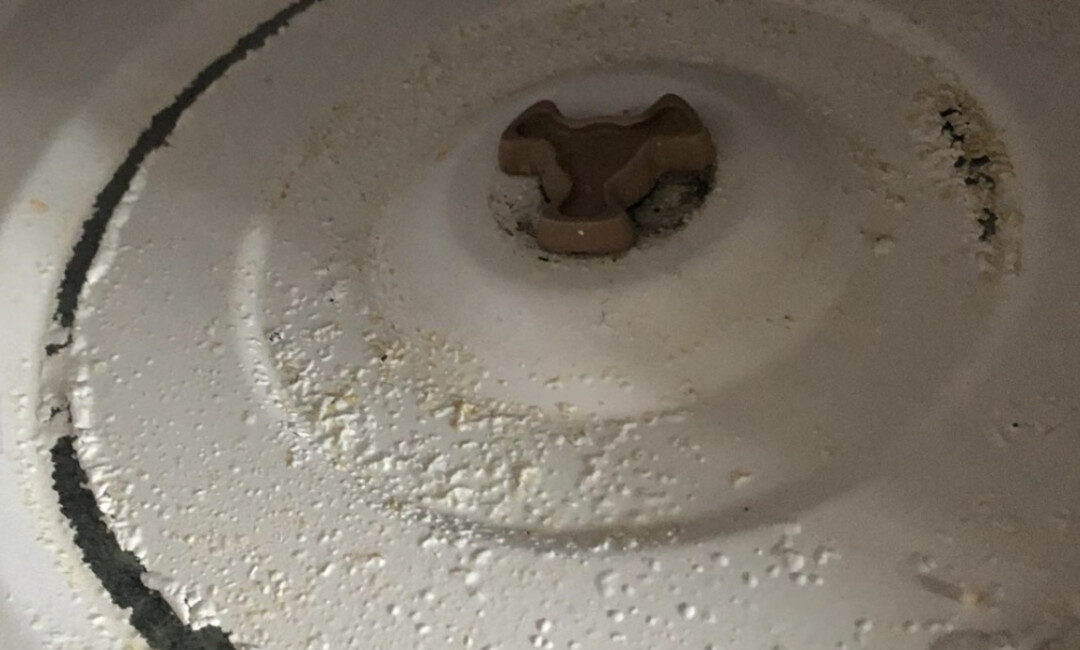
Once bubbling starts, peeling usually follows.
When the coating lifts:
- The metal underneath is exposed
- Moisture contacts bare steel
- Oxidation begins
That’s when you may notice:
- Brown or orange spots
- Flaking metal
- Rough textures
At this stage, the damage is no longer cosmetic. Rust interferes with microwave energy reflection and can worsen rapidly.
Is It Dangerous to Keep Using a Microwave Like This?
This is the critical question.
Small, isolated bubbles or chips
→ Usually not immediately dangerous, but they should be monitored.
Large peeling areas or visible rust
→ The microwave is no longer safe to use.
Exposed metal can:
- Cause arcing (sparks)
- Damage internal components
- Create uneven heating
- Increase fire risk
Microwaves rely on controlled reflection of energy. When the interior surface is compromised, that control is lost.
Can You Repair a Bubbling or Peeling Microwave Interior?
Sometimes—but only in limited cases.
When Repair May Be Possible
- Damage is small and localized
- No active rust
- The metal underneath is intact
Special microwave-safe cavity paint exists for this purpose. The area must be:
- Sanded carefully
- Completely dry
- Free of rust
Even then, this is a temporary solution.
When Repair Is Not Worth It
- Large peeling sections
- Rust spreading under the coating
- Multiple damaged areas
In these cases, replacement is the safer and often more economical option.
How to Prevent This from Happening Again
Gentle habits make a real difference:
- Clean splatters quickly, especially acidic ones
- Use soft cloths or non-abrasive sponges
- Avoid harsh chemicals
- Never run the microwave empty
- Cover food to reduce steam and splatter
- Wipe condensation regularly
These steps don’t make a microwave immortal—but they dramatically extend its usable life.
The Bigger Picture: Why This Problem Feels So Frustrating
The annoyance comes from invisibility.
You don’t see the damage happening. You just see the result one day and feel blindsided. But microwaves are harsh environments—constant heat, moisture, and chemical exposure inside a metal box.
Bubbling and peeling aren’t signs of neglect. They’re signs of material fatigue under extreme conditions.
Final Thought
When the inside of your microwave starts bubbling and peeling, it’s not misbehaving—it’s telling you a story. A story about moisture, heat, time, and tiny stresses that quietly add up.
Small damage can sometimes be managed. Advanced damage shouldn’t be ignored.
A microwave works by precision and containment. Once its interior surface loses integrity, safety and performance follow shortly after.
In appliances, as in life, surfaces matter more than we think—especially the ones we rarely look at.