In extreme conditions, yes.
Imagine driving in a rural area on a cold night when your defogger suddenly stops working. Within minutes, your windshield fogs over, and visibility drops to almost nothing. It’s a genuinely dangerous situation that has caused real accidents.
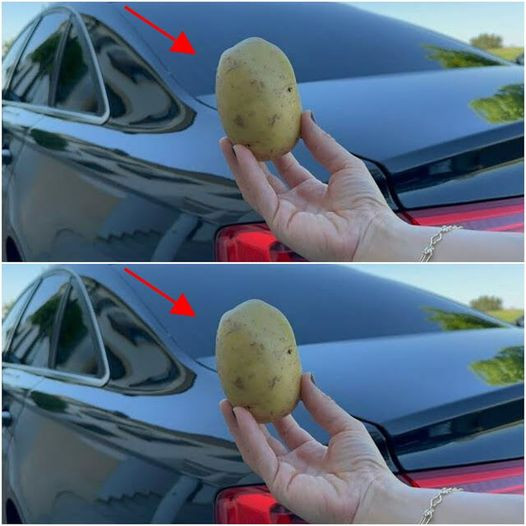
In that scenario, something as simple as having a potato in your glove box—ready to clear up your vision—could literally save lives.
It might sound ridiculous in theory, but practicality often hides in the ridiculous.
And in emergencies, it’s not about what should work—it’s about what does.
Real Drivers, Real Stories
The potato trick has become an internet legend, with countless drivers swearing by it. Some swear it saved them during blizzards, others use it religiously before long winter commutes.
Here are a few examples from drivers who tried it:
- “I live in Norway, and my grandmother always rubbed a potato on her car windows before winter mornings. I thought it was nonsense until I tried it. My windshield doesn’t fog nearly as fast.”
- “I’m a trucker, and I keep a potato in my cabin. One time, my heating system failed overnight in Canada—potato saved my visibility long enough to reach the next stop.”
- “I tried this before going skiing in the Alps. It actually worked better than the defog spray I bought last year.”
Anecdotal? Sure. But where consistent experience meets science, there’s usually truth.
How to Store a Potato Safely in Your Car
If you’re convinced enough to keep one in your glove box, there are a few things to remember:
- Choose a firm, dry potato. Avoid ones that are sprouting or soft—they’ll rot faster.
- Wrap it in paper or cloth. This keeps it dry and prevents odor.
- Replace it every few weeks. A potato lasts longer in cold climates but can spoil quickly in summer heat.
- Don’t leave it in direct sunlight. UV exposure turns potatoes green and slightly toxic (though not enough to harm you through touch).
Treat your “emergency potato” like you would a spare rag or toolkit—low maintenance, but surprisingly handy when you need it.
Bonus: The Symbolism of the Potato
Beyond the practicality, the potato-as-lifesaver story carries a quiet symbolic power. It represents humility meeting ingenuity—a reminder that value doesn’t always wear a label.
The potato is the opposite of glamorous. It’s not high-tech, sleek, or expensive. Yet it’s one of the few foods that can grow in almost any soil, feed billions, and now, as it turns out, keep you safe on the road.
In a world obsessed with newness, the potato stands for enduring simplicity—a common object with uncommon usefulness.
When Old Wisdom Meets Modern Science
Many of these “weird tricks” that circulate online—like rubbing potatoes on windshields, using vinegar for cleaning, or salt to melt ice—stem from older generations who relied on observation, not algorithms. They didn’t have gadgets or chemical sprays; they had intuition, resourcefulness, and experience.
Modern science often validates what folk wisdom already knew. The potato trick is a perfect example—a tiny piece of old-world logic that holds up even under modern scrutiny.
It’s the meeting point between chemistry and common sense.
Other Everyday Items That Can Save You in a Car
The potato isn’t the only unlikely hero. There are a few other kitchen or household items that can be surprisingly useful in emergencies:
- Cat litter: Adds traction under tires stuck in snow or mud.
- Baking soda: Deodorizes and cleans up spills instantly.
- Plastic bags: Work as makeshift gloves or waterproof shoe covers.
- Duct tape: Fixes cracked hoses, mirrors, and even leaky windows temporarily.
- Candle and lighter: Provides emergency light and warmth if you’re stranded in winter.
But the potato stands out because it bridges both worlds: everyday practicality and science-backed utility.
A Word of Caution: Don’t Overdo It
While potatoes can help, they’re not miracle workers. Too much starch can leave a film that catches dust or smears under wipers. Always buff the windshield after applying the potato layer, and never rub the same area repeatedly with a drying slice—it can leave streaks.
Also, never use potatoes on tinted glass or specialty-coated windshields, as the organic compounds can interact with certain coatings.
When used properly, though, it’s a safe and natural alternative to chemical defoggers.
Final Thoughts: The Humble Potato, Reimagined
It’s funny how a single object—something we slice, mash, and fry without thought—can also be a tiny guardian in our daily lives.
The potato-in-the-car trick isn’t just a life hack; it’s a symbol of human creativity and the power of simple solutions. It’s a reminder that not every problem requires a purchase—that sometimes, the tools we need are already in our hands.
So the next time you’re about to hit the road on a foggy morning, think of the potato sitting quietly in your kitchen drawer. Slice it, swipe it, and let it lend you its humble, lifesaving clarity.
Because sometimes, the most ordinary things—like a potato—can be the unsung heroes of our modern world.
And that’s the kind of magic worth believing in.