Walk into almost any home, office, school, or public facility, and you’re bound to find a humble plastic stool somewhere. It might be tucked away in a bathroom corner, used as a makeshift seat in the kitchen, or sitting quietly on a balcony. These small yet versatile furniture pieces are part of daily life—affordable, durable, and useful in countless ways.
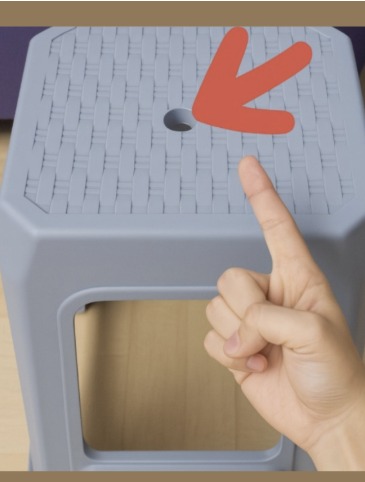
But have you ever looked closely at a plastic stool and noticed something curious? Almost all of them, regardless of brand, shape, or color, have a hole in the middle of the seat.
It’s such a small and ordinary design feature that most people overlook it entirely. Yet, that little hole is not there by accident. It serves several practical, ergonomic, and safety purposes—a clever design element that combines function, efficiency, and even environmental logic.
This article dives deep into the hidden purpose and engineering logic behind the hole in a plastic stool, exploring its functional, manufacturing, and even psychological benefits. We’ll also look at how this small design choice connects to ergonomics, safety, and everyday convenience. By the end, you’ll never look at a simple plastic stool the same way again.
The Humble Plastic Stool: A Modern Essential
Before understanding the hole’s role, it helps to appreciate why plastic stools became so universal. Once considered an inexpensive substitute for wood or metal furniture, plastic stools have evolved into durable, multi-purpose items found in homes, offices, hospitals, schools, restaurants, and outdoor spaces.
The popularity of plastic stools comes down to several advantages:
- Affordability: Plastic is inexpensive to produce and mold.
- Durability: Resistant to water, rust, and termite damage.
- Lightweight: Easy to carry, stack, and transport.
- Low maintenance: Wipe clean and ready for use.
- Variety: Available in endless colors, sizes, and designs.
Yet, what truly sets these stools apart is their simplicity. Every design element, from the legs to the edges, serves a purpose. The hole on top is one of those small but intelligent touches that make plastic stools so practical for everyday use.
The Most Obvious Purpose: Easy Handling and Portability
Let’s start with the most apparent reason for the hole—ease of carrying.
Plastic stools are designed to be lightweight, but they can still be awkward to pick up if the surface is smooth and solid. The hole acts as a built-in handle, allowing you to easily lift, carry, or reposition the stool with just one hand.
Think about how you move a stool around the house:
- When cleaning floors, you lift it with a quick grab through the hole.
- When arranging seating outdoors, you carry multiple stools with ease.
- When storing them, the hole gives you a solid grip even if your hands are wet or slippery.
Without the hole, gripping the stool would require both hands or an awkward lift from the sides, especially for people with smaller hands or weaker grips.
Ergonomic Benefit
From an ergonomic perspective, the hole minimizes wrist strain and reduces the risk of dropping the stool. Designers intentionally shape the edges of the hole to be smooth and rounded for comfortable handling. This is especially important for older adults, children, and maintenance workers who frequently move furniture.
In short, the hole transforms an ordinary object into something user-friendly and efficient—one of the key principles of good industrial design.
The Hidden Structural Benefit: Strength and Stability
Beyond convenience, the hole actually plays a mechanical role in the stool’s design. It helps distribute stress and reinforce structural integrity during manufacturing and usage.
When someone sits on a stool, their weight exerts pressure downward on the seat surface. If that surface were completely flat and solid, the pressure would concentrate at the center, potentially causing deformation or cracking over time. The hole helps redistribute that stress, reducing the chance of material fatigue.
This design logic is similar to how engineers use holes or cutouts in bridges and aircraft components—not to weaken them, but to strengthen them through better weight distribution and controlled flexibility.
How It Works:
- The hole reduces internal tension during the injection-molding process.
- It prevents air pockets from forming in the middle of the mold.
- It ensures uniform cooling, so the stool’s top doesn’t warp or bulge.
- It maintains an even weight load when someone sits or stands on it.
In essence, the hole is a structural relief point. It contributes to the stool’s long lifespan and ability to withstand regular, heavy use without cracking.
The Manufacturing Secret: Efficiency in Molding
One of the least-known reasons for the hole’s existence lies in how plastic stools are made.
Plastic stools are typically produced using injection molding, a manufacturing process where molten plastic is injected into a steel mold. The mold then cools and solidifies, forming the final product.
Now, here’s the critical part:
When molding large plastic objects, air can become trapped inside, leading to defects like bubbles, uneven surfaces, or weak points. The hole acts as a vent or release point, ensuring the plastic spreads evenly and the air escapes during the process.
Benefits for Manufacturers:
- Reduces material use: Less plastic is needed, cutting costs and environmental waste.
- Speeds up cooling: The hole allows heat to escape more evenly, shortening production time.
- Prevents shrinkage: Uniform cooling avoids deformities or bending.
- Ensures consistency: Every stool comes out identical, with minimal defects.
So while it may look like a simple design choice, the hole actually makes mass production more efficient, cost-effective, and sustainable.
Every manufacturer knows that even a few millimeters of plastic saved per unit can result in tons of material conserved annually. The hole helps achieve that balance of function, economy, and environmental responsibility.
The Safety Advantage: Preventing Suction and Air Pressure Traps
Here’s another clever reason for the hole’s existence—safety.
When a stool without a hole is placed on a wet surface, it can create a vacuum seal between the stool and the floor. This suction effect makes it difficult (and sometimes dangerous) to lift the stool, especially in bathrooms, swimming areas, or kitchens.
The hole allows air to flow freely between the top and bottom surfaces, preventing suction or pressure buildup. This ensures the stool can be lifted or moved safely, even when wet.
Why It Matters:
- Prevents slipping accidents caused by sudden release of suction.
- Reduces mold growth by allowing moisture to escape faster.
- Improves hygiene since water doesn’t pool around the stool’s base.
This safety design is particularly important in hospitals, gyms, and childcare centers, where stools are used in moist environments.
Hygiene and Cleaning Convenience
Plastic stools are often used in bathrooms, showers, and kitchens, where water and soap residue are common. The hole plays a crucial role in hygiene and cleaning as well.
When rinsing or washing a stool, water can easily flow through the hole, preventing puddles from forming on the surface. This ensures that:
- The stool dries faster, reducing the chance of bacterial growth.
- Soap and cleaning agents rinse off more easily.
- Dust and grime don’t accumulate in the center.
If you’ve ever used a stool with no hole in a damp area, you’ll notice water tends to sit on the surface, making it slippery and unhygienic. The central hole eliminates that problem entirely.
For this reason, many stool designs used in public restrooms, spas, and healthcare facilities feature larger or specially shaped holes to maximize drainage and drying efficiency.
The Stackability Factor: Saving Space with Smart Design
If you’ve seen plastic stools stacked in a corner or on a shop shelf, you’ve probably noticed how neatly they fit together. That’s no coincidence. The hole helps with stackability.
When stools are designed to nest one into another, the hole provides an air escape path that prevents pressure buildup as the stools slide together. Without this venting hole, the trapped air could make it difficult to stack or unstack them easily.
Benefits of Stackability:
- Saves storage space in homes, restaurants, and classrooms.
- Simplifies transport—trucks and warehouses can carry more units per load.
- Reduces damage during shipment because stools fit snugly.
This smart design makes mass distribution and everyday storage much easier. In small apartments or commercial spaces, stackable stools are a game changer.
So that little hole? It’s also part of a logistical solution that benefits both manufacturers and consumers.
The Role of the Hole in Aesthetic Design
Click page 2 for more