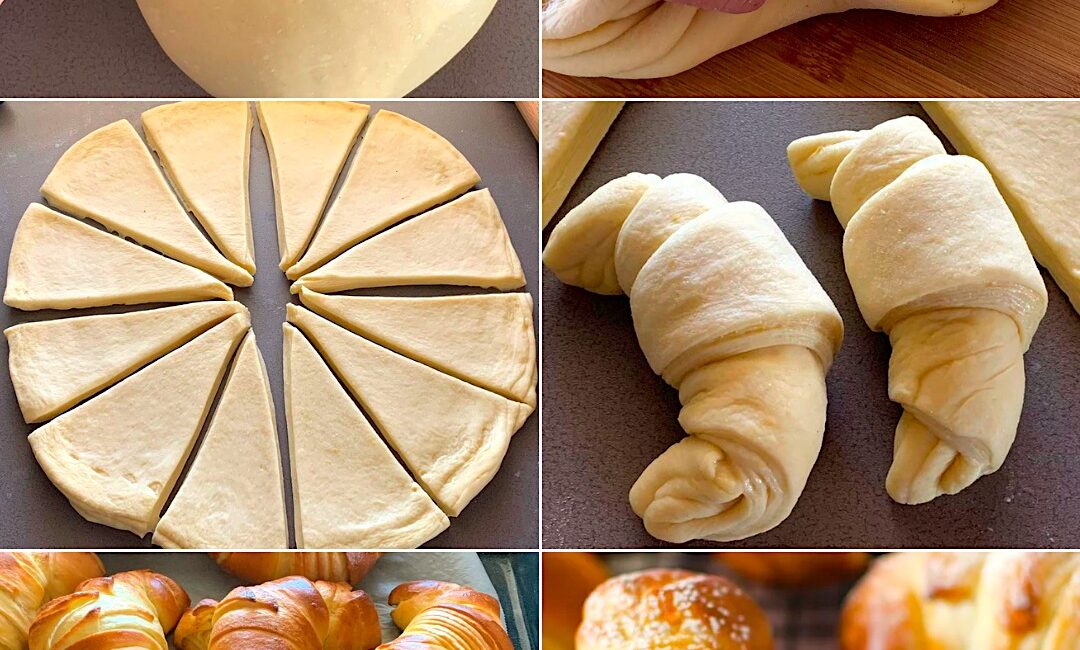
A croissant’s golden exterior is achieved through careful glazing and precise baking.
- Egg wash:
Lightly brush each croissant with a beaten egg yolk. This promotes a shiny, golden-brown finish. - Baking temperature:
Bake in a preheated oven at 180°C (356°F) for 18–20 minutes. The exact time may vary depending on oven performance. Croissants should be golden, slightly crisp on the outside, and soft inside. - Cooling:
Allow the croissants to cool slightly on a wire rack to maintain their delicate layers. Optionally, dust with powdered sugar for extra sweetness.
Tips for Ultra-Soft Croissants
- Use high-quality butter: Butter quality dramatically affects flavor and layering. European-style butter with higher fat content works best.
- Keep dough and butter cool: During lamination, soft but cool butter prevents melting, ensuring distinct layers.
- Be patient: Allowing proper resting and proofing times is essential for soft, airy croissants.
- Avoid over-flouring: Too much flour makes croissants dense and dry.
- Use a sharp knife or cutter: Clean cuts maintain shape and even baking.
Variations to Enhance Croissants
Once you master the basic croissant, the possibilities are endless:
- Chocolate Croissants (Pain au Chocolat): Add chocolate sticks before rolling triangles.
- Almond Croissants: Fill with almond cream and sprinkle slivered almonds before baking.
- Fruit-Filled Croissants: Add raspberry or apricot jam for a fruity twist.
- Savory Croissants: Incorporate cheese, ham, or herbs for breakfast or snack options.
Storing and Reheating Croissants
Croissants are best enjoyed fresh, but they can be stored carefully:
- Room temperature: Keep in an airtight container for 1–2 days.
- Freezing: Wrap tightly in foil or plastic wrap, then freeze for up to 1 month.
- Reheating: Reheat in an oven at 150°C (302°F) for 5–10 minutes to restore crispness and warmth.
Why Homemade Croissants Are Worth Mastering
Making croissants from scratch is rewarding on multiple levels:
- Culinary satisfaction: The skill of layering dough and butter hones your pastry-making abilities.
- Customization: Control ingredients for healthier or indulgent versions.
- Presentation: Homemade croissants elevate any breakfast, brunch, or special occasion.
- Memorable aroma: The smell of fresh croissants creates an inviting, cozy kitchen environment.
Mastering homemade croissants also opens doors to other laminated pastries like Danish pastries, puff pastry desserts, and specialty breads.
Common Mistakes and How to Avoid Them
Even experienced bakers can make mistakes. Here’s how to troubleshoot common croissant issues:
- Dense croissants:
- Cause: Over-kneading, insufficient proofing, or too much flour.
- Fix: Allow proper resting times and use minimal flour when rolling.
- Flat croissants:
- Cause: Butter too soft or melting during lamination.
- Fix: Keep butter cool and dough chilled between folds.
- Uneven browning:
- Cause: Uneven egg wash or oven hotspots.
- Fix: Apply even egg wash and rotate tray halfway through baking.
- Sticky dough:
- Cause: Excess moisture or under-kneading.
- Fix: Knead thoroughly and adjust flour as needed.
Final Thoughts
Creating ultra-soft homemade croissants is a culinary achievement that combines science, artistry, and patience. From selecting the best ingredients to mastering the lamination process, shaping, proofing, and baking, every step contributes to the final result: flaky, buttery, and irresistibly soft croissants.
By following this detailed guide, even home bakers with modest experience can achieve bakery-quality results. Each croissant, golden and aromatic, will reward your effort with layers of tender, buttery perfection that melts in your mouth. Serve them for breakfast, brunch, or special occasions, and you’ll experience firsthand why croissants are celebrated as one of the world’s most iconic pastries.