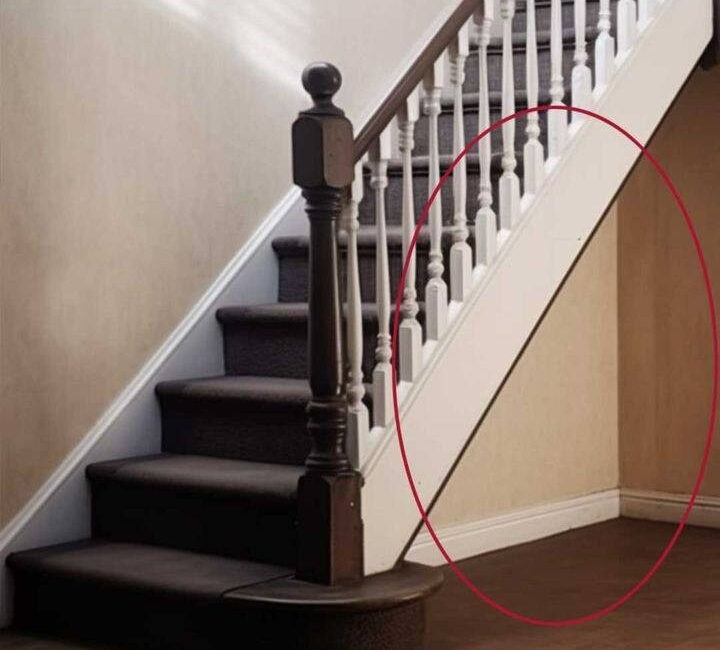
For homes where space is tight, moving your washer‑dryer, ironing board, or storage of cleaning equipment under the stairs can free up other rooms.
Why it’s smart: Hidden utility zones keep messy gear out of main sightlines and free up more desirable spaces.
Design tips: Verify plumbing and drainage are feasible; ensure ventilation; use sliding doors or pocket access; incorporate shelves for detergents, baskets etc.
Impact: Practically transforms the home’s workflow; adds utility value and frees up primary rooms.
11. Guest Storage & Travel Gear Hub
Use the under‑stair zone as a dedicated “hub” for travel items, suitcases, seasonal gear, boarding pass area, packing station.
Why it’s smart: Most homes accumulate random bulky items: suitcases, ski gear, camping gear. Rather than stuffing them into a garage or attic, you calibrate a well‑designed zone.
Design tips: Install tall cabinets at the high‑end of the space for gear; include hooks for bags/coats; add pull‑out trays for easy access; custom fit height and depth for your specific gear.
Impact: Functional differentiation for the home; low‑cost but high utility improvement.
12. Reading or Relaxation Nook for Adults
Beyond kids, you can design this as a serene adult retreat: floor cushions, bench, built‑in bookshelves, mood lighting, maybe small table for coffee or wine.
Why it’s smart: Creates a hidden refuge within your home—something that feels special and bespoke.
Design tips: Use comfortable seating, textured fabrics, built‑in shelving or cupboards for books, wall‑mounted lights or LED strips, consider a fabric curtain or sliding panel to “close” it off when you want quiet.
Impact: Ups the “lifestyle” factor of the home; such niches are talked about and noticed by occupants and visitors.
Step‑by‑Step Guide to Converting the Under‑Stairs Space
Here’s a detailed blueprint you can follow from concept to completion—whether you’re the DIY‑type or hiring pros.
Step 1: Audit & Vision Phase
- Measure the width, depth and height of the space. Sketch the slope of the stair underside and mark any low head height zones.
- Identify access: Where is the door or opening? Will you keep the existing door or create a new one?
- Map out any utilities or constraints (pipes, HVAC, wiring, structural beams).
- Define purpose: choose the conversion use that best fits your home’s needs. Use your list above to pick 1 or 2 functions (storage + lounge, office + storage, etc.).
- Create a mood board: materials, colors, lighting, finishes that align with the rest of your home.
Step 2: Design & Planning
- Sketch custom cabinetry or built‑ins that match the slope of the stairs. Consider depth gradually decreasing.
- Choose access solution: hinged door, sliding panel, open alcove. Sliding/pocket doors often work best in narrow zones.
- Plan lighting: overhead general lighting plus task lighting inside the niche. Consider LED strips or puck lights.
- If plumbing/electrical required, engage a licensed professional early.
- Select materials: high‑durability surfaces if needed (mudroom, pet zone), premium finishes if design‑feature (bar, wine rack).
- Create budget. Allocate for custom joinery, doors, hardware, lighting, finish work.
- If necessary, obtain building permits (especially if changing plumbing, creating a toilet, altering load‑bearing structure).
Step 3: Structural/Utility Work
- If required, ensure structural modifications (e.g., shifting framing, reinforcing supports) are completed first.
- Run new wiring/outlets/lighting as needed. Install any plumbing/drainage if adding a cloakroom or laundry.
- Install insulation if needed (especially for pet zones or if outer wall).
- Ensure proper ventilation if the space will house appliances, wine storage, or be closed off.
Step 4: Framework & Cabinetry
- Build the structural box or joinery units. Custom cabinets have to accommodate the sloped ceiling.
- Use high‑quality hardware: smooth runners, sturdy hinges, soft‑close doors.
- Doors/panels should align visually with your home’s trim for seamless integration (especially if you want the space “hidden”).
- If you’re building drawers in each stair riser, plan sequencing, depth and access mechanism.
Step 5: Finishing & Integration
- Install doors, fronts, handles. Paint or stain to match your interior.
- Fit shelves, lighting, fixtures (desk, bench cushions, hooks).
- Install flooring or base surfaces if the under‑stairs floor is different material.
- Add task items: cushions, desk lamp, wine glasses, pet bed, etc.
- Test functionality: open all doors, drawers; ensure clearance; verify lighting; check comfort.
Step 6: Styling & Accessorising
- Add design touches: accent lighting, textured fabric, curated décor, hidden calendars or charging stations if appropriate.
- If you’ve created a bar zone or reading nook, include personal touches (artwork, plants, books).
- For storage zones, label drawers or use baskets to keep organized.
- For family zones, integrate seating or toy baskets (if children’s den) and ensure safety (soft edges, no hazard).
- Make sure the visual transition from the rest of your space is smooth: stair finish, handrail, spindles should still feel cohesive with the new work beneath.
Step 7: Maintenance & Use Plan
- Establish how items will be stored and accessed. For example, seasonal gear might go toward the deep end of the space; everyday items front.
- Clean quarterly: hidden zones under stairs tend to collect dust or dog hair.
- Ensure lighting stays functional and replace bulbs/LED strips before they fail.
- Periodically review if the use still fits. Maybe today it’s a “desk” but later you’ll convert into a kids’ zone when they grow.
Cost‑Effective Customisation Tips and Value‑Boosting Features
To get the most bang for your renovation budget — and increase the value of your home — include the following smart features:
- Pre‑engineered modules: Instead of fully custom cabinetry, consider modular units trimmed to fit the slope. This saves cost yet still looks custom.
- Sliding doors over hinged: In tight hallways, sliding or pocket doors maximize access and reduce pinch‑points.
- Multifunctional surfaces: A bench with lift‑top storage or drawers plus seating covers two needs simultaneously.
- Lighting with motion sensors: Especially in storage zones, sensor‑activated lighting adds convenience and feels high‑end.
- Hidden power outlets and USB ports: For office or charging zones, having discreet power adds value without disrupting styling.
- Matching finish palette: Match the under‑stairs conversion finish (wood tone, hardware, door finish) to the rest of your interior so it feels integrated, not patched‑on.
- Neutral color with accent: Use neutral main finish with an accent (e.g., inside drawers, back wall of shelves) to make the space visually pop without going overboard.
- Maintain “prime area” feel: While it doesn’t have to be a major room, treat the zone with the care you would any living area. Good lighting, clean lines, no unfinished surfaces.
- Labelled zones in storage: Buyers and everyday users appreciate that the space is usable not just decorative. Labelled drawers, logical organization = smarter home.
- Document the transformation: When selling, being able to say “purpose‑built under‑stairs workspace, custom joinery, motion LED lighting” adds to perceived value.
- Consider value‑add functions: A downstairs cloakroom or wine bar adds more perceived value than simple storage. If budget allows, go beyond the mundane.
Avoiding Common Mistakes
Many under‑stairs conversions go wrong—not because of the concept, but because of execution failures. Here are pitfalls to avoid:
- Making space too shallow / awkward: If the usable head‑height is under ~70cm for the most part, you’ll lose practicality.
- Ignoring lighting & access: A dark, cramped niche with a poorly placed door will seldom get used.
- Poor ventilation: Especially for laundry, wine racks or enclosed zones; stagnant air kills utility and comfort.
- Mismatched finish: A flashy under‑stairs build that looks disconnected from the rest of the home can hurt aesthetics.
- Under‑estimating costs: Plumbing, wiring or custom joinery often cost more than expected—budget appropriately.
- Treating it as a weird after‑thought: It should be fully integrated into your home’s design narrative, not added as an after‑thought.
- Blocking existing pathways or creating safety hazards: Ensure that the conversion doesn’t interfere with egress, stair clearance or create pinch points.
- Using low‑quality hardware: Squeaky drawers or misaligned doors degrade perception and usability quickly.
Visual & Style Ideas to Match Different Home Aesthetics
For the Modern Minimalist
- Smooth surfaces, handle‑less cabinetry, white or light grey palette.
- Under‑stair bar or coffee station with matte black accents and LED strip under floating shelf.
- Hidden doors flush with wall to keep clean lines.
For the Rustic / Farmhouse Style
- Reclaimed‑wood bench under the stairs, wrought‑iron hooks, baskets for shoes.
- Textured wall panelling inside the niche, soft wool cushions.
- Use of natural tones, visible joinery, open shelving.
For the Luxe Contemporary
- Glass‑front wine cabinet under the stairs with LED display lighting.
- Dark hardwood, velvet bench seating, gold/brass hardware.
- Dramatic contrast with high‑gloss finish or bold accent wall.
For Family Friendly / Playful Homes
- Built‑in bookcases and bench seating for kids. Soft cushions, fun colours or kids‑height hooks.
- Storage drawers for toys integrated into the risers.
- Chalkboard wall panel in the children’s nook.
When the Space Should Remain Open (Yes, Sometimes Less Is More)
Not every under‑stairs zone must be “filled.” There are situations where leaving it mostly open—just styling it well—is the best approach. For example:
- When the staircase itself is a dramatic architectural element and filling the underside would distract.
- If the head‐height is extremely low, making functional use hard; in this case leaving it as an open accent zone or adding subtle lighting or artwork might be wiser.
- If your home’s design ethos is minimal and any built‑in would feel heavy. In these cases, a lounge chair, a simple plant, a sculptural piece may be better.
But the key takeaway: “dead space” is a mindset, not a fact. Regardless of whether you fill or style it, the under‑stairs zone deserves intentional design, not neglect.
Summary: Why You Should Re‑Think That “Dead” Under‑Stairs Area
- That dead space under your stairs isn’t dead at all—it’s one of the few untapped zones in many homes.
- With proper measurement, design and execution, you can convert it into high‑utility real estate: storage, workspace, lounge area, bar, pet zone—or combination.
- The right conversion adds both everyday quality of life (organization, extra function, storage) and resale value (an extra usable area, special feature).
- Key success factors: accurate measurement, strong access design, integrate utilities and lighting, choose high‑quality finishing and hardware, match the rest of your home’s style.
- Avoid doing it half‑heartedly. If you’re going to convert, treat it with the same design respect you give any other room.
- Even if you don’t convert it into a full function zone, styling it purposefully—lighting, finish, art—will lift the aesthetic and perception of the space.
Next Step: Walk to your staircase. Put a tape measure to the zone underneath it. Measure width, depth, head height at front, height at back. Ask: What functions in my home need help? Do you need storage, a workspace, a kid zone, a bar? Pick one idea from the list above and sketch your plan. You’ll quickly realise: that “dead space” is anything but dead—it’s an opportunity waiting for you to claim it.