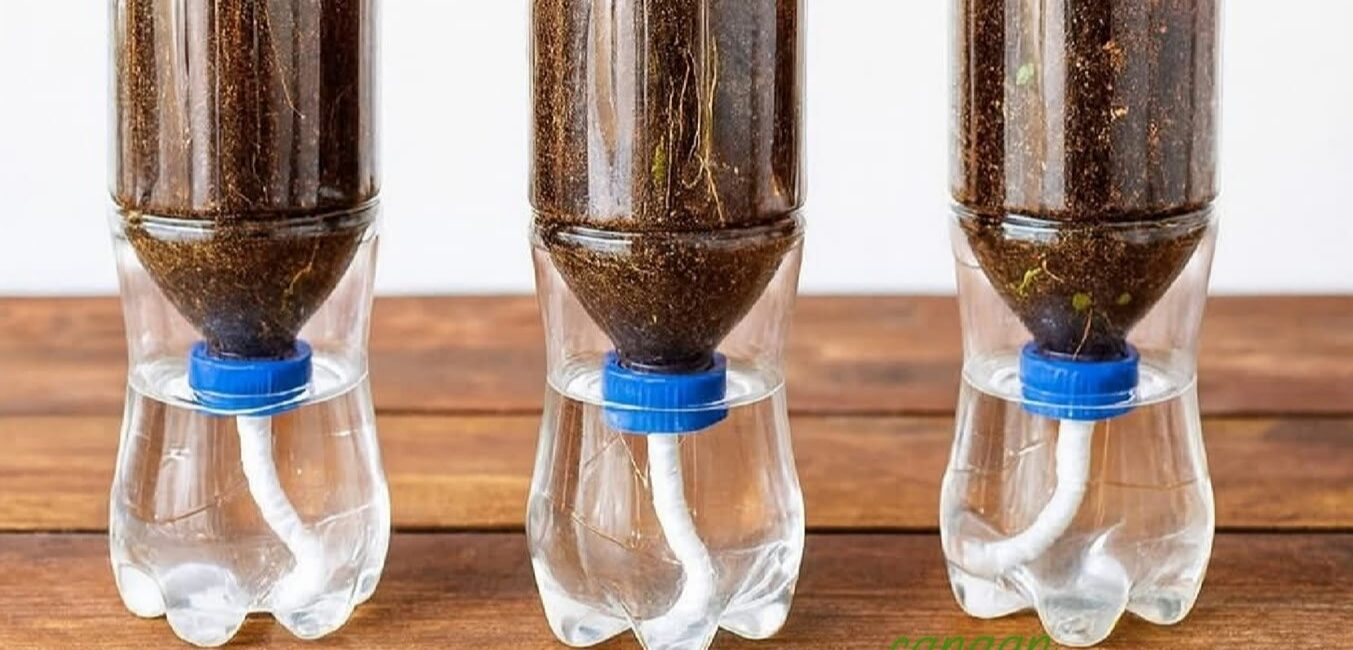
- At intervals (e.g. monthly), flush the entire system with fresh water to remove salts, debris, or buildup.
- Empty reservoir, clean bottle parts, and scrub mesh to prevent clogging.
Pruning & Root Management
- Keep roots from overgrowing; trim or re-pot when root density gets too high.
- For fast-growing plants, periodically trim leaves to reduce water stress.
Pest and Algae Control
- Cover reservoir opening with a lid or fabric mesh to prevent mosquitoes or pests breeding.
- Use opaque reservoirs or shade covers to minimize light penetration and algae growth.
Seasonal Adjustments
- In hotter seasons, water demand increases; monitor and refill more frequently.
- In cooler or dormant months, reduce refill frequency or scale back planting.
Troubleshooting Common Issues & Solutions
Even with good design, problems can arise. Here are common pitfalls and remedies:
| Issue | Possible Cause | Solution / Fix |
|---|---|---|
| Soil too dry at top | Wick not contacting lower soil, wick too thin | Adjust wick contact, increase wick size, ensure good capillary path |
| Soil soggy / waterlogged | Overly thick wick, poor drainage | Reduce wick cross-section, add more drainage layer, reduce water level |
| Algae growth in reservoir | Light enters reservoir, stagnant water | Make reservoir opaque, cover top, flush regularly |
| Root rot / fungal smells | Constant saturation, poor drainage | Add charcoal, flush, thin wick, repot if necessary |
| Clogging of wick | Soil particles blocking wick fibers | Wash or replace wick, use finer mesh barrier, keep soil mix clean |
| Inconsistent watering in multiples | Uneven wick lengths, reservoir levels differ | Standardize design, use equal wick lengths, interconnect reservoirs when possible |
Scaling Up: Vertical & Community Bottle Gardens
Once you master one planter, you can scale to an array or vertical setup:
- Use multiple bottles connected to a central reservoir, with tubing or branching wick lines.
- Stack bottle planters on racks, each feeding into the one below (like a cascading system).
- Use drip tubing from a master reservoir to supplement or top up each bottle’s water supply.
- Integrate into your balcony or windowsill garden to maximize space.
Measuring Success: Performance Metrics
To evaluate how well your self-watering design works, monitor:
- Water usage per plant: compare amount refilled vs plant growth.
- Plant health / greenness index: measure leaf color, vigor, growth rate.
- Root density / architecture: examine roots when re-potted to determine depth and distribution.
- Frequency of refills: how many days between watering.
- Failure / clog rate: how often wick or system needs maintenance.
Tracking these helps you refine your design over time for maximum efficiency.
DIY Design Variations & Creative Approaches
Get creative with your builds:
- Use aluminum cans, plastic jugs, glass jars with similar wick/reservoir setup.
- Combine with rainwater harvesting: collect rainwater into a master tank that feeds bottle planters.
- Use solar pumps or capillary mats to feed water to bottles from a central reservoir automatically.
- Add nutrient sensors or moisture probes to feed data and automate top-ups.
Sustainability and Environmental Impact
By building self-watering planters from recycled bottles, you:
- Divert plastic waste from landfills
- Reduce the carbon footprint of new planter production
- Promote water conservation and reduce garden water waste
- Cultivate local food or medicinal herbs sustainably
- Inspire circular practices and hands-on ecological education
Every bottle you upcycle into a planter is one less in waste streams—and every plant you grow is another step toward greener living.
Putting It All Together: Sample Project Timeline & Checklist
Here’s a sample workflow to build a set of self-watering bottle planters over a weekend:
| Day | Tasks |
|---|---|
| Day 1 (Morning) | Collect and clean bottles; gather materials; test wick materials |
| Day 1 (Afternoon) | Cut bottles, prepare wick holes, assemble a prototype planter |
| Day 2 (Morning) | Plant in prototype, fill, monitor; assemble additional units |
| Day 2 (Afternoon) | Add enhancements (charcoal, gauge, shade wraps); place in final locations |
| Ongoing | Monitor, refill, adjust wick, maintain system |
Checklist before deployment:
- Wick length and contact tested
- Soil mix drained properly
- Reservoir sealed from light and pests
- Water level gauge or marker included
- Plants appropriate for container size and lighting
- Plans in place for cleaning and top-ups
Why This DIY Method Beats Buying Pre‑Made Self‑Watering Pots
- Much lower cost per planter
- Customizable design and size
- Reuses waste materials
- Easy to repair or upgrade
- Demonstrates sustainable, hands‑on learning
- Encourages innovation and adaptation
Final Thoughts: Grow Smarter, Garden Greener
DIY self-watering planters crafted from recycled bottles are a powerful example of innovation meeting sustainability. With thoughtful design, careful maintenance, and monitoring, you can cultivate thriving plants with minimal effort, conserve water, reduce waste, and gain deeper appreciation for how smart garden systems work.
Start small, refine your approach, experiment with enhancements, and before long you’ll have a mini eco‑garden powered by ingenuity, not waste. Your plants will thrive, your footprint will shrink, and your hands will be greener—one upcycled bottle at a time.