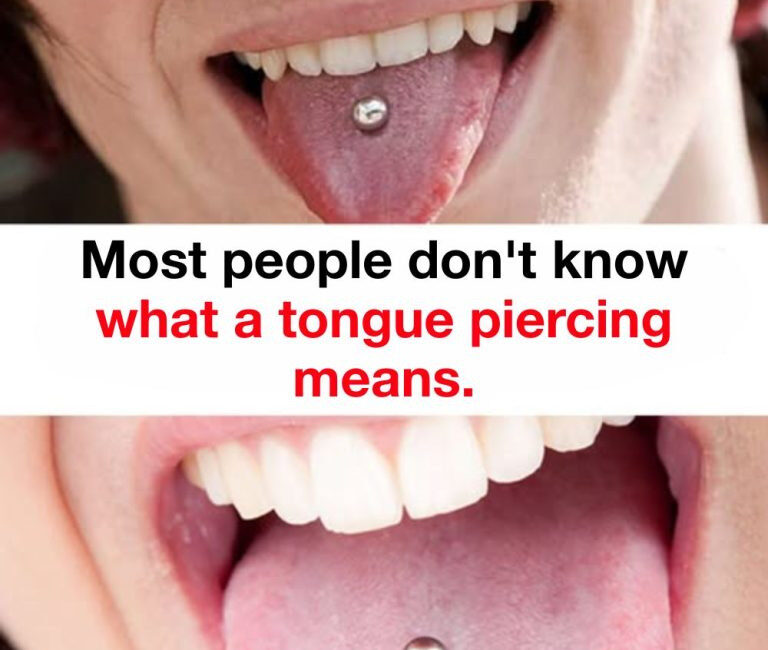
Tongue piercings occupy a unique position in the constellation of body modifications: hidden yet intimate, bold yet often unobserved, sensual yet also symbolic. When someone chooses to pierce the tongue, that act carries meanings that resonate on multiple levels — personal, cultural, aesthetic, sexual, psychological. And while many of those meanings are shared across genders, there are notable differences in how people experience, interpret, and project tongue piercings depending on whether one is a man or a woman.
In the following in‑depth exploration, we will trace the symbolism, motivations, design choices, social reactions, and gendered narratives tied to tongue piercings. We will compare and contrast how men and women often approach them, what they hope to express, and how society reads them. The goal: a thorough, textured understanding of tongue piercings not merely as decoration but as embodied messages.
I. The Essence of a Tongue Piercing: Symbolism Beyond Adornment
To understand gendered meanings, we first need to grasp the foundational layers of what a tongue piercing means, in general.
1. The tongue as a locus of expression
The tongue is one of the most expressive parts of the human body: speech, taste, kissing, communication, and sensuality. Piercing it intersects with all those domains. Thus a tongue piercing is never just cosmetic; it is a statement about voice, intimacy, and the body as instrument.
2. Hidden vs. revealed
Unlike ear lobes or facial studs, a tongue piercing is ordinarily concealed except in moments of speech, laughter, or intimacy. That “hidden until shown” quality gives it a dual identity: reserved in public, expressive in private. It allows the wearer to control disclosure.
3. Threshold, risk, and bodily sovereignty
Tongue piercings carry risk (pain, swelling, dental considerations). Undergoing it is an act of threshold crossing. It signals self‑ownership: “I choose to alter a sensitive, essential body part.” That sense of autonomy is powerful and often a primary motivator.
4. Sensory enhancement and erotic nuance
Many wearers cite sensual or erotic motivations. The tongue piercing can change sensations — in kissing, oral activities, or conscious awareness of the tongue. In many narratives, that erotic edge becomes a private enhancement or a shared secret.
5. Identity, subculture, and community
Body modification communities have long used piercings as symbols of acceptance, initiation, belonging, or aesthetic identity. A tongue piercing can signal affinity with alternative, avant-garde, or countercultural currents. It becomes a badge of membership or a marker of personal aesthetic that connects with others.
II. Shared Motivations: Men and Women in Common
Before we dive into divergent experiences, let’s look at the motivations that commonly attract both men and women to tongue piercings.
A. Self‑expression and uniqueness
Many people get piercings simply to articulate their individuality or resist normative aesthetic expectations. A tongue piercing is a strong, personal statement of difference.
B. Transition or rite of passage
For some, piercing the tongue marks a life transformation — a break with the past, a reinvention, or an emotional milestone. The piercing becomes a living symbol of that transition.
C. Hidden symbolism
Because it is not always visible, the tongue piercing allows for layered symbolism. It can carry meaning to the wearer (identity, vow, memory) without being broadcast all the time. That private symbolism appeals across genders.
D. Erotic or sensual intrigue
Many cite the sensual dimension: new sensations in kissing, curiosity, playful eroticism. That dimension is rarely absent from tongue piercing narratives, though its weight may vary by individual and gendered social norm.
E. Aesthetic balance and facial harmony
In the landscape of facial features and jewelry, the tongue piercing becomes part of one’s internal visual logic. It complements other piercings or jewelry choices, enhances proportions, or acts as a counterpoint in one’s style.
III. Gendered Symbolism: How Meanings Shift for Women
While many motivations are shared, women’s experiences with tongue piercings often acquire additional layers — shaped by cultural expectations, gender norms, and interpretative frames.
1. Sexual Agency and Empowerment
For many women, a tongue piercing is a claim to sexual autonomy. It is not just decoration but a signifier of confidence in one’s sensuality. In cultures that frequently police women’s bodies and expressions of desire, the piercing can become a personal assertion: “I own my sexual identity, not others.”
2. Rebellion against normative femininity
Women often face prescriptive ideals of “proper” femininity: softness, subtlety, decorum. A tongue piercing pushes against those norms. It introduces an edge, a defiance of conventional beauty. It is both a fashion statement and a feminist act for some.
3. Stereotyping and objectification
One challenge is that women with tongue piercings may be more vulnerable to reductionist reading — framed by observers as hypersexual or provocative, even if the wearer’s intent is not sexual. The piercing might invite assumptions (fair or unfair) about lifestyle, profession, or character. That burden is more frequently borne by women than men.
4. Body politics and beauty economies
Women often feel pressure to balance expressiveness with social acceptability — especially in professional or family settings. A tongue piercing may be celebrated in younger years but contested in marriage, office life, or other contexts. The wearer might face negotiation: when to hide, when to reveal, when to remove.
5. Intimacy and disclosure
Because the piercing is intimate and partly hidden, women sometimes view it as a gift to be revealed only to trusted partners, rather than a universal statement. That selective disclosure embodies emotional boundaries. The piercing becomes a part of one’s intimate language.
IV. Gendered Symbolism: How Meanings Shift for Men
Men, too, experience tongue piercings staked with distinct symbolic resonances, shaped by masculine norms, subcultural codes, and social reading.
1. Disrupting traditional masculinity
In many cultures, men face rigid expectations: stoicism, restraint, physical toughness, avoidance of ornamentation. A tongue piercing can be a deliberate move outside that mold. It says: “I am not constrained by the narrow definitions of ‘masculine’ given to me.”
2. Sexual confidence and signaling
In male narratives, the piercing sometimes becomes a signal — to oneself, to partners — of sexual playfulness or willingness. It can also tap into mythic or erotic associations with oral dexterity, performance, or adventurousness. But among many men, the concern is less about proving and more about enhancing or owning their sensual identity.
3. Subcultural credibility and identity
In music scenes (punk, metal, hip hop), tattoo/piercing cultures, body modification circles, the tongue piercing can mark authenticity. For men within those communities, the piercing is a credential: you’ve crossed a boundary, you bear marks of commitment to the scene.
4. Authority, boldness, presence
Because tongue piercings remain less common than, say, ear piercings, when a man wears one, it can project boldness and disrupt the gaze. It becomes a visual puncture: “I am here, I am uncompromised.” For performance artists, speakers, musicians, it can add a layer of presence or intensity to their persona.
V. Design Choices, Visibility, and Gendered Aesthetics
The meanings of a tongue piercing are deeply shaped by how it is designed — the jewelry type, material, size, adornments — and how visible it is in practice. Men and women often make different aesthetic choices based on comfort, social pressure, and symbolic intent.
Jewelry style: barbell, decorated ends, materials
- Plain barbell: The simplest design (straight bar with balls at ends) often signals minimalism or functional aesthetic. Many choose it for ease, low distraction, and to foreground the piercing itself as symbol rather than jewelry showpiece.
- Decorative ends: Glittering stones, colored beads, custom shapes — adding decorative elements makes the piercing more visible and expressive. Women sometimes favor more decorative or gemstone ends (especially for romantic or fashion reasons), while men are sometimes drawn to darker or more rugged designs, though this is far from universal.
- Exotic or bio‑compatible materials: Titanium, surgical steel, silicone — for allergy concerns or comfort, many choose high-quality materials. Women with sensitivity to metal, or with dental health concerns, may prioritize safe, hypoallergenic options; men may also, but sometimes choose judging aesthetics first.
Visibility and speaking / facial dynamics
Some wearers intentionally emphasize the piercing by speaking in a way that reveals the tongue (singing, dramatic speech). Women with tongue piercings might balance that visibility with norms of demureness or modesty — sometimes choosing to show it selectively. Men, on the other hand, may exploit the visibility more aggressively (in live performance, art, social scenes).
Gendered wear patterns and rotation
Because of social pressure, women might remove or quiet their piercings more often (for work, family, social settings), or choose smaller or less flashy ends. Men, though not immune to pressure, might feel freer to keep bolder or more public jewelry. That difference in wear patterns subtly shapes the meaning — a piercing always exposed suggests defiant identity; one kept hidden suggests intimacy or guarded identity.
VI. Social Reception, Stigma, and Negotiation
The social life of a tongue piercing — how peers, family, strangers interpret and react — is a major dimension in its meaning. And those interpretations often diverge by gender.
A. Stigma, judgment, and “othering”
- Women: Tongue piercings in women may attract judgment as “too sexual,” “too rebellious,” or incompatible with roles like motherhood or traditional femininity. Some women face implicit pressure to remove or conceal tattoos, piercings, or modifications in certain social and familial settings more than men.
- Men: Judgments on men with tongue piercings might lean toward “attention-seeker” or “outlier,” but often carry less sexualized assumptions. Men may be more readily placed in alternative subculture categories rather than moral judgment in certain communities.
B. Professional and relational negotiations
- A woman may choose to remove the piercing temporarily for job interviews, dating, or family events, or conceal it more than a man might. The cost of social friction for women is often higher, requiring balancing authenticity with external expectations.
- For men, though some sectors (business, corporate) may also discourage visible piercings, the pushback can sometimes be framed as “quirky” or “artistic,” not necessarily undermining competence. Still, men too must sometimes manage the piercing’s visibility depending on context.
C. Peer and community support or backlash
Click page 2 for more