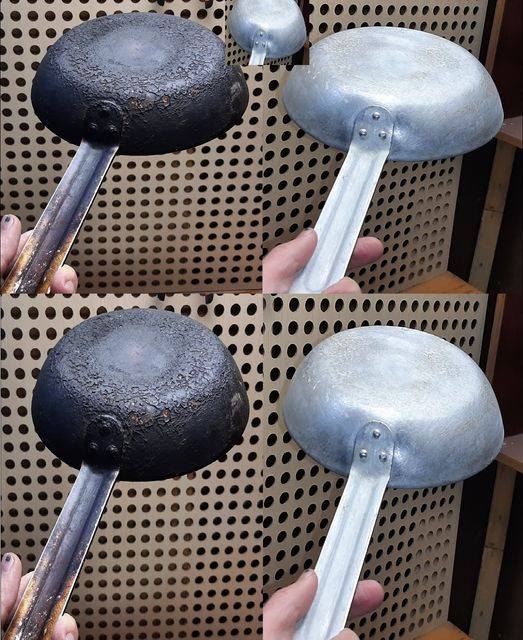
- Baking soda
- White vinegar
- Water
- Scrub brush or sponge
Steps:
- Add baking soda: As with the previous method, start by sprinkling a layer of baking soda over the carbon deposits in your pan.
- Pour in vinegar: Slowly pour white vinegar over the baking soda. The vinegar will fizz and bubble, helping to lift the carbon deposits from the surface.
- Let it sit: Allow the mixture to sit for 10-15 minutes. The fizzing action will help loosen the carbon buildup.
- Scrub away: After the mixture has had time to work, use a scrub brush or sponge to scrub away the carbon deposits. You’ll find that the combination of vinegar and baking soda makes it easier to remove tough carbon.
- Rinse and repeat: If needed, repeat the process until your pan is clean and free of carbon buildup. Rinse the pan thoroughly with warm water.
Why It Works:
The combination of acidic vinegar and abrasive baking soda creates a chemical reaction that helps break down even the most stubborn carbon deposits. The fizzy reaction helps lift the carbon from the surface, while the vinegar’s acidity dissolves oils and food residues.
3. Using Salt for Extra Abrasiveness
For even more scrubbing power, you can add salt to your cleaning arsenal. Salt is a naturally abrasive substance that can help scrub away carbon buildup without damaging the pan’s surface. This method is especially effective for pans with thicker carbon layers.
What You’ll Need:
- Salt (preferably coarse)
- Baking soda (optional)
- A scrub brush or sponge
Steps:
- Coat the surface with salt: Sprinkle a generous amount of salt over the carbon-heavy areas of your frying pan. The coarser the salt, the better.
- Add baking soda (optional): For added scrubbing power, you can mix the salt with baking soda before applying it to the pan.
- Scrub with a brush: Use a scrub brush or sponge to scrub the salt into the carbon deposits. The abrasiveness of the salt will help lift off the carbon without scratching the pan.
- Rinse thoroughly: Once the deposits are gone, rinse the pan thoroughly with warm water.
Why It Works:
Salt’s abrasive nature makes it an excellent choice for scrubbing away thick carbon layers. It works similarly to baking soda but with a more intense scrubbing action, making it effective for tough, persistent carbon buildup.
4. Soaking with Dish Soap and Hot Water
If the carbon buildup isn’t too extreme, a simpler method is to soak the frying pan in hot water and dish soap. This method is less abrasive and works best for lighter carbon buildup, but it can still be effective when combined with a little elbow grease.
What You’ll Need:
- Dish soap
- Hot water
- Scrub brush or sponge
Steps:
- Fill the pan with hot water: Place your frying pan in the sink and fill it with hot water (the hotter, the better). This will help loosen the carbon deposits from the pan’s surface.
- Add dish soap: Add a few drops of dish soap to the hot water. The soap will help break down grease and oils, loosening the carbon deposits.
- Let it soak: Allow the pan to soak for 15–30 minutes. The heat and soap will work together to soften the carbon buildup.
- Scrub away: After soaking, use a scrub brush or sponge to scrub away the softened carbon. The deposits should come off much more easily.
- Rinse: Once the pan is clean, rinse it thoroughly with warm water.
Why It Works:
The combination of hot water and dish soap helps to soften the carbon deposits, making them easier to scrub away. While this method may not be as powerful as the vinegar and baking soda combination, it’s still an effective solution for lighter carbon buildup.
Preventing Future Carbon Buildup
Now that you know how to clean your frying pan from carbon deposits, it’s also important to take steps to prevent future buildup. Here are a few tips to keep your frying pan clean for longer:
1. Use the Right Cooking Oils
Certain oils, like vegetable oil and canola oil, have higher smoking points than others like olive oil. Using oils with higher smoking points can help reduce the amount of carbon produced when cooking at high heat.
2. Clean Immediately After Use
The best way to prevent carbon buildup is to clean your pan shortly after use. After cooking, let the pan cool slightly and then wash it with warm water and dish soap. The longer you let food residue sit on the pan, the harder it will be to clean.
3. Use Lower Heat Settings
If you find that your frying pan tends to accumulate carbon quickly, try cooking at lower heat settings. High temperatures cause oil and food to burn faster, leading to faster carbon buildup.
Conclusion
Cleaning strong carbon deposits from your frying pan doesn’t have to be an overwhelming task. By using natural and accessible materials like baking soda, vinegar, salt, and hot water, you can restore your frying pan to its pristine condition with minimal effort. Whether you have a non-stick pan, cast-iron skillet, or stainless steel frying pan, these methods can effectively remove even the most stubborn carbon deposits.
Remember, the key to prolonging the life of your frying pan is regular maintenance. By cleaning your frying pan after each use and following a monthly deep-cleaning routine, you’ll ensure that your kitchen staple stays in excellent condition for years to come.
Happy cooking!