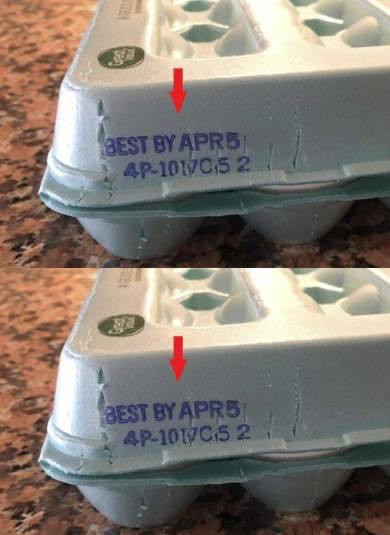
Even a fresh egg will decay faster if poorly stored. Here’s how to get maximum shelf life:
- Refrigerate immediately when you get home
Don’t leave eggs out on counters for extended times. - Set your fridge to 4 °C (≈ 39 °F) or colder
The colder, the slower the degradation (without freezing). - Store eggs in their original carton
The carton protects from absorption of odors and helps label orientation. - Choose a stable cold zone—not fridge door
The door undergoes temperature swings every time you open it. - Don’t nest heavy items on eggs
Pressure or imbalance may crack shells and permit bacterial entry. - Keep eggs away from raw meat
Cross contamination is dangerous — never store next to raw poultry or meat. - Avoid washing eggs before refrigeration
The natural “bloom” (protective coating) helps reduce bacterial infiltration. If eggs are dirty, clean delicately just before use. - Freeze or cook borderline eggs
If you can’t use them in time, crack and beat whole eggs (or separate elements), then freeze them in airtight containers. Use within recommended freezer guidelines. - Use older eggs first (FIFO: First in, First out)
Always rotate your inventory, using the oldest first, even if the newer ones look better.
When to Discard Eggs: Safety Boundaries
As useful as all those tests are, sometimes you must draw the line. Here are circumstances when you should absolutely discard:
- The shell is cracked, slimy, moldy, or chalky
- The egg floats in the water test
- It emits a foul smell when cracked
- It yields discolored or abnormal-looking whites/yolk
- The date is well beyond 6 weeks from pack, and the egg fails tests
- You can’t verify handling/storage integrity
- The egg was stored above safe temperatures for a stretch (e.g. left out too long, fridge malfunction)
When in doubt, throw it out. The risk of foodborne illness (like Salmonella) is not worth the gamble.
Common Myths & Misconceptions
Over the years I’ve heard many beliefs — some harmless, some dangerous. Here are a few:
- Myth: If the date says expired, it’s immediately bad.
False. Many eggs remain usable days or weeks past expiration with proper testing. - Myth: The float test is perfect.
Not always. Some eggs float prematurely due to shell porosity, not spoilage; others may sink even when degraded. Always use multiple tests. - Myth: Brown eggs last longer than white eggs.
No. The shell color is breed-dependent, not a freshness indicator. - Myth: Organic or free‑range eggs last longer.
Not because of labeling — it still depends on handling and storage. - Myth: Cooking makes bad eggs safe.
Cooking can kill some bacteria, but if spoilage toxins or severe contamination are present, risks remain. Never rely solely on cooking to “fix” a bad egg. - Myth: Smell is enough.
Some pathogens don’t produce noticeable odor. Always combine tests.
Using Eggs Near or Past Their Date: Smart Strategies
Sometimes you have eggs that are close to their date (or just past) but still salvageable. Here’s how to use them safely:
- Use in thoroughly cooked recipes (cakes, custards, quiches) where high heat is applied.
- Use them first for cooking, not for “raw egg” dishes (e.g. mayonnaise, hollandaise, poaching).
- Freeze extra eggs (beaten or separated) to extend utility.
- Use them promptly; don’t let them linger.
- Monitor results — if texture or flavor seems off, discard.
This way you reduce waste while managing safety.
Real‑World Examples & Observations
From my years in grocery:
- I’ve seen cartons shelved with only 2–3 days remaining until “EXP.” Customers buy them, expect a full shelf life, but many eggs are marginal already.
- Sometimes egg suppliers will push cartons with short shelf life to clear inventory.
- Returned eggs often come from batches near expiry, weak shells, or cracked shells.
- On slow‑selling brands, employees may rotate or dump eggs too early to avoid liability, even when perfectly good.
- In summer or warm climates, eggs left in back rooms get progressively bad before ever reaching the shelf.
- Customers often complain “I bought eggs six days ago and they smell bad” — that’s almost always improper storage or picking eggs too close to their end date.
These experiences reinforce: the date is your first filter, not your last.
Keyword-Rich Insights & SEO-Aware Angles (For those who might publish this info)
To maximize this article’s discoverability (in case you want to share online), here are some high–value terms woven into the content:
- Egg expiration date
- Egg shelf life
- Egg freshness test
- How long eggs last
- Best before eggs
- Egg storage tips
- Sell‑by date vs expiration
- Julian pack date
- Egg spoilage signs
- Safe egg usage
- Food safety eggs
- Extend egg shelf life
Throughout the article we discuss “egg aging,” “egg quality degradation,” “bacterial penetration,” “float test,” “smell test,” “rotate inventory,” and “refrigeration best practices.” All of these are high-impact terms when people search about egg safety, waste reduction, or grocery buying tips.
Summary & Action Plan
Here’s a distilled plan you can adopt immediately:
- When shopping: check the Julian pack date or expiration date; pick cartons with the longest remaining life.
- Inspect shells in-store — reject cracked or dirty ones.
- Store correctly: in the original carton, in the coldest stable zone (not door), at ≤ 4 °C.
- Rotate usage: oldest first, don’t overbuy beyond what you’ll use soon.
- Test before use: float test, visual, sniff — don’t rely on date alone.
- Use borderline eggs in cooked recipes rather than raw uses.
- Discard eggs that fail any test or show clear signs of spoilage.
- Reduce fear and waste: many eggs are still usable after the printed date if tested.
If you follow that method, you’ll:
- Waste fewer eggs
- Save money
- Reduce risk of foodborne illness
- Feel confident using eggs you buy
Final Thoughts
That date stamped on an egg carton is far more than a decorative note. It encapsulates quality forecasts, safety margins, and wholesale timing constraints. But it is not absolute. By combining smart shopping, careful storage, and a few simple tests, you can push your egg usage window effectively — with much less waste and much greater peace of mind.
When I see customers pick cartons and throw out eggs just because the date passed, I cringe — those are often perfectly good eggs. But I also see people using eggs too far past safe points because they ignored tests and warnings.