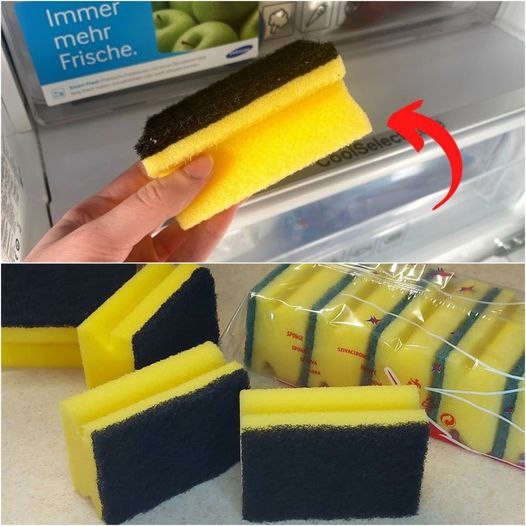
To maximize benefit, integrate the sponge trick with a holistic fridge freshness regimen.
Step 1: Deep Cleaning
- Empty fridge contents
- Remove shelves, drawers, and trays, wash with mild detergent
- Wipe all interior walls and gasket seals
- Clean drip pans, drainage holes, fan outlets
Step 2: Set Up Sponge Hack
- Place spare sponge(s) in chosen zones (drawer, shelf, back wall)
- Optionally pre-treat with baking soda or charcoal
- Ensure sponge is dry / lightly damp but not wet
Step 3: Regular Monitoring & Replacement
- Daily: glance at sponge; if dripping or saturated, wring or replace
- Weekly: sun-dry or sanitize the sponge
- Biweekly or monthly: fully replace sponge
Step 4: Maintain Other Odor Barriers
- Use sealed containers for strong-smelling foods
- Use baking soda box or charcoal in parallel
- Air out the fridge periodically
- Avoid placing foods uncovered
- Check and seal door gaskets, maintain temperature
Step 5: Produce Care and Storage
- Dry produce before placing in drawers
- Use airflow, perforated plastic bags for ventilation
- Rotate items to avoid decay near sponge zone
Step 6: Adjust Based on Season / Humidity
- In humid or rainy seasons, replace sponge more frequently
- During dry or cold seasons, you may need less frequent maintenance
- Add extra sponges or moisture absorbers if humidity surges
With these steps, the sponge trick becomes a meaningful component of your fridge management, enhancing odor control, moisture balance, and food longevity.
Expected Results & How Much Benefit to Expect
What real improvement can someone expect from using this trick? Here’s a realistic projection and metrics to watch:
Possible Improvements
- Less visible condensation or dripping inside drawers
- Produce (leafy greens, herbs, vegetables) remaining crisp a few days longer
- Fewer musty or lingering odor episodes
- Slight reduction in bacterial / fungal growth from water exposure
- Less frequent need to wipe moisture or puddles
Variables That Affect Impact
- How humid your kitchen or climate is
- How much moisture-generating food you put in the fridge
- How saturated / effective your sponge is (size, porosity)
- How promptly you maintain and replace the sponge
- The baseline cleanliness and drainage of your fridge
In ideal conditions, some users find their vegetable drawer stays fresher 1–3 extra days, and drawer moisture is noticeably reduced.
Suggested Metrics to Track
- Compare shelf/drawer drip or water accumulation before vs. after
- Track spoilage rate of leafy vegetables or herbs
- Monitor frequency of odor complaints or scents
- Note how often you need to wipe or dry inside surfaces
- Assess how quickly your sponge becomes saturated / needs replacement
Using the sponge trick isn’t magic, but if you’re diligent, it can shift the balance in your favor in many everyday kitchens.
Troubleshooting & Common Mistakes to Avoid
Even good hacks can go wrong if used incorrectly. Here’s what to watch out for and how to troubleshoot.
The Sponge Leaks or Overflows
- Mistake: Choosing a sponge too large or too absorbent, in a zone with drips
- Fix: Use a smaller sponge, or place it above a drip tray; wring it frequently
The Sponge Stinks or Develops Mold
- Mistake: Leaving sponge too long, moist, no air drying
- Fix: Replace often, sanitize, sun-dry, switch to natural fibers
No Noticeable Improvement
- Mistake: Fridge is already well ventilated; external humidity overwhelms effect
- Fix: Add additional moisture control (baking soda, charcoal, dehumidifier); check drainage
Sponge Touching Food & Contaminating
- Mistake: Placing sponge directly under food items
- Fix: Use mesh or breathable covers; reposition away from direct container contact
Sponge Obstructing Airflow
- Mistake: Large sponge blocks vent or shelf air paths
- Fix: Place in side or lower corners, keep clearance around it
Over-Reliance & Neglect of Maintenance
- Mistake: Thinking it’s a set-it-and-forget-it hack
- Fix: Incorporate sponge maintenance into your fridge care routine (same way as cleaning and changing filters)
By adjusting placement, frequency, and sponge type, you can solve most issues easily.
Final Thoughts: Why This “Too Simple” Hack Is Worth Testing
What makes this sponge trick particularly attractive:
- It’s low cost (just a sponge, maybe baking soda)
- Easy to test — you can start with one sponge and see changes
- It augments, rather than replaces, other deodorizing / moisture control methods
- It helps directly at the shelf/drawer level — where moisture and condensation problems hit produce hardest
- It’s adaptable: you can scale it (multiple sponges, zones)
Of course, it’s not a silver bullet. It won’t eliminate odor or moisture entirely in all fridges, especially poorly maintained ones. But in many kitchens, it shifts the balance: less drip, less humid stress, longer produce life, fewer odor complaints.
If you try this, monitor sponge saturation, freshness, and produce quality over a few weeks. Combine with regular cleaning, good airflow, sealed containers, and odor absorbers. With that, this simple sponge trick may become one of your most trusted fridge hacks—something you wish you knew sooner.