By the time I was six months pregnant, the anticipation was at an all‑time high. My sister‑in‑law—let’s call her Anna—and I had always been close. When I told her we’d found out the baby’s gender, she immediately volunteered to help with the reveal. She’s creative, generous, and thoughtful. She handled the decorations, made custom invites, arranged catering, and even baked the reveal cake herself. It was going to be perfect.
Anna planned an afternoon event in our backyard. Balloons in pastel colors, a banner, a big “He or She?” sign. Family were invited: my husband, his parents, siblings, nieces and nephews. Many were traveling in for the event. I wanted everyone present to share that moment of surprise and delight.
My MIL—Margaret—has always presented as supportive. She acts kind, compliments the baby bump, tells me how happy she is. But underneath that polished exterior, there is tension. I’ve seen her sideline me in conversations, make subtle digs about how I “do things differently,” and remind everyone how she used to throw such wonderful parties. The comparisons have always made me uneasy, but I kept my peace, hoping that respect and goodwill would outshine any bitterness.
The Gender Reveal Party
The day arrived. Sunlight filtered through the trees. Kids ran around, laughter filled the air. Anna’s decorations were stunning. The cake sat at centre stage on a small table, covered with pastel blue and pink frosting, adorned with tiny edible stars. Underneath that frosting was the secret—blue filling if it was a boy, pink if it was a girl.
We gathered everyone: much to everyone’s happiness, I was healthy, glowing, excited. My husband squeezed my hand as Anna went to fetch the cake from the kitchen. I could see my MIL watching, a certain sparkle in her eyes—though I tried to ignore it, told myself I was being paranoid.
Anna rolled the cake out on a small cart. The moment was near.
The Smash: When the Cake Fell
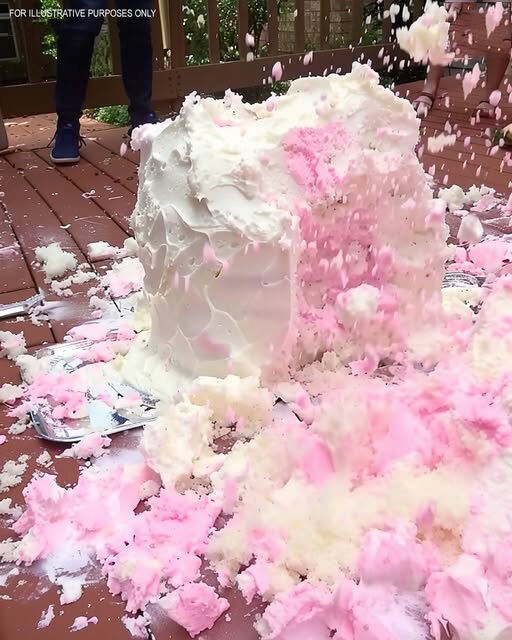
Margaret “accidentally” knocked into the cart. She leaned forward at just the wrong angle—either she didn’t see the wheel, or she pretended not to. The cart tipped slightly. The cake wobbled—and then with a sickening inevitability, it slid off, hitting the ground with a crash. The creamy frosting splattered. The pastel colors smeared with dirt from the stone patio. Guests gasped.
I froze. Anna gasped. My husband looked furious. Margaret’s face registered surprise—and then something else: the edges of a smirk. One of those constrained, tiny smiles, the kind that’s almost in embarrassment, but also like she was enjoying the impact. It was visible, even if she tried to hide it, as though she had finally orchestrated the chaos she’d always wanted.
In that moment, everything seemed to slow. Hearts stopped for a second. My cheeks felt hot—not from the heat of the sun, but from shock, anger, humiliation. There was cake everywhere. Some kids cried. Some adults stiffened. The pastel blue or pink inside would be ruined; no reveal as planned. All the effort, love, anticipation—gone in a smear of frosting and broken cake.
The Aftermath: Tension, Words, and Stings
We gathered the remains. Anna’s hands shook. She tried to laugh, to salvage the moment: “Well, who wants cake anyway?” But her eyes were watery. My MIL hovered, offering napkins, sounding concerned in voice, but her expression betrayed something else: satisfaction.
People murmured. My husband glared. I tried to calm things: “It’s okay, these things happen.” But it wasn’t really okay. Inside I burned with resentment. I looked at Margaret, waiting for an apology, some admission. But it was unspoken. She claimed she had stepped back, that she “moved too fast,” didn’t see the wheel of the cart. It sounded flimsy, but it was polite enough to avoid confrontation.
We regrouped. Anna cleared cake, wiped tables, people tried to laugh it off. Some gifts of baby clothes passed around. The tension lingered like dampness in the air. Behind my calm words, I was seething. I wanted her to see that she couldn’t erase the moment so easily.
The Turning Point: My SIL’s Reversal
After a few minutes, when guests were distracted by drinks and small talk, my SIL—let’s call her Beth—stepped up. Beth is quiet, thoughtful, but has this quiet strength. She walks softly, but carries a big heart. She surveyed the mess, saw Anna wiping tears, saw guests redirecting their attention, felt the injustice.
She approached Margaret—not during the height of conflict, but in quiet. Soft voice, but firm. She said: “Mom, I think your daughter deserves a moment of recognition. You know how much she worked on this reveal, how hard she planned. I’d like everybody to know that Anna put this together because she loves this baby already so much. No cake on the ground, no mishap can take that away.”
Then she gestured to the small crowd around the ruined cake. She said, “I propose we don’t let this moment be ruined. Anna, will you cut the cake… even if part of it is on the floor? Because I want everyone here to see what’s inside, to celebrate the gender together.” And then she looked squarely at Margaret and said, “Because what matters is what grows beneath your heart, not what falls onto the ground.”
Beth’s words were simple. Surprising. They rippled through the group. There was a beat of silence. Then people started nodding. Some clapped. People warmed. Anna looked stunned. My heart ached with pride. My MIL’s face went pale, the smirk gone, replaced with shame.
Beth didn’t accuse. She didn’t yell. She didn’t start a spectacle. She reclaimed the moment with grace. With love. With an inclusive tone so that Anna wasn’t embarrassed, and Margaret was called to her better self.
The Reveal: Blue or Pink
Anna, encouraged by the support, got a fresh small piece of cake (some scraps from the ruined reveal). She cut into it, holding it aloft for everyone. Blue filling. We’re having a boy.
Cheers and tears. Beth clasped my hand. My husband beamed. Even some relatives who had been quiet hugged us. The mood shifted. It wasn’t perfect—there was cake on shoes, frosting on tables—but it became beautiful. Imperfect, but honest.
The Fallout: Relationships in the Light
After the party ended, the clean‑up was slow. I noticed Margaret avoiding eye contact, sitting quietly. She offered few words. I know she felt exposed. I don’t relish that, but truth has a way of doing that for some people.
Over the next days, Anna and I talked. She was shaken, upset, embarrassed. But she also felt stronger—like Beth’s words had lifted her, given her affirmation. My husband apologized (for his mom’s behaviour; for the moment; for thinking it might happen). That meant a lot.
Margaret eventually sent a message: “I’m sorry about what happened with the cake. I didn’t mean for things to go wrong.” It was short. It was carefully worded. There was no grand confession, no big apology. But it was something. I replied, acknowledging it, saying the party meant so much and we appreciated everyone’s love, including hers.
But more importantly, things changed. The dynamic shifted. People in the family saw something: that I, Anna, Beth, and my husband were ready to stand up—not in anger, but in self-worth. It wasn’t about confrontation; it was about what is deserved: respect.
Lessons Learned: What This Moment Taught Us
When a moment like this occurs, it reveals more than just spilled frosting. It reveals character. It reveals boundaries. It reveals what people are capable of doing—and what we’re willing to accept.
Here are some lessons I took from our experience:
- Boundaries are essential. Letting small slights go over and over ends up giving people more power than they deserve. Standing up (gently but firmly) does not require anger. It requires clarity.
- Supportive voices matter. Beth’s intervention wasn’t loud; it was thoughtful. It mattered because it came from someone who deeply cared. Having allies in the family gives courage.
- Grace doesn’t mean letting others get away with hurt. When Beth asked everyone to see Anna’s love, she elevated the moment without finger‑pointing. You can reclaim power through kindness and dignity.
- A milestone is more than celebration. It’s a declaration: of love, identity, and family values. Even a ruined cake can’t erase what truly matters: the relationships, the love, and the meaning behind the event.
- Imperfection can become a stronger memory. The reveal cake smash will be the story we tell. Not because of the mistake, but because of the way we responded. The cake, the embarrassment, the reversal—all of it becomes part of the story that defines us.
Emotional Impact: From Hurt to Empowerment
I want to speak here about the emotional landscape—the underbelly of moments like this, because they matter. When someone “accidentally” ruins your moment, it hurts more than disappointment. You feel exposed. You feel small. You feel unseen.
- Hurt: My heart ached for Anna. All the work, the hope. The dream of sharing, of delight. It felt taken.
- Anger: I was furious—not only because of the smirk, but because it felt intentional. Because behind it I saw a repetition, a pattern.
- Shame / Embarrassment: Having the party, having guests, wanting everything perfect—to have it undone was humbling.
- Relief (after the reversal): When Beth spoke, I felt relief. That someone saw the injustice, acknowledged Anna’s worth, made the moment real again.
- Empowerment: The moment taught me that even when someone tries to hijack your joy, you have tools: your voice, your allies, your love.
Navigating Family Dynamics: Clarity and Healing
This story isn’t just about cake and a party. It’s about how families negotiate power, recognition, and respect. Here’s what helped us afterward, and what might help you if you find yourself in similar situations.
Communicate After the Fact
We didn’t have a big blow‑up in front of everyone. Later, Anna and I, and also my husband, talked with Margaret. We didn’t attack. We stated how the moment felt, what we noticed, what we wished had been different. Sometimes people don’t realize the impact of their actions.
Set Future Boundaries
Anna said with gentleness that she’d prefer if in future, when someone is helping with special events, that roles and responsibilities are respected. If someone promises to do part of a job, they follow through. If someone offers help, let it be help—not control. Boundaries aren’t hostile; they protect relationships.
Model Generosity of Spirit
Click page 2 for more