| Problem | Cause | Solution |
|---|---|---|
| Root rot (mushy roots, unpleasant smell) | Roots constantly submerged, low oxygen, stagnant water | Clean water more often; ensure some water movement or aeration; trim off rotten roots; don’t submerge crown |
| Algae buildup | Light hitting roots or water, nutrients in water, stagnant water | Use filtered water; change water weekly; clean container; reduce exposure to direct light |
| Leaves yellowing | Nutrient deficiency / too much light / too much or too little water | Check feeding schedule; adjust light (less or more as needed); ensure proper water changes |
| Wilting or droopy fronds | Shock from temperature change / underwatering / poor root health | Warm water; stable temperature; ensure roots have enough water; remove damaged parts |
| Brown tips or edges on fronds | Low humidity / minerals in water / over‑fertilizing | Use filtered or soft water; raise humidity; reduce fertilizer concentration; trim brown tips |
Specialized Care Tips: Making It Last
These are finer, more advanced tips to push your water‑grown ferns from “living” to “thriving”.
- Oxygen at the roots: Roots under water need oxygen. You could add small air stones (as used in aquariums) or ensure there is splash or gentle circulation in water occasionally.
- Partial water culture: Some fern species do better with semi‑water culture—roots in water, but fronds anchored in moist bark or pebbles rather than completely submerged. This hybrid method can reduce risk of rot and increase vigor.
- Rotating between water culture and soil: Some growers let ferns grow in water for a while, then transplant temporarily into soil to give their root systems a “rest” or recharge before going back. This can work if done with care.
- Cleaning and pruning: Remove dead fronds, trim back overgrowth so airflow around the plant is good. Clean glass containers so light penetrates well and to avoid algae blocking light.
- Monitoring water parameters: If possible, test pH of water—it should be near neutral to slightly acidic for many fern types. Watch hardness of water; very hard water may leave deposits on roots or fronds. Use filtered or softened water if necessary.
Seasonal Care: How to Handle Changes
Seasonal shifts affect your fern in water culture just like soil plants. Here’s how to adjust:
- Spring / Summer (active growth period): aim for more feeding, more light (but still indirect), change water weekly, monitor for pests (mites, small insects). Growth will be faster.
- Fall: Light begins to fade; growth slows. Reduce feeding; keep water clean; monitor indoor heating which can dry air.
- Winter: Many ferns will slow growth significantly. Some may go somewhat dormant. Feed very lightly or not at all; reduce disturbance; keep temperatures above frost; ensure humidity. Water changes need to continue, but you can stretch intervals slightly if growth is minimal.
Display Ideas & Creative Uses
Growing ferns in water isn’t just utilitarian—it can also be decorative. Here are creative ideas:
- Group several glass jars with different ferns on a windowsill for visual effect
- Use large bowls with multiple ferns and layered roots + decorative stones
- Use hanging glass terrariums or wall‑mounted glass pockets filled with water and ferns
- Place ferns in bowls or containers in bathrooms (humidity plus indirect light can be great)
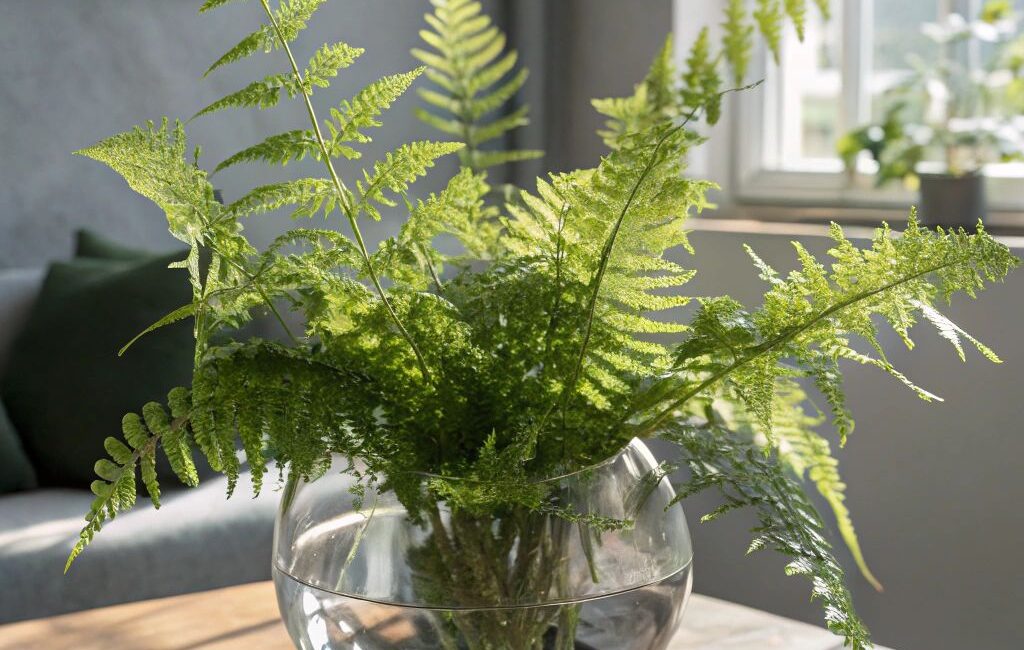
- Hybrid displays: half the plant in water in a vase, fronds spilling over, portions in soil around
How Long Can Ferns Survive (and Flourish) in Water?
If well cared for, water‑grown ferns can survive for many months, even years. Some key points:
- Keep changing water, managing root health, and providing nutrients.
- Regular maintenance is the difference between a short‑lived experiment and a thriving display.
- Eventually, roots may need trimming or dividing if they become overly crowded.
- Many ferns will adapt over time: their roots may become more water‑tolerant, fronds more resilient.
Myths and Misconceptions
Let’s clear up some common false ideas:
- Myth: Ferns die in water quickly. Not always true—if setup and care are correct, they can live well in water.
- Myth: You need special hydroponic systems. Not really. A simple jar with clean water and occasional feeding can be enough.
- Myth: All ferns behave the same. False. Some ferns are very sensitive (e.g., rhizome ferns), others are more forgiving. Know your species.
Step‑By‑Step Quick Checklist
To make it easier, here’s a summary checklist you can follow when setting up or maintaining:
- Choose a tolerant fern, healthy condition
- Remove soil, clean roots carefully
- Choose a clean container, add support (stones)
- Use filtered/rain/distilled water, avoid submerging crown
- Position in bright, indirect light
- Change water weekly, clean container
- Feed with diluted fertilizer during growth season
- Maintain moderate temperature & high humidity
- Monitor for pests, algae, root health
- Prune dead leaves, trim as needed
Final Thoughts
Growing ferns in water is a beautiful way to bring greenery into your home with style and serenity. It’s not the easiest approach for every fern, but if you choose suitable species and commit to care routines, the results are stunning. Clean roots, lush fronds, glass vessels glowing with life—they all create a living art piece in your space.
If you start this journey, be patient. Observe. Feel the changes. The first few weeks can be a transition as plant and roots adjust. But once established, your fern in water becomes a living, breathing companion in your home.