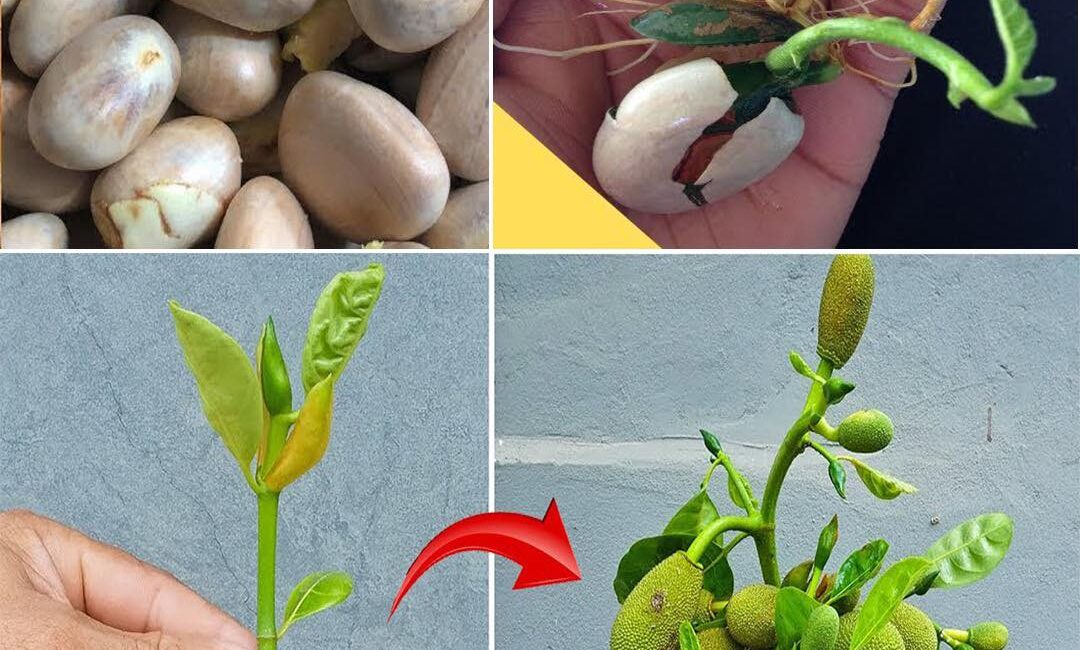
Watering
- Young trees need deep watering 2-3 times per week.
- Mature trees are more drought tolerant but benefit from irrigation in dry periods.
- Avoid waterlogging as roots are prone to rot.
Fertilization
- Feed with balanced NPK fertilizer 3-4 times a year.
- Supplement with organic compost or manure annually.
- Foliar feeding with micronutrients (magnesium, zinc) can improve growth.
Pruning
- Prune young trees to develop a strong central leader and open canopy.
- Remove dead or diseased branches regularly.
- Prune to manage size and improve air circulation.
Pest and disease management
- Monitor for common pests: aphids, scale insects, fruit flies.
- Use organic insecticides or neem oil if infestations occur.
- Prevent fungal diseases by ensuring good airflow and avoiding excess moisture.
Step 8: Pollination and Flowering
Jackfruit trees produce both male and female flowers on the same tree (monoecious).
Flowering time
- Flowering occurs 3-8 years after planting from seed.
- Flowers appear on trunks and large branches.
Pollination
- Pollination is primarily insect-driven.
- In some cases, hand pollination can improve fruit set.
- Support pollinators by planting companion flowers nearby.
Step 9: Fruit Development and Harvesting
Fruit growth
- After successful pollination, fruits develop slowly.
- Mature fruits can take 3-8 months to ripen.
Signs of ripeness
- Skin changes from green to yellowish or brownish.
- Emits a strong, sweet aroma.
- Softens slightly to touch.
Harvesting
- Use a sharp knife or pruning shears to cut fruit carefully.
- Support fruit’s weight during harvest to prevent damage.
Troubleshooting Common Problems
Poor germination
- Ensure seeds are fresh.
- Maintain proper moisture and temperature.
- Scarify seeds if germination is slow.
Seedling damping-off
- Caused by fungal pathogens.
- Prevent by using sterilized soil and avoiding overwatering.
Pest infestations
- Check regularly for aphids, mealybugs, and fruit flies.
- Introduce beneficial insects or use organic controls.
Nutrient deficiencies
- Yellowing leaves can indicate nitrogen deficiency.
- Adjust fertilization accordingly.
Tips for Growing Jackfruit in Containers (for Limited Space)
- Use large pots (20+ gallons) with good drainage.
- Choose dwarf or smaller varieties if available.
- Keep plants in warm, sunny locations.
- Regularly fertilize and prune to manage size.
- Be mindful of watering needs as pots dry out faster.
Conclusion: Growing Your Own Jackfruit Tree
Growing jackfruit from seed is a rewarding journey that requires patience, care, and attention to detail. While the tree may take years to bear fruit, the process of nurturing it from a tiny seed to a towering fruit-laden giant is fulfilling for any gardener.
With the right seeds, soil, watering, and care, you can cultivate a thriving jackfruit tree that will not only provide abundant harvests but also bring tropical beauty to your garden.
Start your jackfruit growing adventure today and enjoy the exotic bounty that this magnificent tree offers!
Pages: 1 2