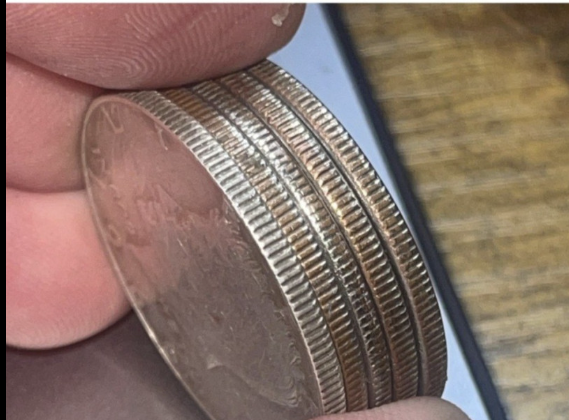
The legacy of ridged edges persists because it provides an enduring blend of security, accessibility, and sensory familiarity that digital currency cannot replace. Coins with ridges embody a centuries-old struggle against fraud, showcasing the intersection of design, technology, and human ingenuity.
Beyond Coins: The Evolution of Tamper-Proof Design
The principle behind coin ridges—making tampering obvious—has influenced security measures far beyond currency.
Modern money incorporates a range of tamper-proof features:
- Watermarks embedded in paper bills
- Holograms on credit cards
- Security threads woven into banknotes
- Microprinting and color-shifting inks
Each innovation answers the same fundamental question: Has someone altered or forged this item?
Just like the coin’s ridges, these features deter criminals and protect consumers by providing visible or detectable signs of authenticity.
The Cultural and Historical Legacy of Coin Ridges
Coin ridges symbolize more than just a technical fix; they represent a fascinating chapter in monetary history and human problem-solving.
They remind us of an era when the value of money was literal—silver and gold coins weighed and measured carefully, vulnerable to clever criminals. They honor Sir Isaac Newton’s often-overlooked role in public service and crime prevention.
And they reflect our ongoing desire to maintain trust and integrity in the systems we rely on every day.
Practical Tips: How to Recognize and Use Coin Ridges Today
If you handle coins regularly, here are some useful pointers about ridges:
- Counting Ridges: Coins have specific ridge counts. For example, U.S. quarters typically have 119 ridges, while dimes have 118. Knowing this can help you spot counterfeits.
- Using Touch: If you are visually impaired or want to test coins discreetly, feeling the ridges is a reliable method to identify them.
- For Collectors: Coins with smooth edges or irregular ridging might be misprints, errors, or counterfeits—adding another layer to numismatic intrigue.
- Vending and Machines: When using coin-operated devices, ensure you insert coins with the correct ridging to avoid rejection.
Conclusion: Small Details, Big Impact
The next time you find a quarter in your pocket or flip a coin for a decision, pause for a moment. Trace your finger over the ridges and consider the centuries of history, science, and ingenuity packed into that tiny circle of metal.
Those ridges are more than grooves—they’re a silent guardian of value, an aid to the visually impaired, and a tactile connection to our collective past. They tell a story of theft and justice, of clever solutions to real problems, and of the continuing evolution of currency security.
In a rapidly digitizing world, this small piece of metal remains a tangible reminder of human creativity and resilience. Coin ridges are a quiet but powerful testament to how thoughtful design can shape and protect society.